
India better placed than most competitors after Trump's 10% forced labour tariff, says FIEO
ADVERTISEMENT
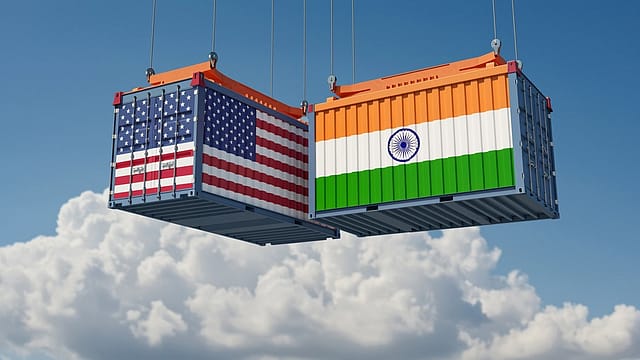
India is in a relatively favourable position compared to many of its global competitors after the United States imposed an additional 10% 'forced labour' tariff under Section 301 of the Trade Act 1974 on imports from India, the Federation of Indian Export Organisations (FIEO) has said.
Admitting that the additional tariff will increase the landed cost of Indian products, FIEO wanted the overall impact to be viewed in the proper competitive perspective rather than through the headline tariff alone.
"The fact that India has been placed in the lower 10% tariff category, while several competing exporting nations including China, Vietnam, Thailand, Türkiye, UAE, Brazil, South Africa, and others face a higher tariff of 12.5%, reflects the recognition by the US of the policy measures taken by the Government of India to strengthen its framework relating to forced labour. This has helped India secure a relatively favourable position compared to many of its global competitors," S C Ralhan, President, FIEO, said.
Ralhan pointed out that many of India's direct competitors in labour-intensive sectors such as textiles, garments, leather and footwear—including Bangladesh, Cambodia, Pakistan, Sri Lanka, Indonesia and Malaysia—have also been subjected to the same 10% tariff. Consequently, Indian exporters largely retain their relative competitiveness in these sectors, as competing suppliers will face a similar duty incidence in the US market, he added.
According to Ralhan, Indian exporters could benefit from trade diversion in several product segments where competing countries are subject to the higher 12.5% tariff. “Even a differential of 2.5% can influence sourcing decisions in highly competitive markets, particularly where Indian exporters are able to offer quality products, reliable deliveries and stable supply chains," he said.
FIEO advised exporters not to draw broad conclusions based solely on the additional 10% tariff but to undertake a product-wise assessment of the applicable US tariff, available exclusions and the tariff treatment of competing supplier countries.
"Indian exporters have repeatedly demonstrated resilience in overcoming global disruptions. While the new tariff presents challenges, it also offers opportunities for India to expand its presence in sectors where competing countries now face relatively higher duties. With proactive industry response and continued Government support, Indian exports remain well positioned to sustain their growth in the US market," Ralhan said.