
India could become one of our top five markets by 2035: Kiko Milano CEO Simone Dominici
ADVERTISEMENT
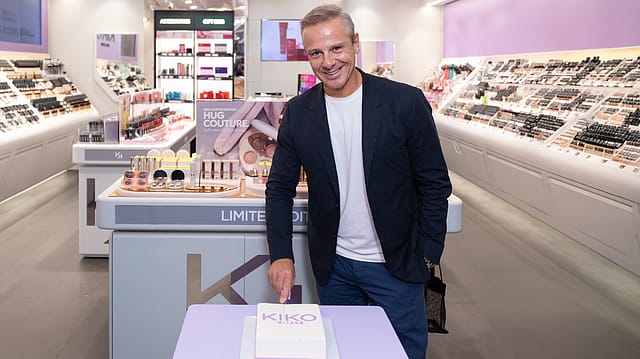
For Kiko Milano, India is still a small market, but one with the potential to become a major growth engine. The Italian beauty brand, which recorded global revenues of $1billion in 2025, is accelerating its India expansion after partnering with Reliance Retail’s Tira in 2024 and plans to double its store network by the end of this year.
Global CEO Simone Dominici sees an opportunity in a younger, increasingly informed consumer who wants premium-quality makeup without luxury-level prices. In this exclusive conversation with Fortune India, Dominici discusses the brand’s India ambitions, its omnichannel strategy with Reliance and Tira, and how Kiko intends to build consumer preference before prioritising profitability.
How has the Indian beauty market changed in the last 20 years since you last visited? What was your perception then and how has it evolved?
My perception of the beauty market today is that consumers, especially the younger generation, are becoming more and more educated to beauty and makeup. In particular, they are sourcing information from social media, from the digital and they are shaping their own idea by sourcing information here and there. 20 years ago you didn't have social media, digital marketing, and the consumer was shaping information through friends, family or television. Now the social media has changed a lot and they understand a lot about beauty and makeup.
Even before they come to the store, they know the product because they have met the product on social media [through] the influencer, the creator, the follower. This raises the bar for all the players in the market a lot; quality is becoming more and more important. That's why with Kiko we believe we have a great role to play because we bring the high premium quality at accessible price and this is the distinctiveness of Kiko. If you want high-quality innovative products but at an accessible price with all the Italian culture of beauty, the Italian vibrancies and the Italian way of living which is the way we distinguish ourselves when coming to emotional balance.
How has Kiko Milano's journey transpired in the country?
Kiko Milano’s evolution in India has followed its global evolution. When we started in India more than 7 years ago, Kiko globally was a mass retailer, then in 2022 we started the transformation from a mass retailer with 80% of the volume discounted into a global premium brand with a key franchise like the 3D Hydra like the Unlimitable Touch, the Maxi Mod and the Unlimited Foundation we started transforming what was a retailer into a brand. And then by investing in building emotional value to the brand, to our creators, social media, and recently with our global ambassador Madonna.
Now that it's a brand, we also believe that it was the right time to accelerate in India, that's why in 2024 we signed a deal with Reliance Retail's TIRA, which is we thought was the best partner for us and we are after 2 years very happy, because not only they are in love with Kiko, but they offer an omnichannel platform of distribution. Together with Reliance, we developed our own presence in the marketplaces like TIRA, offline through a selection of stores, beauty specialist stores and online, and also a selection of stores like the one we are reopening today [in DLF Avenue, Saket].
The fact that we are present in all these platforms gives us the opportunity to get to know Kiko from the customers, maybe online who are doing exploration in TIRA and then a deep dive on understanding the full range of Kiko in the stores; that's the full navigation behind.
What is the brand's expansion strategy?
We have big plans for India. At the moment, we are present in 19 locations, 10 of our own stores, with the one we reopened today plus 9 stores with TIRA. By the end of the year, we will double the number of stores from 19 today, and then we have a full plan to develop them going towards other cities as well, and reinforcing our presence in big cities in the coming years. I don't have a number in mind, but we have an ambition in mind, which is to become the most loved beauty destination for self-expression in India that's what we want to become.
There has been a renewed focus on India in the last few years and there has been a shift from other marketplaces. For Kiko Milano, where does India sit?
We are very little at the moment. We just started the acceleration one year ago with the Reliance. As I said we have 19 points of sales today, by the end of the year we will have doubled this number. However, it is still very limited if you consider the overall distribution and the size of India. But given the fact that India is a large market, it is expected to grow three times faster than the average global beauty world. India will grow 10-12% per year till 2035 for now, while the global beauty will be 3-4%. India is three times faster than this, that's why we believe we have a huge potential here to express in India. At the moment, it is very limited in our operation as India is not even in the top 10 countries for us but at the end of the trajectory by 2035, when the full distribution and full collaboration with Reliance will have given the fruit we want, for sure India will be top 10 countries or even top 5.
Do you think the beauty market in India sits between this sweet spot that Kiko targets, which is the premium segment, or is luxury a bigger opportunity?
The sweet spot in India today is premium quality, because as I said, the consumers are very educated, very savvy, they understand quality, but at an accessible price. Then you can cater the middle class, which is rising in India. We don't want to cater only the 0.5% richest part of the population; we are a democratic brand, we democratise luxury with people and that is our mission globally. We want to go on the middle class, and the middle class cannot spend every week for a luxury product. That's why we are very conscious on price, and we come with a mass, prestige price on premium and prestige quality.
For the next decade, is the global playbook going to be similar across markets as India?
We have a similar position everywhere, we have about 1,460 stores in 78 countries where we are present. We have similar positioning meaning that that will be the trend for the coming years - premium quality, but accessible. Our Italian culture of beauty also gives us the opportunity to explore a different emotional engagement with consumers rather than forcing them to chase perfection. We promote confidence and self-esteem which is a different angle in beauty than other cultures of beauty. Other brands want to go more on perfection, they choose beautiful and young celebrities and they want to inspire everybody to look like them. I want everybody to look like the best version of themselves, and that's why we have the wide range of colours.
We see localisation play out in a lot of makeup, cosmetics and skin care brands. What is your strategy?
Sometimes some brands misunderstand localisation; it is not only producing products for a specific country, but localisation means understanding the culture. For example, the Diwali collection we developed and presented yesterday is taking our iconic products and give them the interpretation under the festivity moment of Diwali. And we have extended the range of shades to cover the needs of multiple markets we serve, including the Indian one. We have 49 shades in the key foundation ranges and more than 40 gloss shades, this means that we want to cover all the possible shades.
At the moment we produce everything in Europe. 75% is in Italy and the rest is produced in other parts of Europe where there is a special technique and technology. Some are produced by a supplier which is in the north of Europe, they produce for all the luxury brands as this technology is very rare, but at the moment we source everything in Europe and 75% in Italy.
Any plans to bring manufacturing in India?
Not at the moment, but I don't exclude it in the future. If our marketing, team and design needs and we realise a product which is only dedicated to the Indian consumers and the only way to do it in a qualitative way is to produce here, I don't exclude that but we don't have plans at the moment to produce anything in India.
Within this price segment, there already exists a lot of other global as well as Indian brands. How do you plan to increase the adoption for Kiko Milano amongst Indian consumers?
It's a three-fold strategy. The first one is by being present in all the three platforms. We can offer a complete experience and journey to the consumer; they discover the brand maybe online, they explore the product on TIRA and then they come for a deep dive in our stores. Not many brands have a presence in all the three platforms. The second one is leveraging the loyalty programme of TIRA, we come in touch with millions of consumers that today are in the CRM (customer relationship management) of TIRA. And then by shopping Kiko on TIRA, we'll have the benefit that TIRA is reserving them as a loyal customer, they have an incentive to try Kiko and once they try, they come and discover more in our stores. And then of course the third one is keep the innovation very high, you see today a collection, you will see Diwali in two days, then after the Diwali they will get another collection. We have 7-8 collections a year; every 5-6 weeks you find something new, you find another opportunity, another excuse to come and visit us.
What's your outlook on achieving profitability in India?
I can't disclose the number. Profitability for us is not the main driver. The main driver is gaining consumers preference, and when you gain consumer preference, profits will come. We are not here for a short journey, we are here for a long journey with Reliance in India. I want to invest in people, recruiting the right people, selecting the right location, the right participation with data in their own stores, selecting the right local influencer. I'm worried to gain consumer love and to be seen as a destination for self-expression.
We know how to make money out of the product, we have 1,450 stores and we have been growing, doubling the size of our company in the last 4 years. Last year in 2025 we reached the threshold of $1 billion, and now we are more than $1 billion and we were less than half 4 years ago. So, we know how to make money I'm not worried about making money. I'm worried about gaining consumers love especially in a territory where there is a lot of competition, where we are a recent brand in India. So, my obsession is gaining consumer love.