
India Inc is shifting from incremental to exponential growth, but R&D investment remains a major weakness: Dinesh Kanabar
ADVERTISEMENT
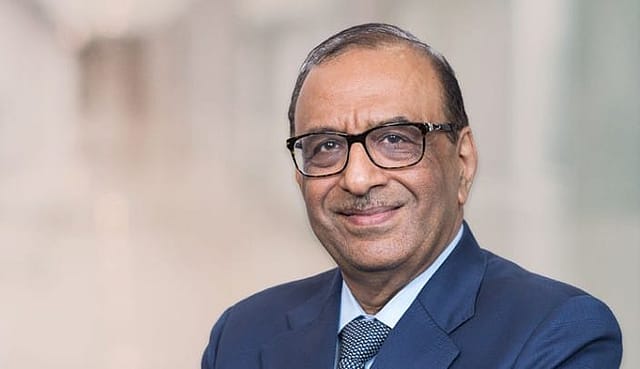
Indian companies are increasingly moving away from incremental growth strategies towards building businesses at scale, with greater focus on long-term investments and infrastructure. However, inadequate spending on research and development (R&D) remains a major weakness that could constrain India's ambitions in advanced manufacturing and emerging technologies, Dinesh Kanabar, founder and CEO of Dhruva Advisors, has said.
"There was a point of time when people looked at incremental growth. Today people are looking at exponential growth," Kanabar said in an freewheeling with Fortune India's Editor-in-Chief Sourav Majumdar in the latest episode of Unscripted.
India Inc's growing appetite for scale
Kanabar said the shift was visible in the way corporate leaders were approaching investments and their businesses, with a growing number of companies looking beyond immediate expansion.
"I'm really glad that there are people thinking long term, there are people wanting to invest in infrastructure, long-term growth of the country, align their own interest with the interest of the country," he said.
"People are thinking of scale today, which is what India needs," he added.
However, Kanabar cautioned that the ambition was not yet widespread enough across corporate India. "I think India is punching far below its weight. I think India can do a lot more and I'm glad that corporates have this aspiration. My disappointment correspondingly would be that there are fewer corporates who do that and I wish more and more did it," he said.
Entrepreneurship expands beyond e-commerce
Another important change he has observed is the growing appetite for entrepreneurship, with capital backing ideas across sectors beyond e-commerce.
"The second thing which enthuses me is entrepreneurship in this country. I have seen people come up with fascinating ideas and I see money backing up those ideas," Kanabar said.
He pointed to opportunities emerging in healthcare, pharmaceuticals and delivery, among other areas, where entrepreneurs are developing solutions for both Indian and global markets.
"There are fields where I see people come back and say that this is what India needs or for that matter this is what the world needs and we are here to make it in India," he said.
Kanabar also sees a growing recognition of the importance of quality as companies pursue scale, particularly in the context of India's manufacturing ambitions.
R&D spending remains a key weakness
But he flagged a significant gap in the resources Indian businesses allocate to innovation. While companies are becoming more conscious of quality, he said their R&D spending remains considerably lower than global levels.
"When you see globally, organisations spend between 6 and 8% of their revenues on R&D and you say that Indian groups are spending between 1 and 2%, you come back and say this is something lacking out there," he said.
He argued that India would need to strengthen its research ecosystem to capitalise on the opportunity presented by skilled professionals potentially returning to the country amid difficulties in securing H-1B visas in the US.
"There's going to be a reverse brain drain happening," he said, but questioned whether India had built the ecosystem to absorb returning talent and put their expertise to use.
"With these people come back here, have we created an ecosystem to really absorb them and build on them? Unless you spend on R&D, it's not going to happen," Kanabar said. He also stressed the need for a stronger industry-academia interface.
Kanabar pitches for R&D tax incentives
The Dhruva Advisors founder said he had raised the issue of R&D incentives during a recent meeting with the Finance Minister, arguing that India needs to reconsider tax support for corporate research.
"One of the requests that I made to her was that we seriously need to relook at incentivising R&D from a tax perspective," he said, referring to the earlier weighted deduction provision that has since been discontinued.
While acknowledging the possibility of misuse, Kanabar said that should not prevent the government from supporting research.
"Anything that you do there will be abuse, but abuse cannot mean that you don't do what is the right thing. You try and put guardrails to ensure that the abuse is prevented," he said.
He said both industry and the government would need to step up investment, particularly as India seeks to build capabilities in areas such as semiconductors and advanced manufacturing.
"You talk about manufacture of semiconductors, whatever else large you want, they're all required tremendous amount of R&D, they require deep pockets and somewhere on the line industry needs to do it a bit and government needs to do it better," Kanabar said.