
India must move beyond content consumption to become global creative leader: Gajendra Shekhawat at FICCI Frames 2026
ADVERTISEMENT
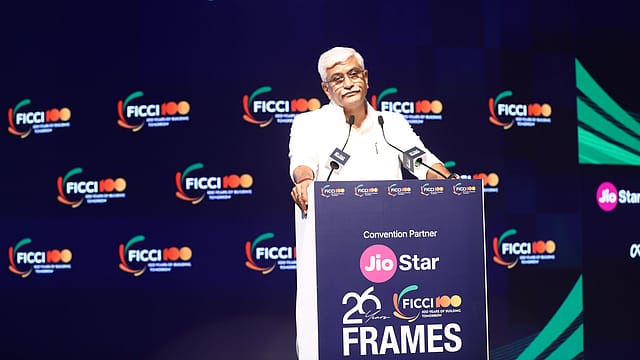
Union minister for culture Gajendra Singh Shekhawat said the future of Indian storytelling may be increasingly shaped by technology, but its core must remain human, He urged the country’s media and entertainment industry to move beyond its scale as a content market and establish itself as a global creative leader.
Speaking at the 26th edition of FICCI FRAMES in Mumbai, Shekhawat said artificial intelligence, digital platforms, and new forms of content creation were reshaping how stories are created, distributed, and consumed. The transformation, he said, also presents an opportunity for India to build a new category of content centred on human creativity.
“We must move beyond making India just a content consumer and work together to make it a world leader in content creation and creativity. We must move beyond the scale of our audience and build original Indian intellectual property. We must connect the India seen on screen with the experience of travelling through the real India, so that stories inspire tourism and tourism creates local prosperity,” he said.
AI will reshape storytelling, but human creativity must remain central
Shekhawat said the growing use of AI in creative processes may eventually create demand for content that is explicitly human-made.
“I feel that in the next two to three years, a time will come when the whole world will start looking towards low-AI content, no-filter content, or human-only content,” he said.
At the same time, he cautioned the industry against allowing technology to weaken the creativity of the next generation. As AI becomes more deeply embedded in content creation, he said, the industry must ensure that human imagination and originality remain central to storytelling.
Shekhawat began his address by referring to the traditional lighting of the lamp at the opening of the event. In Indian philosophy, he said, the lamp represents not just light but knowledge, introspection, hope, direction and transformation. He used the symbolism to underline the scale of change underway in the media and entertainment industry.
According to Shekhawat, the pace of technological and cultural change has accelerated sharply, with more transformation taking place over the past decade than in the previous century. The next few years, he said, are likely to bring an even greater shift.
That makes the role of media and entertainment increasingly significant because stories can influence how people understand cultures, places and one another. “A single story doesn’t merely entertain us; it fundamentally changes our perspective, our way of thinking, and builds our opinions regarding a topic, an object, or a place,” he said.
From content abundance to India’s ‘creative dividend’
Shekhawat said the industry’s challenge was no longer a shortage of content. Instead, the focus must shift towards creating work that offers meaning, depth, originality and a strong human connection.
“Attention is limited, but choice is limitless, and trust is the key,” he said, stressing that audience trust must remain central as the number of platforms and content choices expands.
He said India’s advantage extends well beyond its large audience. Its cultural history, linguistic diversity, young creative talent, technological capabilities and thousands-year-old storytelling traditions give the country a broader foundation for global creative leadership.
“India doesn’t merely possess content. India possesses context,” Shekhawat said. He traced this storytelling heritage from the cave paintings of Bhimbetka and oral traditions to literature, sculpture, painting, folk arts and cinema, and more recently to OTT, gaming and music. While the mediums have evolved, he said, India’s storytelling consciousness has remained constant.
For Shekhawat, the opportunity therefore extends beyond entertainment. A stronger media and entertainment ecosystem can contribute to cultural preservation, economic growth, employment, India’s global standing and tourism. “This is our creative dividend, this is our creative capital,” he added.
Shekhawat also outlined three broad shifts that he believes India’s media and entertainment sector needs to make over the coming decade, with the focus on building original intellectual property, strengthening the connection between storytelling and tourism, and ensuring that technology enhances rather than replaces human creativity.