
Indian dairy sector not yet prepared to open up under FTAs: NDDB chairman Meenesh Shah
ADVERTISEMENT
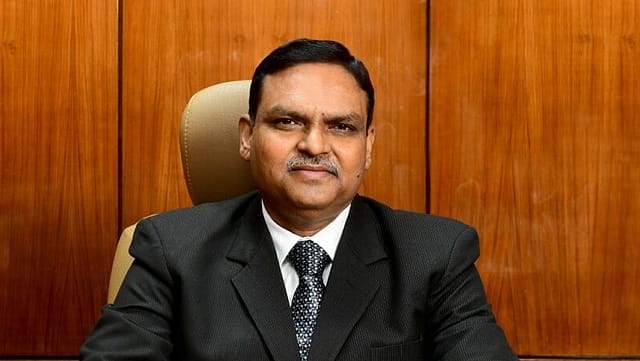
Even as the Central government is busy finalising and operationalising Free Trade Agreements (FTAs) with developed country partners, Indian dairy sector will continue to be excluded from such FTAs until the sector, which provides livelihood to more than eight crore families, becomes strong enough to face the global competition, says Meenesh Shah, Chairman, National Dairy Development Board (NDDB).
In an exclusive interaction with Fortune India, Shah said India has a small-scale holding farming system with families owning not more than 2-3 cows each. “Generally, they don’t get any subsidy. Now think of a country where each farm has 1000-1500 cows, the economy of scale it brings, and where everything is subsidised. Even if they are unable to milk the animal for a day, there is some subsidy provided by the government for not milking the cow. So we want more and more Indian farmers to build their assets, increase the number of cows, and be globally competitive first”, Shah said.
He also pointed out that as of now, India’s share in the global trade of milk and dairy products is insignificant as the country’s demand and production growth are happening at the same rate. “We don’t have any pressure (to export), so whatever we are producing, we are able to sell. In terms of pricing, you compare our milk price with any other commodity, the prices are reasonable. You compare our prices with milk prices in any country, our prices are reasonable. At the same time, the price which we pay to producer is highest”, he explains. “If that market is taken over by products coming from other countries, our producers will ultimately suffer. The government knows it is a real challenge. That is why we see dairy excluded in the FTAs”, he adds.
However, Shah supports competition among India’s State milk cooperatives within the domestic market. "There is no point in having monopolistic market now. When it was necessary, it was provided. We wanted quantity and we have achieved that. Now, in order to bring efficiency, in order to have quality, it is very important that the market is free; it is competitive, so that you are forced to be efficient”, he said. According to him, for efficiencies and for better products to the consumer, it is important to open up the sector. “Let the cooperatives also have a level playing field and compete with the private players. Players like Amul have already shown that we can compete with anybody”, he said.