
India’s airlines face ₹38,000 crore losses in FY27 as passenger traffic weakens, ATF costs rise
ADVERTISEMENT
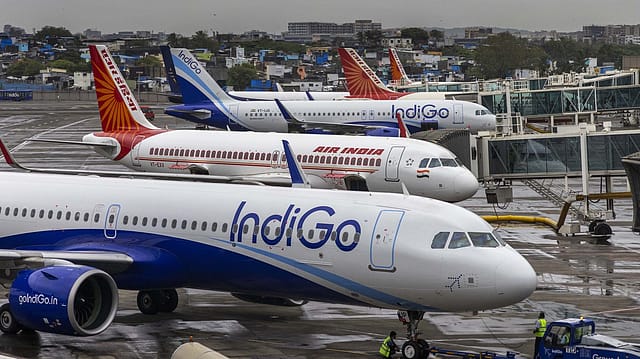
India’s aviation industry is staring at mounting financial pressure, with airlines expected to report net losses of ₹36,000-38,000 crore in FY2027, compared with estimated losses of ₹28,000-30,000 crore in FY2026, as elevated aviation turbine fuel (ATF) prices, rupee depreciation, and geopolitical disruptions weigh on profitability, according to a report by rating agency Icra.
The pressure is already visible in passenger traffic. Domestic air passenger traffic fell 6.5% year-on-year to 118.2 lakh in September 2026, from 126.4 lakh a year earlier. Traffic also declined 2.5% sequentially from 121.3 lakh in August, amid elevated airfares and subdued discretionary travel demand.
Airlines have responded by reducing capacity. Domestic capacity deployment in September was down 8.1% year-on-year and 4.5% month-on-month. Despite weaker demand, the passenger load factor (PLF), which measures the proportion of available seats occupied, remained relatively stable at 81.1%, compared with 81.4% in September 2025. It improved from 79% in August, reflecting the impact of capacity rationalisation.
Icra has maintained a negative outlook on the Indian aviation industry, citing rising fuel costs, the depreciation of the rupee against the dollar, and international airspace disruptions following the escalation of the West Asia conflict in late February 2026.
Domestic traffic growth to slow; international travel hit harder
Domestic air passenger traffic stood at 786.1 lakh in the first half of FY27, a decline of 1.9% year-on-year. This follows growth of 1.2% in FY26, when domestic traffic reached 1,674.2 lakh.
The agency expects domestic passenger traffic to grow 3-6% in FY27. However, international passenger traffic for Indian carriers is projected to decline 3-6% during the year, reflecting the impact of airspace restrictions, network disruptions and higher fares. International passenger traffic for Indian carriers fell 19.3% year-on-year in the first half of FY2027, despite having grown 3.9% to 350 lakh in FY26.
The outlook will depend on demand during the festive season and the trajectory of the geopolitical situation. Higher fares, driven by rising operating costs, could further dampen discretionary travel, particularly as inflationary pressures constrain household spending.
ATF prices jump 46.2% in October
Fuel costs are emerging as a major threat to airline profitability. ATF prices for domestic operations rose 13.2% month-on-month in October 2026, increasing by around ₹16,000 per kilolitre from September levels. Prices were 46.2% higher year-on-year. During the first half of FY2027, ATF prices increased 24.1% year-on-year.
Fuel accounts for 30-40% of airline operating expenses, while 35-50% of costs, including fuel, aircraft lease rentals and maintenance, are dollar-denominated. A weaker rupee therefore compounds the pressure from higher fuel prices, while foreign currency debt adds to the exposure of some airlines.
Airlines have begun passing on part of the increase through fuel surcharges. IndiGo revised surcharges on domestic and international bookings from October 6 while Air India, Air India Express, and Akasa Air introduced or revised surcharges for new bookings from October 9. Domestic surcharges range from ₹375 to ₹1,200 per ticket, depending on the route and distance, with higher charges on international routes.
Government relief offers limited respite
The government has introduced measures to ease liquidity and operating-cost pressures. In April 2026, the Ministry of Civil Aviation announced a 25% reduction in landing and parking charges for domestic airlines at major airports for three months. With the temporary relief having expired, airlines are once again bearing the full charges.
In May, the government approved the ₹5,000-crore Emergency Credit Line Guarantee Scheme (ECLGS) 5.0 for the aviation sector. Eligible scheduled passenger airlines can access additional credit with 90% guarantee coverage, subject to borrowing limits of up to 100% of peak working capital utilised in the fourth quarter of FY2026, capped at ₹1,500 crore per airline. The scheme offers a repayment tenure of up to seven years, including a two-year moratorium.
However, uptake remained moderate as of August 2026. Applications totalled ₹2,530 crore while sanctions and disbursements stood at ₹920 crore. SpiceJet had drawn ₹150 crore and was awaiting a further ₹350 crore while Akasa Air had received sanctions of ₹740 crore. Air India and IndiGo had not availed themselves of the scheme despite being eligible for up to ₹1,500 crore each.
The Federation of Indian Airlines has sought faster disbursement of sanctioned funds, a cost-plus pricing mechanism for ATF, replacement of the 11% ad valorem excise duty with a fixed-rate levy, rationalisation of state-level value-added tax (VAT) and an extension of airport-charge relief.
Maharashtra and Delhi had reduced VAT on ATF to 7% from 18% and 25%, respectively, for six months from May 2026. In October, Tamil Nadu cut VAT to 16% at Chennai airport and 1% at other airports in the state for November 2026-October 2027. Goa also reduced its VAT rate from 15% to 7%.
Aircraft groundings add to cost pressures
Supply-chain constraints and engine reliability issues involving Pratt & Whitney engines continue to affect fleet availability. Around 99 aircraft, accounting for 11-13% of the industry fleet, were grounded as of March 2026. The share subsequently increased to 19-20% by August amid continued engine-related issues and international capacity rationalisation following the West Asia conflict.
Grounded aircraft have forced airlines to rely on additional leased aircraft, including wet leases, often at higher rates and with lower fuel efficiency. These expenses have added to operating costs, although relatively healthy yields, high load factors, and partial compensation from engine manufacturers have provided some relief.