
IndiGo recovers only 60% of fuel cost surge, sees further pressure in Q3
ADVERTISEMENT
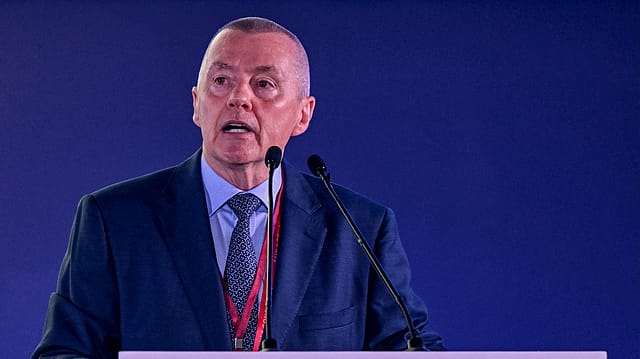
IndiGo has recovered only around 60% of the increase in fuel costs through fare increases and other measures, chief executive officer Willie Walsh said on Thursday, warning that the airline could face further cost pressure in the December quarter as fuel prices remain elevated.
The country's largest airline by market share reported a consolidated net loss of ₹1,879.1 crore for the July-September quarter of FY27, narrowing 27.2% from ₹2,582.1 crore in the year-ago period. However, the loss widened sharply from ₹238 crore in the preceding quarter.
“We estimate, similar to many airlines around the world, that we've recovered about 60%,” Walsh said during the post-results media interaction, referring to the increase in the airline's fuel bill. He attributed the pressure to higher crude oil prices and, more specifically, the elevated spread in jet fuel prices.
“We've not been able to offset that despite all of the actions taken by management during the quarter,” he said, adding that early indications suggested fuel costs could be higher in the third quarter. Walsh expects fuel prices to remain elevated through the rest of the year.
IndiGo's aircraft fuel expenses surged 67.2% year on year to ₹9,966.8 crore in the September quarter, outpacing the 25.9% growth in revenue from operations to ₹23,363.8 crore. Total expenses rose 18.6% to ₹26,188.4 crore.
Walsh said IndiGo would continue to balance fares and passenger load factors to maximise revenue. The airline had no choice but to raise fares to offset some of the increase in fuel costs, although it would seek to minimise the extent of fare increases, he said.
IndiGo expects low-single-digit capacity growth in Q3
IndiGo's available seat kilometres (ASK), a measure of passenger-carrying capacity, declined 1% year on year to 40.8 billion in the September quarter. Domestic capacity was broadly flat, Walsh said.
The airline expects capacity to grow by low single digits in the December quarter compared with the same period last year. Its passenger traffic, measured by revenue passenger kilometres (RPK), fell 3.7% to 32.8 billion, while the number of passengers carried declined 4.7% to 27.5 million.
IndiGo's yield, or revenue earned per passenger kilometre, rose 34.3% to ₹6.30. However, its passenger load factor declined 2.2 percentage points to 80.3%, indicating that a smaller proportion of available capacity was occupied.
Walsh said the airline would weigh fares against load factors as it navigates the elevated fuel-cost environment. He also said management would review network plans and capacity and take steps within its control to limit the impact of higher costs.
Underlying profitability remains under pressure
Despite the narrower reported net loss, IndiGo's results showed continued pressure on profitability after adjusting for foreign exchange movements.
The airline's net loss excluding forex stood at ₹723.7 crore, compared with a profit of ₹103.9 crore in the year-ago quarter. Earnings before interest, taxes, depreciation, amortisation and rentals (EBITDAR), excluding forex, declined 4.9% to ₹3,615.3 crore. The corresponding margin fell to 15.5% from 20.5%.
Reported EBITDAR more than doubled to ₹2,459.9 crore from ₹1,114.3 crore a year earlier, with the margin rising to 10.5% from 6%.
IndiGo reported a net foreign exchange loss of ₹1,333.2 crore during the quarter, down from ₹2,892.1 crore in the year-ago period. Walsh highlighted the airline's exposure to the US dollar, saying that 50-60% of its non-fuel costs were dollar-denominated.
The average rupee-dollar exchange rate for the quarter stood at ₹95.09, compared with ₹87.06 a year earlier, according to the company's investor presentation.
Walsh said IndiGo would continue to look for cost-saving opportunities but ruled out significant cost-cutting measures, citing the airline's relatively efficient cost base and strong liquidity. The airline is also continuing to invest in pilots and aircraft to support future growth.
IndiGo may reconsider fuel stabilisation scheme
IndiGo has not ruled out participating in the government's fuel price stabilisation scheme in the future, after opting out of the programme earlier this year.
“There is ongoing dialogue with the government,” Walsh said, crediting the government for exploring ways to minimise the impact of high and volatile fuel prices. He added that IndiGo would continue to monitor the scheme and could participate if appropriate.
The airline had earlier said it chose not to participate in the Price Stabilisation Fund scheme introduced by the Ministry of Petroleum and Natural Gas from June 9, 2026, and continued to use prevailing market prices under its contractual arrangements.
Walsh said the airline remained focused on managing near-term challenges while continuing to invest for growth. He said the long-term outlook for India's aviation market remained attractive and that the company would pursue prudent growth despite the current cost pressures.
Shares of InterGlobe Aviation Ltd ended 0.32% lower at ₹4,675 apiece on the NSE on Thursday. The stock has fallen nearly 20% over the past year, underperforming the benchmark Nifty 50, which declined close to 12% during the same period.