
Protein consumption, LPG access expose India’s rural-urban divide: SBI Research
ADVERTISEMENT
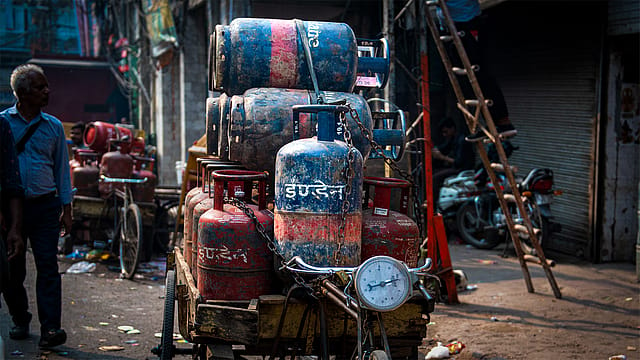
Food accounts for nearly one-third of household consumption expenditure in India, but significant interstate disparities in spending on protein-rich foods, access to clean cooking fuel and coverage under food-security schemes highlight the uneven nature of consumption patterns across the country, according to a report by SBI Research.
Food expenditure accounts for around 32.82% of total household consumption expenditure, reflecting the continued importance of basic consumption needs. Non-food items and services together account for nearly 67% of household spending, indicating a gradual diversification of consumption.
The report highlights considerable variations across states in household expenditure on selected protein-rich food items. Sikkim and Goa record the highest average expenditure on these items, followed by Haryana. Odisha, Chhattisgarh and West Bengal, on the other hand, report the lowest expenditure.
These differences could reflect variations in household purchasing power, food prices, and dietary preferences, pointing to uneven access to protein-rich food across states.
Gender differences in protein consumption patterns
The report also identifies gender-based variations in the prevalence of higher diversity across selected protein-rich food categories. Male observations record higher percentages than female observations in most of the states considered, with particularly wide gaps in Telangana, Odisha, Punjab, and Chhattisgarh.
Rajasthan records the lowest percentages for both groups, at 60.49% for males and 49.06% for females. In contrast, the gender gap is relatively narrow in Assam, Uttar Pradesh, and Gujarat.
The variations point to differences in household food preferences, affordability and access to a diverse range of food items.
Rural-urban divide in clean cooking fuel access
Access to LPG also varies considerably across states, with Goa and Punjab recording high adoption, followed by Andhra Pradesh, Karnataka, and Tamil Nadu. Usage remains relatively low in Odisha, Chhattisgarh, Jharkhand, Rajasthan, and Bihar.
The rural-urban divide is particularly pronounced in Jharkhand, where LPG usage stands at 17.2% in rural areas compared with 77.6% in urban areas. The corresponding figures are 15.3% and 81.3% in Chhattisgarh, 16.8% and 63.5% in Odisha, and 22.9% and 85.6% in Rajasthan.
Assam and West Bengal also report key disparities. Rural LPG usage stands at 36.3% in Assam and 20.5% in West Bengal, compared with 94.3% and 82.9%, respectively, in urban areas. The data highlight the uneven penetration of clean cooking fuel, particularly in rural eastern and central India.
Rural households account for larger share of PMGKAY beneficiaries
The report also points to significant rural-urban variations in coverage under the Pradhan Mantri Garib Kalyan Anna Yojana (PMGKAY), with rural coverage generally exceeding urban coverage across most states.
The disparity is particularly visible in Gujarat, where rural and urban coverage stands at 61.3% and 19.7%, respectively. Maharashtra records corresponding figures of 63.3% and 18.9%, while Rajasthan reports 66.5% and 26.4%, and Karnataka 71.1% and 34%.
Rural coverage is particularly high in Andhra Pradesh at 90.5%, followed by Telangana at 89.3% and Chhattisgarh at 87.1%. Coverage is comparatively lower in states such as Himachal Pradesh and Punjab. The findings highlight the geographical differences in food-security support, with rural households accounting for a larger share of reported beneficiaries in most states.