
Rolls-Royce, IIT Kanpur join hands to develop aircraft cabin noise reduction technologies
ADVERTISEMENT
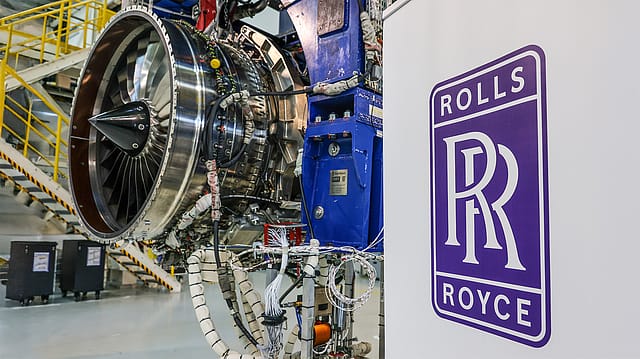
Rolls-Royce and the Indian Institute of Technology Kanpur (IIT Kanpur) have launched a joint research project to study engine vibration-related noise and explore ways to reduce noise levels inside aircraft cabins.
The six-month project will focus on understanding structure-borne noise arising from engine vibrations, a key factor influencing passenger comfort during flights. The research will involve validating a numerical methodology developed by Rolls-Royce through an experimental test-rig setup at IIT Kanpur.
The project was launched at IIT Kanpur in the presence of Prof. Abhay Karandikar, Member of NITI Aayog; Prof. Manindra Agrawal, Director, IIT Kanpur; Andy Rix, Associate Fellow, Rotor Dynamics, Rolls-Royce Plc; and Raghavendra Saroor, Programme Manager, Future Defence Programmes, Rolls-Royce, along with senior faculty members and company representatives.
Research to examine engine vibration and cabin acoustics
The research will follow a systems engineering approach and involve developing an experimental aircraft fuselage model designed as an integrated system of systems. The setup will simulate an aircraft in flight, with a vibration-inducing source representing an engine.
By combining a mechanical vibration source with an array of advanced acoustic and vibration sensors, researchers will study how structure-borne vibrations interact with cabin acoustics. The findings are expected to provide insights into vibration transmission and help inform future noise-reduction strategies.
Rolls-Royce engines, including the Trent XWB, incorporate advanced technologies and noise-reduction features designed to improve passenger comfort. The latest research initiative aims to deepen the understanding of engine vibrations and their impact on cabin noise.
Collaboration builds on earlier MoU
The research project follows a broader industry-academia partnership between Rolls-Royce India and IIT Kanpur, formalised through a memorandum of understanding (MoU) earlier this year. The agreement provides a framework for collaboration in research, joint projects, internships, knowledge exchange and skill development.
Sashi Mukundan, Executive Vice President, Rolls-Royce India, said collaborations with academic institutions play an important role in advancing research, developing skills and nurturing next-generation talent.
"We are happy to partner with IIT Kanpur in India, as such partnerships play an important role in strengthening a collaborative ecosystem for innovation, supporting India's ambitions in advanced engineering, research and manufacturing. The research initiative reinforces our long-term commitment to developing local capabilities and encouraging collaborative innovation," Mukundan said. He added that the company is also advancing internships and knowledge-sharing initiatives to equip students with hands-on experience in addressing real-world engineering challenges.
Project may lead to further research phases
Prof. Manindra Agrawal, Director, IIT Kanpur, said the project will combine numerical methodologies with experimental validation to investigate an important aspect of aircraft cabin comfort. "By establishing and using the experimental test rig at IIT Kanpur, the teams will work to generate reliable insights to inform further research into vibration transmission and noise-reduction strategies," he said.
Agrawal added that the collaboration would strengthen the institute's deep-tech ecosystem by connecting research capabilities with industry requirements and creating pathways for technology development and talent building. The initiative is being undertaken as the first phase of the research programme, with the potential for subsequent phases based on the findings.