
Vijay Singh produces letter detailing Jimmy Tata’s backing for Tata Sons listing, Chandra’s reappointment
ADVERTISEMENT
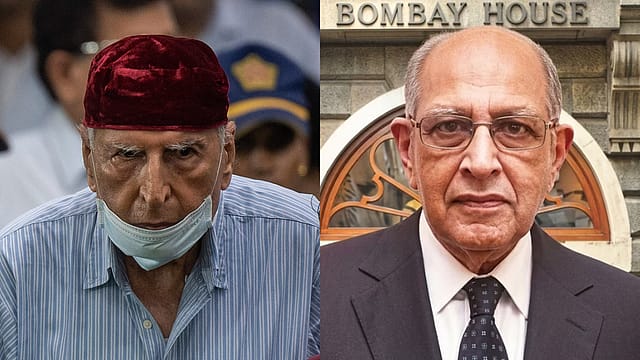
Former Tata Trusts trustee Vijay Singh has shared a signed letter from Jimmy N. Tata, which details a conversation between the two on November 10, 2026. In the letter, which Fortune India has accessed, Jimmy Tata has called for the Reserve Bank of India (RBI) to enforce strict timelines for the listing of Tata Sons, arguing that a public listing would bring greater transparency and accountability to the group. He has also alleged that recent changes in the composition and functioning of Tata Trusts have concentrated power in the hands of the current leadership, contrary to the original objectives of the trusts.
Jimmy Tata has also questioned the induction of multiple members of the same family into the trusts, saying the arrangement effectively conferred control over their substantial shareholding in Tata Sons without consideration. He described the developments as an attempt to secure control over Tata Sons that was never envisaged by the original trustees.
Recalling the origins of the Sir Ratan Tata Trust (SRTT) and the Sir Dorabji Tata Trust (SDTT), Jimmy Tata said the two trusts were established through the wills and deeds of Sir Ratan Tata and Sir Dorabji Tata, who had no children and bequeathed their wealth and properties for the benefit of the Indian people. Their objectives included alleviating poverty and safeguarding Indian culture.
"The trustees are accountable custodians, and both Mr. JRD Tata and Mr. Jimmy Tata's father, Mr. Naval Tata were deeply mindful of this responsibility," the letter says.
He said the trusts were public charitable institutions, and their trustees were custodians of public wealth, not owners of private family assets. Unlike private family trusts, they could not be dissolved, making it imperative for trustees to remain accountable to their original objectives.
Jimmy Tata questions changes to Tata Sons' Articles of Association
A key concern raised by Jimmy Tata was the amendments to Tata Sons' Articles of Association (AoA) around 2013-14. He argued that the changes fundamentally altered the governance structure that had existed before 1989, when the Articles maintained a clear separation between the welfare activities of the trusts and the commercial operations of Tata Sons.
According to him, the amendments granted the Tata Trusts chairman extensive veto powers and the authority to nominate directors, undermining the collective decision-making powers of the Tata Sons board. "The subsequent amendments fundamentally overturned this balance by granting the Tata Trust Chairman unnatural, dictatorial veto powers and the right to place directors, thereby subverting the collective authority of the rest of the board," the letter says.
Jimmy Tata also questioned the introduction of a four-year tenure limit for certain trustees while exempting others. He argued that the arrangement compromised trustee independence and could be used to marginalise or remove those who disagreed with the leadership.
Citing the cases of Venu Srinivasan and former trustee Vijay Singh, Jimmy alleged that dissenting trustees were being targeted. He said Srinivasan, whose term expires in December, faced the prospect of being removed after opposing the induction of Noel Tata's son into the Sir Ratan Tata Trust. He also referred to Singh's earlier removal, which he linked to the latter authoring a factual article.
Contrasting the present approach with the group's earlier governance practices, Jimmy Tata recalled the appointment of independent and eminent personalities such as Nani Palkhivala, Gautam Sarabhai, Homi Sethna and Homi Bhabha as trustees. He also invoked the leadership style of JRD Tata, who, he said, supported and nurtured high-performing executives such as Sumant Moolgaokar, Darbari Seth, Xerxes Desai, and Rusi Mody.
Backs Chandrasekaran, says Tata Sons listing essential
Jimmy Tata also expressed support for Tata Sons chairman N. Chandrasekaran, crediting him with turning around Tata companies that were burdened with significant debt and delivering record earnings and substantial dividend payouts. He pointed to dividend payouts exceeding 6,500% to shareholders, including Tata Sons, as evidence of the group's financial performance under Chandrasekaran.
He alleged that despite overwhelming support for Chandrasekaran, including a 4-1 vote at the Tata Sons board and a unanimous resolution by Tata Trusts, Noel Tata sought to block his continuation by invoking the veto provisions in the amended Articles of Association without offering any justification.
Against this backdrop, Jimmy Tata argued that listing Tata Sons, as mandated by the RBI, had become increasingly important. A public listing, he said, would bring the group under greater statutory scrutiny, dismantle what he described as a culture of secrecy and necessitate a review of the existing Articles of Association.
Jimmy Tata also called for a restoration of the governance framework that existed before 1989, which maintained a separation between the trusts' charitable objectives and Tata Sons' commercial operations.
He cited the listing of Tata Consultancy Services (TCS) under Ratan Tata as an example of how a public listing could benefit the group. He cautioned against any move to split Tata Sons into smaller entities to avoid meeting the RBI's listing threshold, arguing that such a step would undermine public and shareholder interests. He urged the RBI to prescribe and enforce a firm timeline for the listing and prevent any restructuring aimed at circumventing the requirement. He also called on the government and the Charity Commissioner to intervene to safeguard the original objectives of the Tata trusts, which, he said, were established for the benefit of the people of India.
Incidentally, the central bank has reiterated that Tata Sons must comply with the listing requirement applicable to upper layer non-banking financial companies (NBFCs) in a fresh communication to the Tata Group holding company dated November 16.