
We want to create 100 companies with revenues of at least ₹100 crore each: Anoop Ambika
ADVERTISEMENT
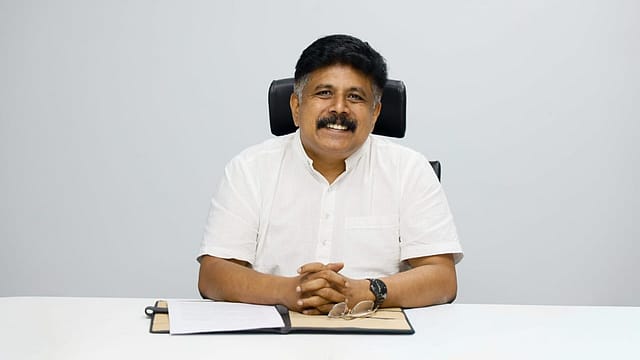
Anoop Ambika, CEO of Kerala Startup Mission since 2022, is stepping down this month after steering the organisation through a crucial growth phase that saw the state’s startup count cross 10,000. In a candid chat with Fortune India, Ambika reflects on the current state of Keralam’s startup ecosystem, its future potential, KSUM’s achievements and the challenges ahead. Edited excerpts:
How do you compare Keralam’s startup ecosystem with that of other states?
Unlike in many other States, people of Kerala were not dying to start a company until recent years. With the number of the State’s Startups crossing 10,000, we are beginning to get rid of that inertia. A social change is underway. Entrepreneurship is back. The next challenge is to scale up these startups. By 2030, we want to create 100 companies with revenues of at least ₹100 crore each, and showcase them as role models for the ecosystem.
How many startups are showing such great promise?
We have identified around 250 companies with significant growth potential. One of them is Netrasemi, a fabless semiconductor chip manufacturer that recently drew enthusiastic praise from Union Minister Ashwini Vaishnaw. I am confident that at least 100 of these companies among them will cross ₹100 crores in annual revenue within the next two years. We set 2030 as the target year simply to be on the safe side. It takes time for companies to scale, but we are in the cusp of that transformation.
Why should startups choose Keralam over the country’s more established startup hubs?
We have legacy advantages in several sectors. Take the space sector, for instance. The presence of the Vikram Sarabhai Space Centre (VSSC) of the Indian Space Research Organisation (ISRO) gives the State a distinct advantage in attracting space-startups. Similarly, startups in healthcare and lifesciences can leverage the excellent healthcare infrastructure available across Keralam – from Kasargod to Thiruvananthapuram – rather than being confined to a few pockets, as is the case in many other States. The presence of state-of-the-art medical facilities, advanced equipment and doctors who are adept at using the latest technologies offer startups an opportunity to access quality healthcare data, develop new models and test new med-tech devices. The third area is the creative economy. As people get more and more engaged with AI, the consumption of original content is going to increase and it applies to proposals, films, music, and even journalism. Keralam’s creative bend and its cultural activities will attract new ventures in this space.
New energy is another promising area, given the need to significantly reduce dependence on carbon fuels and explore alternative sources of energy. Technology interventions in food and agriculture are also among our focus areas.
What is the key challenge facing Startups today?
We need to support startups scale. The pipeline creation has already happened but scaling up is a different game altogether. Many companies are now trying to expand their operations and the biggest challenge they face is access to working capital.
A significant number of Keralam’s startups are in hardware or product manufacturing, and they require substantial working capital. Most of these companies do not have the assets to offer as collateral.
We have a programme that offers collateral free loans of up to ₹10 crores at 7% interest, against purchase orders from public or quasi government entities. That is the maximum they can get under the scheme. But some of these companies require ₹50 crore or even ₹100 crores. How do we facilitate that kind of funding? One possibility is an innovative debt instrument, under which a state financial institution absorbs the first loss of up to 10% of the loan amount. Banks may be willing to offer collateral free loans if the government provides that assurance and cushions them against the initial risk. I think it will be a fair proposition for banks, which also have their own mechanisms to assess the quality of the loans they give. The fact is this is not a problem confined to one State. It is an India-wide challenge.
What financial support does the state offer currently offer startups?
There is an innovation grant that supports startups at various stages of innovation, up to the point of product development. The maximum grant currently available is ₹15 lakhs, which is inadequate. We have proposed increasing it to ₹25 lakhs, and the government is seriously considering the proposal. KSUM also offers an R&D grant for startups, currently capped at ₹30 lakh. We have proposed raising this to ₹50 lakhs. Similarly, we offer seed loans of around ₹15 lakhs at an interest rate of 5-6%. We want to continue this support.
Is Startup Mission the single agency that provides policy inputs to the government based on stakeholder feedback?
Let me put it this way: if there is a nodal agency responsible for startup development, it should be the sole channel through which state government funds are routed to any mission promoting startups, whether it is an agri-mission or semiconductor mission or any other such initiative. This would ensure accountability. Ideally, at the national level, if the Department for Promotion of Industry and Internal Trade (DPIIT) is the nodal department for startups, it should administer all funds meant for startups, even when the initiatives are driven by other ministries. The same principle should apply to policy making. Every provision related to startups in any government policy should be vetted by the Startup Mission. Governments must be careful not to create silos.