
Why blockbuster Jio IPO has little impact on Mukesh Ambani’s wealth
ADVERTISEMENT
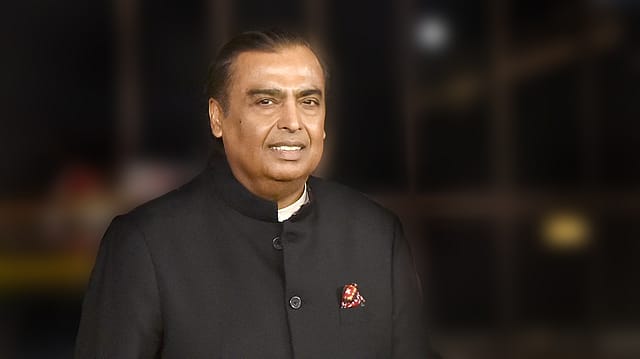
Jio Platforms Ltd (JPL) has made a blockbuster debut on the Indian stock market, emerging as the country’s second-most valuable listed company after its parent, Reliance Industries Ltd (RIL), on the listing day itself and the Mukesh Ambani-controlled RIL group has overtaken Tata group in aggregate market capitalisation. However, the listing has done little to bolster Ambani’s personal wealth. The reason is straightforward—the Ambani family does not own any stake in the telecom and digital giant directly or through the family trusts. Its exposure to Jio’s valuation is routed entirely through RIL.
The ownership structure also has implications for succession within the Ambani family. By keeping its interests in Jio through RIL, the family has consolidated its ownership in a single listed entity rather than distributing direct stakes across individual businesses. This could help preserve a common ownership framework for the next generation and maintain unity among them, even as the group expands into new businesses and brings in external investors.
For most Indian business families, an IPO is also a means of ensuring that the value created partly translates into family wealth. Promoter families such as the Adanis, Birlas and Bajajs have traditionally linked their personal wealth closely to their operating businesses through direct holdings and family investment vehicles. Globally, Elon Musk’s wealth, too, is closely tied to his equity stakes in companies he has built, and he emerged as the first trillionaire because of his stake in the recently listed SpaceX.
Mukesh Ambani, however, has taken a different route with JPL, keeping the family’s ownership concentrated in RIL, its parent company. The approach is not entirely unconventional. The Tata family, for instance, traditionally does not have a direct stake in the operating companies of the Tata group and has historically not invested directly in new businesses. Consequently, the Tata family does not feature in billionaire rankings.
RIL holds a 66.43% stake in JPL, while global technology giants Meta and Google own 9.99% and 7.73%, respectively. Private equity investors, including KKR, Silver Lake, General Atlantic and TPG, hold the remaining equity. The structure raises a pertinent question: why did the Ambani family choose not to own a direct stake in one of its most valuable and strategically important businesses?
Company sources suggest that the answer lies in the family’s approach to wealth creation. The priority, they say, is to build scalable businesses capable of attracting substantial risk capital. Bringing external investors into JPL allows the company to access capital and share the risks of expansion, while giving sector-focused strategic investors an opportunity to participate in its long-term growth.
"If a new venture fails, RIL has financial bandwidth to afford it," said an executive.
The arrangement also separates the operating business from its ultimate promoter. Rather than creating a separate ownership structure for JPL at the family level, RIL can develop its subsidiary’s digital business within the broader corporate framework. As JPL’s valuation rises, the value accrues to RIL and, through it, to the Ambani family.
The scale of that exposure is significant. The family holds a 50.44% stake in RIL, valued at approximately ₹7.85 lakh crore at the October 29, 2026, closing price. In early January, the holding was worth as much as ₹10.8 lakh crore, before declining by about 27.3% over the subsequent 10 months. The fall underscores how the family’s wealth remains tied to the market performance of its listed parent rather than the standalone valuations of individual subsidiaries.
A streamlined ownership structure is another consideration. A direct family holding in JPL could introduce an additional layer between the promoters, the parent company and the operating business. Keeping JPL under RIL gives investors a clearer view of the relationship between the two entities and their respective economic interests.
The structure has also enabled RIL, which has substantial cash flow from petroleum and petrochemicals business, to fund Jio’s capital-intensive expansion, particularly during its formative years. JPL is now better positioned to finance its own growth. It also plans to use the IPO proceeds to repay most of its debt soon.
The family’s ownership of Jio Financial Services Ltd (JFS), however, shows that the approach is not a blanket rejection of direct stakes in businesses. The Ambani family holds a 49.13% stake in JFS, valued at ₹67,148 crore. The stock has fallen 30% in 2026 so far, compared with a 12.28% decline in the Nifty, reflecting the volatility in the market value of the family’s listed holdings. In fact, JFL was part of RIL, but demerged later and promoters infused capital for picking up the stake. The group businesses Network18, Just Dial and Hathway Cable—which Reliance acquired directly—also have no meaningful direct holding by the Ambani family.
Succession could be another factor behind the JPL ownership structure, sources indicate. People familiar with the family’s thinking believe that concentrating ownership in RIL could help maintain unity among the next generation. Separate family stakes in individual businesses could eventually complicate succession if family members develop distinct interests in different assets. A common ownership vehicle, by contrast, preserves a shared ownership interest and may reduce the risk of competing claims over individual businesses, said sources.
JPL’s market debut has brought the value of the underlying business into sharper focus. The company’s final IPO issue price was ₹1,119 per share. Strong investor demand lifted its listing price to ₹1,358 on October 28, a premium of 21.36% over the issue price. The stock closed its second trading day at ₹1,421.60, giving JPL a market capitalisation of ₹13.09 lakh crore. The valuation provides investors with a more direct measure of Jio’s contribution to the RIL group, while allowing the parent to retain control and participate in the digital business’s growth.
The structure also gives the Ambanis room to incubate new businesses under the RIL umbrella. The group is developing Reliance Consumer Products, Reliance New Energy and Reliance Intelligence within the broader corporate framework, potentially creating new engines of growth without requiring separate direct family holdings in each business.
For the Ambanis, the underlying proposition is that RIL can serve as the principal vehicle for capital allocation, governance, long-term value creation and leadership succession, while subsidiaries attract external investors and establish their own market identities.