
Why is Swiggy holding back on dark stores as rivals expand?
ADVERTISEMENT
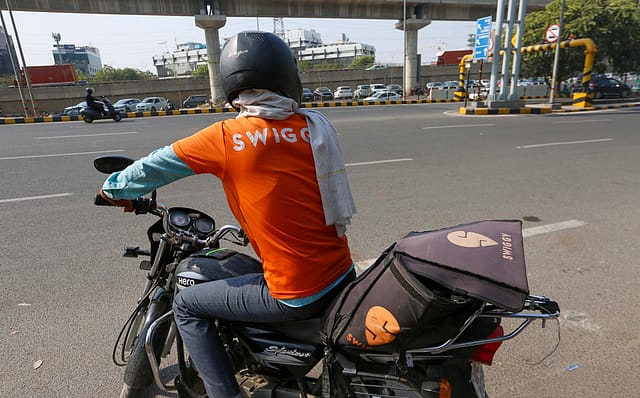
Swiggy is resisting an aggressive expansion of its quick commerce network, choosing to improve the productivity of existing dark stores rather than add capacity at the pace of rivals, even as the gap with market leader Blinkit remains a concern for investors.
During its Q2 FY27 earnings call, Swiggy said it had no immediate plans to expand its geographical footprint beyond the more than 130 cities where Instamart already operates. Instead, the company will add dark stores in neighbourhoods where existing facilities are approaching capacity, a strategy it believes will help improve utilisation and profitability without unnecessary capital expenditure.
The decision comes amid intensifying competition in quick commerce, with rivals expanding their networks and seeking to capture customers in new markets. An analyst from Bank of America questioned why Swiggy was not accelerating store additions despite having sufficient cash on its balance sheet, particularly when a competitor had outlined plans to expand its dark store network to 5,000.
Blinkit added 308 net stores in Q2 FY27, taking its network from 2,443 in June to 2,751 in September. It has raised its target to 3,500 stores by March 2027 and 5,000 by March 2028.
The August CLSA comparison covered the top 10 cities, where Blinkit had 969 stores, Zepto 828, Flipkart Minutes 627, and Instamart had 615.
Rahul Bothra, chief financial officer at Swiggy, said the company would continue to add stores where demand required additional capacity but did not see a need to substantially increase the pace of expansion.
“From a coverage standpoint in these cities, we are well covered,” Bothra said, adding that Instamart's existing network, comprising larger mega stores and regular hyperlocal stores, provided the assortment needed to support growth.
Productivity before expansion
Swiggy said orders per day per store increased by close to 10% sequentially in the September quarter, leaving room to grow without significantly accelerating store additions. The company typically initiates plans for a new store when an existing location crosses around 2,000 orders a day. By the time the new store becomes operational, usually within two to three months, the original location is doing roughly 2,300 to 2,500 orders daily.
Bothra said around 5% to 7% of the network approaches this capacity threshold each quarter, making additions a function of demand rather than a predetermined expansion target.
Instamart reported 13.4% quarter-on-quarter growth in net order value (NOV) in Q2 FY27, added 1.3 million monthly transacting users and recorded a 4% sequential improvement in retention and frequency metrics.
However, the strategy faces a competitive test. An analyst from CLSA pointed to a persistent gap of around 50% between Blinkit and Instamart in NOV per store. Swiggy's management said improving store productivity, increasing category penetration and building repeat usage would be its primary levers.
Instamart chief executive Nandita Sinha said nearly 20% of orders now come from differentiated assortment, including its private brands Noice and Nectr. One in eight orders is from Noice, which the company says helps improve retention.
The bigger question is whether these initiatives can close the productivity gap quickly enough. Swiggy's management has made it clear that establishing a business with a clear path to adjusted EBITDA breakeven takes priority over using its cash reserves to open new markets.