
Wyndham accelerates India expansion with Vienna House debut and 100-hotel milestone in sight
ADVERTISEMENT
Wyndham Hotels & Resorts is expanding its presence in India with the debut of Vienna House Easy, as the US-based hotel company targets the 100-hotel mark by the end of 2026 and continues to build its pipeline through a franchise-led strategy.
The company has 96 operational properties in India, including five in Udaipur, its largest city-level presence in the country. It expects to cross 100 hotels before the year-end, with more than 50 hotels in its development pipeline.
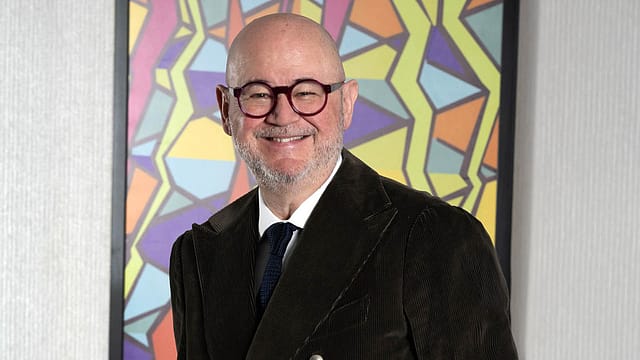
Dimitris Manikis, president and managing director, EMEA, Wyndham Hotels & Resorts, said the launch of Vienna House Easy reflects the company’s confidence in demand for hotels that offer design, service and value without being positioned at premium price points.
“Vienna House is a brand that India can have an amazing future with,” Manikis told Fortune India. “It is design-led, it resonates with a lot of young consumers, and it does not need a huge capex to develop.”
He said the brand can retain common features while allowing individual hotels to reflect their location and local character. Wyndham has opened its first Vienna House Easy property in Vrindavan, a religious destination that attracts both domestic and international visitors, and expects more signings as awareness of the brand grows.
Focus remains on value and smaller cities
Wyndham’s India strategy has been built around franchising, unlike several global peers that operate a mix of managed and franchised hotels. Manikis said this approach, alongside an early focus on Tier 2 and Tier 3 cities, has helped the company establish a footprint across 45 cities.
“Suddenly, with all the infrastructure development, the Tier 3 cities turned to be Tier 2 cities and the Tier 2 cities became Tier 1 cities,” he said. “We now have a presence in 45 cities across India.”
The company is also expanding its brand portfolio in the country, with Wyndham Grand and Wyndham Garden among the brands being introduced alongside Vienna House. Manikis said Wyndham would selectively pursue luxury and upper-upscale openings, but its principal opportunity remains in the midscale and economy segments.
“Premium experiences do not require paying premium price,” he said. “The majority of our business is where we believe the majority of the clients are sitting, and this is the midscale and the economy segment.”
That view is shaped by a shift in consumer spending after the post-pandemic surge in travel, according to Manikis. While demand for high-end stays rose after Covid-19, he said travellers are now becoming more cautious with discretionary spending and are seeking value across categories.
Wyndham’s scale gives it room to pursue that opportunity. The company has approximately 8,400 hotels across about 100 countries on six continents. In India, it says owner retention stands at 95%, while nine out of every 10 hotel signings have come from new ownership groups.
The group reported net revenues of $327 million for the second quarter ended June 30, 2026, compared with $316 million in the same period a year earlier. Its full-year 2025 revenue was about $1.43 billion, up 1.49% from 2024.
Manikis said Wyndham is not setting expansion targets merely for headline value. “We prefer to be very conservative, pragmatic and realistic,” he said. “Reaching the 100-hotel mark, plus 50 hotels in the pipeline and growing, means a lot. It is a great base to grow.”