
Cabinet clears ₹14,115-crore Kanpur-Kabrai highway, Delhi tunnel projects
ADVERTISEMENT
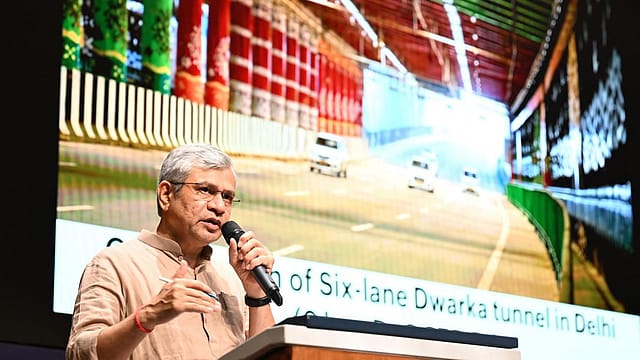
The Cabinet Committee on Economic Affairs (CCEA), chaired by Prime Minister Narendra Modi, on Wednesday approved two major National Highways Authority of India (NHAI) projects worth over ₹14,100 crore to strengthen road connectivity, improve logistics efficiency, and generate employment.
117.7-km access-controlled greenfield highway
The Cabinet approved the construction of a 117.7-km access-controlled greenfield highway between Kanpur and Kabrai at an estimated cost of ₹7,145.14 crore. The four-lane corridor, designed for future expansion to six lanes, will be developed under the National Highways (O) Programme on Build-Operate-Transfer (BOT-Toll) mode.
The project forms a key stretch of the proposed Bhopal-Kanpur Economic Corridor and is expected to significantly improve connectivity between industrial centres in Uttar Pradesh and the manufacturing, mining and agricultural regions of Madhya Pradesh.
Designed for speeds of 80-100 kmph, the highway will reduce travel time between Kanpur and Kabrai to around 1.5 hours from the current 3.5 hours. It will also improve connectivity with NH-34, NH-35, the Bundelkhand Expressway, Kanpur Ring Road and several state highways, while facilitating smoother movement of minerals, industrial goods, construction materials and agricultural produce.
Aligned with the PM GatiShakti National Master Plan, the corridor will provide better access to 16 economic nodes, 10 logistics hubs and nine social and tourism destinations across the region. The project is expected to generate nearly 1.2 crore person-days of direct and indirect employment during construction and is projected to handle about 18,069 passenger car units (PCUs) daily by FY28.
8.1-km six-lane road tunnel in Delhi
Separately, the Cabinet approved an ₹6,969.67-crore project to construct an 8.1-km six-lane road tunnel connecting the Dwarka Expressway with Nelson Mandela Marg in Delhi under the Hybrid Annuity Mode (HAM).
The project is aimed at easing congestion and providing faster connectivity between West and South Delhi, while also benefiting traffic from Gurugram, Dwarka, IGI Airport and West Delhi. The underground twin-tube tunnel will pass beneath the Southern Ridge forest, minimising environmental impact and surface disruption.
The tunnel originates from the Shivmurti interchange and terminates near Nelson Mandela Marg. The project also includes an elevated corridor, flyovers and a U-turn facility to improve traffic flow around Mahipalpur and Chhatarpur. It will integrate with the proposed elevated corridor between AIIMS and Mahipalpur, enhancing connectivity with East Delhi, Ghaziabad and Noida through the Barapullah elevated road.
According to the government, the Delhi project is expected to generate about 7.54 lakh person-days of direct employment and 9.8 lakh person-days of indirect employment, besides creating additional economic opportunities in the surrounding areas.