
India handling geopolitical challenges well; perceived as essential partner for future: Brad Staples
ADVERTISEMENT
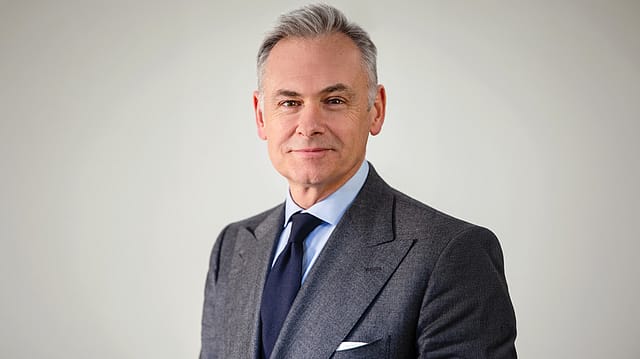
In a fragmented, polarized world, India is skillfully navigating relations with superpowers and with nine FTAs since 2021, it diversified trade effectively as a key mid-sized power and essential partner, says Apco CEO Brad Staples. In an exclusive conversation with Fortune India, Brad stresses that such multi-layered strategies remain vital for energy security and transitions.
Question: The global trade order, including trade, and tariff scenario, is in complete contrast of what it used to be? Economies are turning inwards, wars are the new normal, tariffs have been weaponised and multilateral agencies have lost their relevance. So where is the world order really headed and how does one navigate it?
Brad Staples: We're in a much more fragmented, polarized world. For any major economy that's looking to navigate its relationship with the two superpowers now -- even if I still believe that we are in more of a multipolar world -- is complicated. And the choices you make elsewhere have an impact on how those relationships are going to develop because politics, trade and diplomacy are all interwoven.
So, India's decision to capitalize on available Russian oil to underpin its economic growth is essential way of complementing limited domestic energy resources. The country is essentially dependent on imports for energy needs, and the country is not naive in any way, in any context. It's very clear that making a choice to get oil products from Russia when it is engaged in a war in Europe will have consequences.
And we've got a leadership in the White House that looks at a very purposeful, transactional way of securing outcomes and ways of applying pressure to achieve a particular objective. Other parts of the world and other countries are also facing similar challenges.
Q. In this context, trade diversification thought FTAs and expanding energy basket been the key strategies to handle tariff onslaught the geopolitical turmoil? How do you see India’s handling of the situation?
I think India is navigating this moment pretty well. I mean, this country has had nine Free Trade Agreements since 2021. So, within a very short period of time, trade agreements have been finalised with its biggest trading partners in the world and some of the fastest growing emerging economies.
And that's very impressive. If we accept that mid-sized powers are now having a greater say and being more diversified in the way that they approach economic opportunity, political relationships, and security relationships, I think India is probably the exemplar of that. That’s happening because it is a combination of an emerging superpower and an emerging nation.
It seems to navigate these scenarios pretty well and choose these relationships quite carefully. India is perceived in the U.S., Europe, and China as an essential partner for the future. It cannot be ignored anymore by anybody in any way. It is doing well on every fronts.
In your view how sustainable these strategies would be?
It was always possible to have bilateral, mini-lateral and multilateral trade relationships. More than it being sustainable I think, it's probably essential. Because if you want to secure outcomes to enable a transition to renewable energy whilst recognizing that there's a continued dependency on mineral resources for essential energy needs (coal or oil and gas) then one needs different kinds of relationships for those.
When you think of some of these new markets or some of the challenges that we face with food scarcity and climate change, then this country needs to use all the tools in the toolbox so whether.
What should be India's tool kit for China? And what leverages does the EU FTA bring for India?
Trading relationship with China is for essential components and raw materials and other things to drive the Indian economy. Recognizing that ideologically and values wise these are two very very different countries but there's a need for a constructive relationship.
With the EU deal we've got two similar dynamics where um both could thrive and grow. And if there are more challenges from time to time with the U.S. relationship, then it's a wonderful hedge against that.
What are strategic leverages India holds?
India is very capable because it has scale and it has a rising demography on its side. It has a rising middle class, and it has a consumer base of the future.
So, coming to the global trade order, what is your view on the trade, emerging trade scenario? Economies are turning. The multilateral agencies are losing their relevance. So where is the world trade order really headed? And is globalization a thing of the past?
Multilateral world order as defined by the Western -- the victors of the second world war -- is not the framework for the future. The framework for the future is much more opportunistic, much more transactional. It possibly allows scope for more diversification and optionality, right? It will take really purposeful politics and supportive diplomacy to navigate that and because we won't just have these institutions or frameworks upon which we can rely for the future.
But it doesn't necessarily mean that global trade in volume terms will come down. If you look at the scale of global trade, it's been growing even through this turbulence.
How should India strive for a balance?
India has one advantage which other countries do not have. That is a coherent relationship between government, business, and diplomacy. One gets a sense from outside that the objectives and goals and ambitions of big business leaders and the government's ambition are very often aligned, and diplomacy and regulators fall in line behind that. You don't see that synchronicity in other places.
And this is not an autocracy. This is probably one of the most vibrant, and flourishing democracies anywhere in the world.