
India needs unified aerospace ecosystem to achieve self-reliance: IAF’s Air Marshal Sanjiv Ghuratia
ADVERTISEMENT
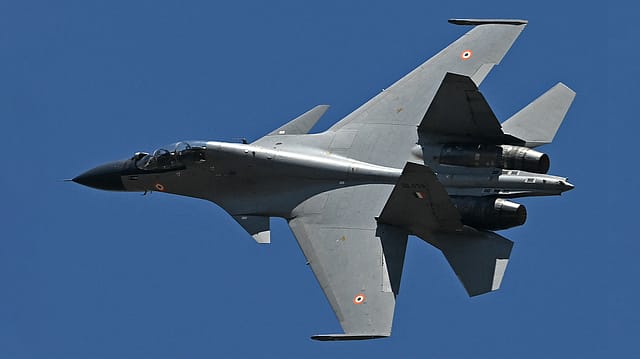
Stressing the need for greater collaboration to strengthen India's indigenous aerospace capabilities, Air Marshal Sanjiv Ghuratia, Officer-in-Charge (Maintenance), Indian Air Force, on Thursday said the country's vision of self-reliance in defence can only be achieved through coordinated efforts involving the armed forces, defence industry, research organisations, academia and certification agencies.
Addressing a workshop jointly organised by the Indian Air Force and the Society of Indian Defence Manufacturers (SIDM), Ghuratia said India's future aerospace capability cannot be built by individual organisations working in isolation, but requires knowledge sharing, trust and a shared national vision.
He thanked the Minister of State for Defence for supporting initiatives aimed at building a robust indigenous defence manufacturing ecosystem, saying such efforts are helping translate the vision of Aatmanirbhar Bharat into operational capabilities.
Speaking on the seminar's theme, 'Sankalp', Ghuratia said the word symbolises determination and a collective commitment towards self-reliance, indigenous development and knowledge-based partnerships, which would form the foundation of India's future aerospace growth.
He said self-reliance in defence cannot be achieved without indigenous technology development, while such innovation depends on strong partnerships between industry, academia, research institutions, certification bodies and the armed forces.
Highlighting the rapidly evolving nature of warfare, Ghuratia said emerging technologies such as artificial intelligence, predictive maintenance, quantum technologies and cyber resilience are already shaping modern military capabilities. He cautioned that dependence on external supply chains for critical defence technologies poses a strategic risk, making self-reliance in aerospace a national security imperative rather than merely a developmental objective.
Referring to the teachings of the Shrimad Bhagavad Gita, he said excellence in duty remains a guiding principle and, for the Indian Air Force, this is reflected through operational readiness, engineering accuracy and continuous innovation.
While acknowledging the significant progress made by India's defence manufacturing sector over the past decade, Ghuratia said achieving complete technological independence remains a challenge.
"Strategic capability cannot always be measured through conventional commercial parameters. Certain technologies must be developed because they are essential for national security and not only because of market demand," he said.
He added that global aerospace advancements have demonstrated that major technological breakthroughs emerge when governments, defence forces, industry and research institutions work together with a common strategic objective. India, he said, already possesses the key building blocks of a strong indigenous defence ecosystem, and the next challenge is to integrate these capabilities into a unified framework to achieve technological sovereignty.