
India's import duty three times that of China, impacting export growth, says report
ADVERTISEMENT
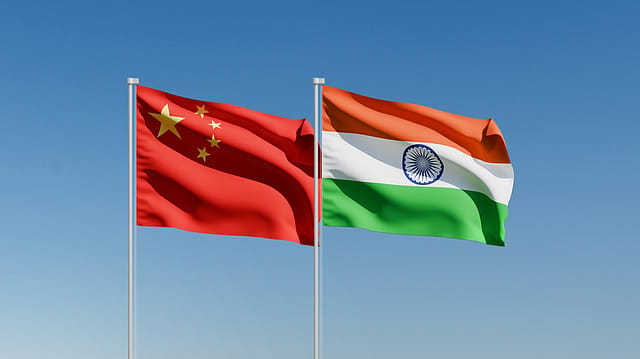
India’s high import duties on industrial inputs and raw materials are impacting the country’s export competitiveness and holding back its manufacturing and export ambitions and job creation plans, says a new report on industrial tariff policy released by Delhi based Foundation for Economic Development (FED).
According to the report, India's average effective import duty on non-agricultural sectors is 10.8% - nearly three times that of China (3.7%) and Vietnam (3.5%) - raising costs for Indian factories and holding back the export growth the country needs to create jobs.
“India’s average tariff on manufacturing inputs is 6.8%, twice China's 3.3% and nearly four times Vietnam's 1.8%. Only 25% of India's imports enter at a duty of 2.5% or less, against 79% for China and 81% for Vietnam. Worse, India’s tariff regime is also very complex, with 44 different effective rates, resulting in disputes, delays, and uncertainties”, the report says. It points out that India’s most liberal 70% of imports span 12 different rates (from 0-8.25%), while China needs just one (0) and Vietnam four (0-3%). About 60% of disputes at the customs level are classification-related, and nine out of ten times, such disputes that reach appellate bodies or courts are ruled in favour of the industry, the report notes.
“Every tariff on an input is an added cost and barrier for an Indian factory trying to sell to the world. A simpler, lower tariff regime is the most direct lever we have to create the 80 lakh jobs India needs every year," Rahul Ahluwalia, founder and managing partner, FED, said.
Incidentally, the report suggests that case-by-case duty exemptions often create duty inversions, where inputs are taxed more than the finished goods they go into, while trade schemes such as SEZs, MOOWR or advance authorisation account for very few of India’s exports, because they offer only partial relief and each has its own Achilles heel.
“All these input barriers add up to very real and harmful costs for Indian industry. In electronics, engineering goods, and apparel, which together account for $ 10.5 trillion of global trade, Indian goods cost 5 to 15% more to make than those from China and Vietnam, and input costs alone account for 60 to 77% of that gap. If India matched Vietnam's export share in just these three sectors, it could create about 53 lakh additional direct jobs”, the report says.
The report shows that between 2022 and 2026, as India cut import duties across the mobile phone value chain, its mobile phone exports grew about seven-fold, from $ 4.4 billion to $ 29.4 billion, and employment in the sector more than tripled. The country’s longer history also validates this trend: since tariffs began falling in 1991, Indian manufacturing has grown seven times larger, it said.
FED calls for reducing and rationalizing tariffs and advocates the following principles: First, it should be designed to enable export competitiveness, with low and stable rates, and as many inputs at the zero-tariff rate as possible. Second, simplicity should be a key regulatory objective, with fewer rates and less variation within closely related product categories.
To achieve the goal of Viksit Bharat, India needs to grow at over 8% and create 80 lakh additional jobs every year. The report, titled 'Cheaper Inputs, More Jobs: The case for low and simple import tariffs,' estimates that to achieve this, India requires manufacturing exports to grow at more than 10% a year, nearly double today's rate (5.4%).