
India's manufacturing PMI eases to 54.7 in October as output, new orders growth moderates
ADVERTISEMENT
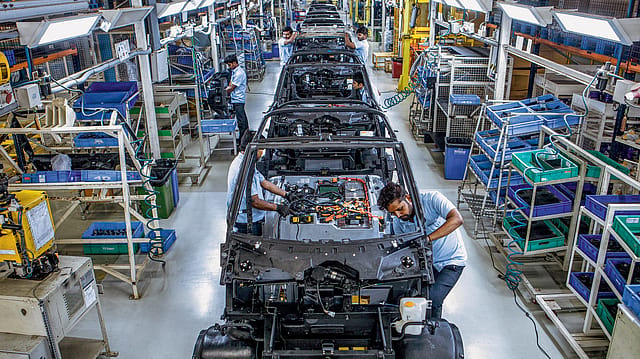
India's manufacturing activity continued to expand in October, but the pace of growth moderated as output and new orders increased at a slower rate. The seasonally adjusted HSBC India Manufacturing Purchasing Managers' Index (PMI) slipped to 54.7 in October from 55.1 in September, according to a monthly survey released on Monday.
Despite the decline, the index remained comfortably above the neutral mark of 50 and its long-run average, signalling sustained expansion in the manufacturing sector.
A PMI reading above 50 indicates expansion, while a reading below that level signals contraction. The moderation in the headline index came even as demand conditions remained strong. New business continued to rise sharply, although growth eased marginally from September's seven-month high. The pace of expansion remained robust by historical standards, reflecting sustained demand for Indian manufactured goods.
"India's manufacturing PMI softened to 54.7 in October from 55.1 in the previous month, but remained firmly in expansionary territory and above its long-run average," said Pranjul Bhandari, Chief India Economist at HSBC.
Export demand strengthens
International demand provided a key source of support for the manufacturing sector. Growth in new export orders accelerated to a six-month high, helping sustain a robust increase in output.
Manufacturers reported higher orders from a broad range of markets, including Bangladesh, Canada, Indonesia, Nepal, Oman, Saudi Arabia, Sri Lanka, the UK, the US, and the UAE.
Bhandari said strong international demand had supported output growth, while manufacturers increased their input inventories at the fastest pace in eight months. The inventory build-up reflected efforts by companies to create precautionary buffers against potential supply shortages and meet rising production requirements amid global uncertainty.
On the employment front, higher production requirements and rising workloads prompted manufacturers to increase factory hiring for the second consecutive month. However, the pace of job creation moderated in October, indicating a relatively subdued improvement in employment.
Business confidence weakens, cost pressures ease
Despite continued growth in demand and production, manufacturers turned less optimistic about the year ahead. Business confidence declined from September and remained below its long-run average.
Only around 18% of surveyed manufacturers expected output to increase over the next 12 months, while the remaining respondents were neutral about the outlook.
Meanwhile, cost pressures eased across all three broad categories of India's manufacturing industry tracked by the survey. Although some manufacturers reported higher prices for raw materials and energy, the overall rate of input cost inflation fell to its lowest level since February.
The moderation in input costs also helped contain selling price pressures. "Although some material and energy costs increased, overall input and output price pressures eased slightly from the previous month," Bhandari added.
The HSBC India Manufacturing PMI is compiled by S&P Global based on responses to questionnaires sent to purchasing managers at a panel of around 400 manufacturers.