
PM Modi highlights export potential of local products, ₹28 crore Khadi sales and 50 crore e-Sanjeevani consultations
ADVERTISEMENT
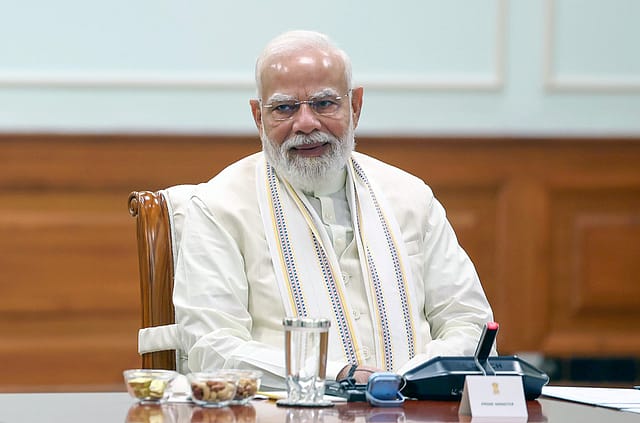
Prime Minister Narendra Modi on Sunday highlighted the growing export potential of India's local products, the rising popularity of Khadi and the expanding reach of digital healthcare, underscoring how traditional industries and technology-led innovation are creating new economic opportunities. Addressing the 139th episode of Mann Ki Baat on October 25, Modi cited several initiatives spanning agriculture, handicrafts, healthcare and deep technology to illustrate the potential of local enterprises and community-led development.
The Prime Minister said sales of Khadi Gram Udyog products exceeded ₹28 crore on Gandhi Jayanti this year, an increase of ₹1.5 crore over the previous year. He urged consumers to prioritise locally made products during the festive season, arguing that stronger domestic demand could accelerate the government's Vocal for Local and Atmanirbhar Bharat initiatives.
Local products find overseas markets
Modi cited makhana from Purnia in Bihar reaching Greece and arhar dal from Kalaburagi in Karnataka being exported to the Maldives as examples of Indian agricultural products accessing international markets. He also highlighted the importance of packaging in improving product appeal and marketability.
In Maharashtra, the Shabari Naturals initiative is marketing products such as honey, mahua, chironji and bamboo-based goods in packaging inspired by tribal art. The packaging has received Japan's Good Design Award, according to the Prime Minister. Separately, a Karnataka-based start-up is developing packaging materials using bamboo and agricultural residue.
In Punjab's Malwa region, the Kheti Virasat Mission's Nav-Trinjan initiative promotes chemical-free organic cotton, including naturally coloured varieties. Its weaving school has trained women in handloom production, helping former agricultural labourers and domestic workers develop skills to produce shawls, towels and other textiles.
Digital healthcare reaches remote regions
The Prime Minister said the e-Sanjeevani telemedicine platform had facilitated approximately 50 crore teleconsultations. He also highlighted the role of nearly 1.9 lakh Ayushman Arogya Mandirs in expanding access to healthcare, particularly in rural areas.
Examples from the Andaman and Nicobar Islands, Lakshadweep, Ladakh and Nagaland illustrated how remote consultations helped local medical teams access specialist expertise.
Deep-tech start-ups explore new applications
Modi highlighted research at the Sudha Gopalakrishnan Brain Centre at IIT Madras, which aims to create high-resolution digital 3D images of 100 human brains using the Param Shakti supercomputer. The resulting data will be made available as an open-source resource for researchers.
He also cited start-ups working on gold-quality verification, recovery of funds lost to bank fraud, AI-assisted cervical cancer screening, flying electric vehicles, fast-charging batteries for drones and EVs, and AI applications in defence.
The address also highlighted millet-based entrepreneurship in Meghalaya and Nagaland, where value-added products such as cookies, cakes, muffins and baby food are helping revive cultivation and generate fresh demand for traditional crops.