
Interest rates: Brace for more impact as 6% repo rate in sight by December, say reports
ADVERTISEMENT
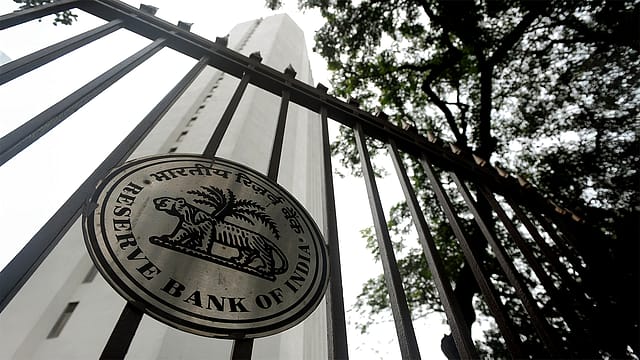
The Reserve Bank of India’s (RBI) latest monetary policy marks a decisive shift from watchfulness to explicit tightening, with SBI Research expecting the repo rate to rise to 6% by December. The research house has called for a possible 50-basis-point rate hike in the next policy review, or even an off-cycle move if global conditions deteriorate sharply.
The RBI’s Monetary Policy Committee (MPC) on Wednesday unanimously raised the repo rate by 25 basis points to 5.50%, its first rate hike in about four years. It also shifted its policy stance from neutral to calibrated tightening, although two external members voted to retain the neutral stance.
Governor Sanjay Malhotra said rate cuts were off the table in the near term, effectively leaving the MPC with two options, another rate hike or a pause, depending on the evolution of inflation and growth.
Inflation concerns put rate hikes back on the table
SBI Research said the October policy communication represented a transition from “watchfulness to explicit tightening”, with the Governor’s statement and the MPC resolution showing greater convergence in their hawkishness than in the previous policy cycle.
The RBI raised its FY27 real GDP growth forecast by 40 basis points to 7.1% while increasing its CPI inflation projection by 20 basis points to 5.2%. It expects inflation at 4.9% in Q2, 6% in Q3 and 5.7% in Q4. SBI Research expects Q2FY27 GDP growth to touch 7.5%.
The research house said the combination of an upward revision to growth and a firmer inflation outlook points to “controlled tightening” rather than a panic response.
SBI Research expects inflation to peak at around 6.8% in November 2026. Based on historical RBI rate cycles, it estimates that a peak repo rate of around 6% could be warranted, implying another 50 basis points of cumulative tightening from the current 5.50%.
“Given the steepening inflation trajectory currently underway, we believe that the December policy cycle could deliver a 50 bps rate hike depending on global conditions,” SBI Research said.
Standard Chartered, meanwhile, said the RBI’s shift to calibrated tightening and its firmer inflation assessment were more hawkish than expected. It now expects a 25-basis-point hike in December, followed by further 25-basis-point increases in February and April, taking the repo rate to 6.25% by end-April 2027.
Rupee weakness adds another policy challenge
SBI Research said the RBI also needs to focus on measures to support the rupee, which fell to a five-month low amid stronger dollar conditions and foreign capital outflows. Debt outflows stood at $2.1 billion in September, it said.
The research house proposed a series of measures, including incentives for longer-term equity capital, a temporary widening of the effective interest-rate corridor through a higher marginal standing facility (MSF) rate, and continued use of open market operations and variable-rate repo operations for liquidity management instead of relying on the cash reserve ratio.
It also called for reducing the standard export realisation and repatriation period for foreign currency proceeds from nine months to six months, with longer periods allowed only on a case-by-case basis.
SBI Research further said India needs a clear artificial intelligence policy to facilitate capital flows, arguing that policy certainty would be important as global investors reassess emerging markets.
“An agile and tactile response” on the rate front may be required, it said, adding that a jumbo hike could be warranted at the next scheduled policy review—or through an off-cycle move if external risks intensify.
The RBI also announced interoperability among NBFC-account aggregators and decided to include bank deposit account information in consolidated account statements through the account aggregator framework. It also proposed a Financial Market Consultative Committee to facilitate structured engagement with market participants on money, government securities, foreign exchange and related derivatives markets.