
Couture in close focus
ADVERTISEMENT
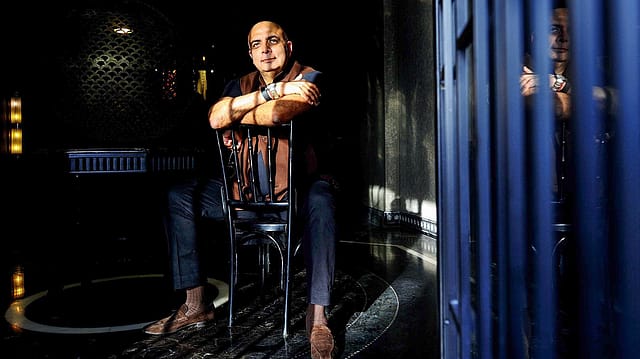
Indian fashion designer Tarun Tahiliani took a different approach to the traditional fashion show at Bikaner House in New Delhi, presenting Bespoke Couture 2026 as an immersive experience that brought audiences closer to the craftsmanship behind Indian couture.
Presented recently as part of Hyundai India Couture Week, the presentation moved beyond the conventional runway format, transforming the historic venue into a journey through the design philosophy and craftsmanship of the Tarun Tahiliani atelier. Instead of experiencing the clothes only as they passed down a runway, guests were encouraged to slow down and examine the construction, embroidery and textile development that went into each creation.

The experience began in the ballroom, where 20 models dressed in conceptual couture explored a new interpretation of the human form through ‘Ang,’ the Hindi word for “body”. Sculpted bodices traced the contours of the body, revealing the collarbones, shoulder blades, navel and subtle definition of the torso. Drawing from the technical precision of European corsetry and tailoring, the silhouettes remained firmly rooted in Indian aesthetics and celebrated the natural proportions of the Indian body.
Despite their sculptural construction, the bodices retained softness and flexibility, allowing freedom of movement. Layers of padding, hand construction and precise tailoring created the structure, while Tahiliani's signature drapes flowed naturally from the sculpted forms. The result was a study in contrasts -- structure and fluidity, precision and ease, European technique and Indian sensibility.
Beyond the live presentation, Bikaner House became an extension of the atelier. Guests moved through spaces that revealed the making of couture, beginning with corset toiles before progressing through installations dedicated to florals and technology. A technology-led corridor reinterpreted the rhythm of a runway through digital interventions, while an immersive room juxtaposed a temple-inspired garment with digital projections.
The house's enduring relationship with the architectural language of the jali was explored through chikankari, zardozi and intricate threadwork. Other spaces celebrated India's diverse textile heritage through Ajrakh, Kashidakari and resham chikankari.
The journey continued to the first floor, where the presentation explored different facets of Tahiliani's design vocabulary, from feminine expressions inspired by the nautch girls to contemporary bridalwear in red and the evolving language of Tarun Tahiliani menswear. Each space offered another perspective on the relationship between traditional craftsmanship and contemporary design.
Technology played a significant role throughout the experience, but remained secondary to the craft itself. Immersive projections, digital scenography and multimedia interventions created new environments through which the garments could be experienced, reinforcing Tahiliani's India Modern philosophy of allowing Indian craftsmanship to evolve through innovation.
“For years, the runway has been the natural home of couture, but I've often felt its finest details disappear in motion. With Bespoke Couture 2026, we wanted people to come closer, to slow down, and to experience the craftsmanship behind every garment,” Tahiliani said. “The techniques that define our atelier are centuries old, but the way we present them should continue to evolve. Technology isn't here to replace craftsmanship, but to honour it, amplify it and bring people closer to it. That, to me, is India Modern.”
With Bespoke Couture 2026, Tahiliani offered a considered alternative to the fleeting nature of the runway. After more than three decades of redefining Indian occasion dressing through craftsmanship and understated sophistication, the designer presented couture as something to be experienced at close quarters -- where construction, textile, embroidery and innovation were given as much attention as the finished silhouette itself.