
Fortune India Luxury Summit: Indian labels look beyond global visibility to build lasting brands
ADVERTISEMENT
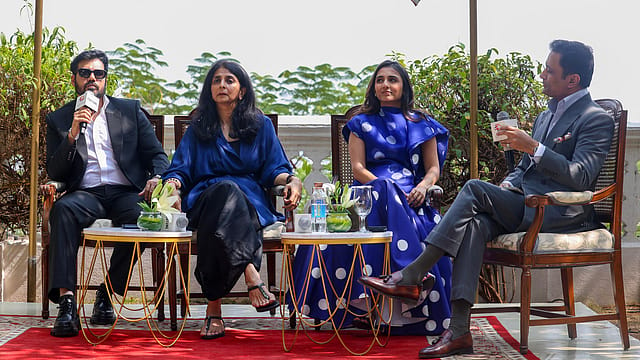
Indian labels need to look beyond international visibility and focus on building strong businesses at home if they are to become lasting global brands, experts said at the Fortune India Business of Luxury Summit 2026.
The discussion brought together Shane Peacock, co-founder and creative director of Falguni Shane Peacock; Tina Tahiliani Parikh, director of Ensemble; and Masoom Minawala, founder of MSF Ventures, creator and podcaster. The panel was moderated by Arvind Vijaymohan, CEO of Artery India.
“Because internationally can give you visibility, but India can give you that scale,” Peacock said, looking back at the label's journey from India Fashion Week to London and New York Fashion Weeks.
Opening the panel, Vijaymohan recalled being told early in his career that “luxury resides not merely in that which is expensive, but that which is irreplaceable”. The challenge for India, he said, was to create brands that do not merely participate in the global luxury conversation, but “actually set the tone for the world to follow”.
Global visibility, domestic scale
Peacock's experience illustrates the trade-offs involved. After the brand's first show at India Fashion Week in 2006, it received orders from international retailer Aritzia, followed by other overseas stores. The label went on to show eight seasons at London Fashion Week and 12 at New York Fashion Week.
But international buyers were not looking for Indian designers to reproduce trends already available elsewhere. One buyer told Peacock: “What we're looking out for is something that is different from you, something that the customers cannot find, and something that's really unique that stands out.”
A question after the label's Fall/Winter show in New York in 2015 prompted another rethink: “You're doing so much internationally. Are you big enough back home?” Peacock said he and Falguni then took a conscious decision to stop showing internationally and focus on the Indian calendar. The label showed at India Couture Week in 2018 and began building its Indian presence.
For Masoom Minawala, the domestic market should be the starting point for brands with global ambitions. “You need to have your grounding before you want that global stage,” she said, arguing that operating in India tests a business and prepares it for international markets.
From supplier to global brand
India's larger challenge, Minawala said, is converting its craft advantage into brand value. “India has become the supplier of luxury. India has become the Atelier and not the Maison.” While Indian craftsmanship has a history spanning more than a thousand years, brands have not told that story well enough, she said.
“Handmade in India is not a sales strategy or it's not a marketing strategy. It's genuinely the way things are done,” Minawala said.
Tina Tahiliani Parikh brought the discussion back to the discipline required to build a label that lasts. She said Ensemble looks for an original voice, quality, commitment and consistency, alongside the ability to evolve. “I've seen too many fly-by-night, one fabulous collection wonders,” she said. Parikh added that resilience, access to finance and an understanding of one's strengths and weaknesses are also critical.
Building a brand beyond social media
The panellists also considered how brands should use social media. Minawala called Instagram the most effective starting platform for reaching customers, but Peacock cautioned against building a brand around it.
“I would definitely build my brand first and then take it to Instagram,” he said. “You need to build it for legacy.”
Minawala said the two approaches were complementary: brands should build for the long term while using content to tell their stories. Asked by Vijaymohan whether Indian brands going global should lead with their roots, she had a clear answer: “Lead with its Indianness.”