
How Amrapali Jewels Group turned heritage into a scalable brand

This story belongs to the Fortune India Magazine August 2026 issue.
ADVERTISEMENT
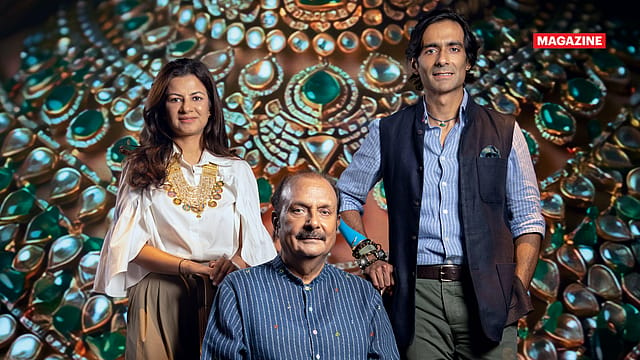
HIDDEN BEHIND AN unassuming façade in C-Scheme — an upscale, centrally located neighbourhood in Jaipur — the one-of-a-kind museum feels less like a jewellery exhibition and more like a carefully preserved archive of the Indian subcontinent. Glass cases hold centuries-old silver anklets worn by nomadic tribes, elaborate bridal necklaces that once travelled through royal households, thick ivory bangles, ritual ornaments, temple jewellery, headpieces, waist belts and everyday adornments that have quietly disappeared from modern wardrobes, thanks to the recent trend of more minimalism and less affordability.
Opened in 2018, the museum houses thousands of traditional ornaments collected by Amrapali founders Rajiv Arora and Rajesh Ajmera over decades of travelling across India. This one is not a company museum in the conventional sense — there are no timelines celebrating business milestones or showcases dedicated to the brand’s bestsellers. Instead, it documents India’s jewellery traditions, region by region and community by community, making visible an extraordinary diversity. It is balanced by one shop floor.