
Avenue Supermarts shares plunge 4% post Q2; brokerages flag slow earnings growth, rising debt
ADVERTISEMENT
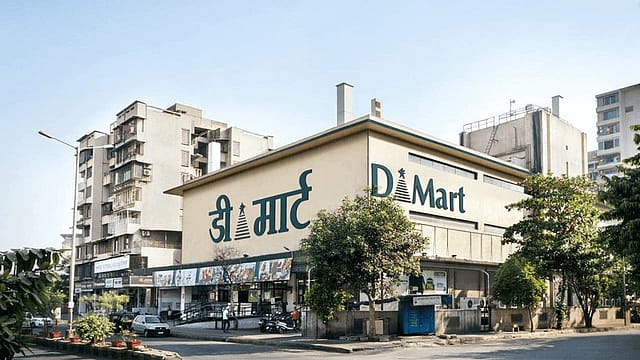
Shares of Avenue Supermarts, which operates the DMart retail chain, fell as much as 4.35% to hit a 52-week low of ₹3,366 on the BSE on Monday as investors reacted to its September-quarter earnings, which fell short of Street expectations. The stock’s market capitalisation declined to around ₹2.22 lakh crore amid concerns over moderating earnings growth, margin pressure and rising debt.
While the retailer reported healthy revenue growth and an improvement in like-for-like sales, profitability remained under pressure due to an adverse product mix, subdued store-level productivity and higher operating costs. Analysts also flagged a sharp increase in free cash flow outflows and debt amid higher capital expenditure and working capital requirements.
Brokerages remained cautious on the stock, with Emkay Global Securities maintaining its ‘Sell’ rating and Motilal Oswal Financial Services reiterating its ‘Neutral’ rating. Systematix Institutional Equities retained its ‘Hold’ rating but lowered its target price.
Profit growth trails revenue expansion
Avenue Supermarts reported consolidated revenue growth of 17.8% year-on-year (YoY) to ₹19,644 crore in the second quarter of FY27, while EBITDA rose 14.8% to ₹1,394 crore. Profit after tax (PAT) increased 8.5% YoY to ₹743.5 crore.
On a standalone basis, revenue rose around 18% YoY to ₹19,200 crore, supported by 14.4% growth in bill cuts and a 3.5% increase in average bill value. Like-for-like sales growth for stores operational for more than two years improved to 9.5%, compared with 6.8% in the year-ago quarter.
However, stronger comparable-store sales did not translate into a commensurate improvement in profitability. Standalone gross margin declined around 10 basis points (bps) YoY to 14.15%, while EBITDA margin contracted approximately 30 bps to 7.3%. Higher interest and depreciation expenses further weighed on earnings.
Emkay Global Securities said PAT growth of around 8% was approximately 14% below its estimate and 8% below consensus expectations. The brokerage attributed the shortfall to weaker gross margins, higher wage costs and increased interest and depreciation expenses.
Rising debt and cash flow outflows raise concerns
The sharp increase in debt and capital requirements emerged as a key concern following the September-quarter results.
Motilal Oswal Financial Services said Avenue Supermarts recorded a standalone free cash flow (FCF) outflow of ₹1,660 crore in the first half of FY27, compared with an outflow of around ₹400 crore in the corresponding period last year. The deterioration reflected higher working capital requirements and capital expenditure.
Working capital build-up rose to ₹1,900 crore from ₹700 crore a year earlier, while capital expenditure increased 23% YoY. Inventory per store also rose around 10% YoY.
Net debt, excluding lease liabilities, surged to ₹2,500 crore at the end of September 2026 from ₹700 crore at the end of March 2026, according to Motilal Oswal. Emkay Global similarly flagged an increase in gross debt to around ₹2,600 crore at the end of the first half of FY27 from approximately ₹1,000 crore at the end of FY26.
Emkay attributed the deterioration in cash flow to subdued earnings growth, higher inventory levels and increased capital expenditure. The brokerage noted that capital expenditure stood at ₹2,100 crore in the first half of FY27, compared with ₹1,700 crore in the year-ago period.
Store expansion fails to lift productivity proportionately
Avenue Supermarts added 15 stores during the September quarter, taking its total store count to 518. Its retail area expanded around 19.6% YoY to 21.4 million square feet, outpacing revenue growth of 18.4%, according to Systematix Institutional Equities.
The brokerage noted that new stores typically require time to mature and achieve optimal productivity, particularly in Tier-II cities and smaller towns, where initial sales per square foot may be lower.
Emkay Global said faster store expansion and inflationary trends had yet to translate into a commensurate improvement in growth. Although like-for-like sales growth improved during the quarter, the contribution from newer stores appeared subdued.
Product mix and operating costs weigh on margins
The product mix remained another drag on profitability. Food sales grew 19.2% YoY in the September quarter, compared with growth of 16.8% in non-foods and 17.8% in general merchandise and apparel, according to Systematix.
The faster growth in food products increased their share of revenue by around 39 bps to 58.8%. As the food segment typically carries lower margins than non-foods and general merchandise and apparel, the shift in sales mix weighed on gross profitability.
Higher operating expenses also contributed to margin pressure. Systematix attributed the increase partly to entry-level wage inflation, store expansion and investments in technology and organisational capabilities.
Meanwhile, revenue from subsidiaries declined 4.3% YoY in the September quarter, according to Emkay Global, likely reflecting the reduced operational presence of DMart Ready. The online business was operational in 11 cities as of September 30, 2026, compared with 19 cities a year earlier. However, subsidiary EBITDA losses narrowed to ₹10.2 crore from ₹16.3 crore in the year-ago quarter.