
Gold down 23%, silver plunges 55%: Why precious metals are losing their shine
ADVERTISEMENT
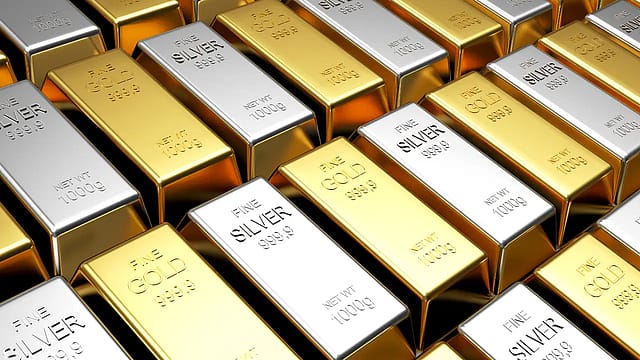
Gold and silver prices have witnessed a sharp correction in 2026 after a stellar rally in recent years, as rising crude oil prices, inflation concerns and changing expectations around US interest rates have triggered a sell-off. A stronger US dollar and higher bond yields have further weakened the appeal of precious metals, with silver bearing the brunt of the correction.
Domestic gold prices are currently trading at around ₹1.37 lakh per 10 grams, down more than 23% from their January peak of approximately ₹1.80 lakh. Silver has fallen nearly 55% from its record high of ₹4,20,048 per kg on January 29, 2026, on the Multi Commodity Exchange (MCX), with domestic retail prices now hovering around ₹1.90 lakh per kg.
The correction follows an extraordinary rally driven by geopolitical uncertainty, tariff concerns and tightness in the physical market. Gold prices rose from approximately ₹47,600 per 10 grams in November 2021 to around ₹1.40 lakh during Dhanteras 2026, delivering an absolute return of nearly 200% and a compounded annual growth rate of 24.53%. Silver surged 138% last year.
Why precious metals are losing their shine
The biggest trigger has been a shift in expectations around US monetary policy. Gold touched a record high of nearly $5,595 per ounce in January 2026, supported by strong investment demand, geopolitical uncertainty and expectations of interest rate cuts by the US Federal Reserve.
However, the conflict involving Iran, the US and Israel pushed crude oil prices sharply higher, from around $60 to $120 per barrel, stoking fears of a fresh inflationary cycle. Markets consequently shifted from pricing in rate cuts to anticipating a more hawkish Fed stance and potential rate hikes.
The US Federal Reserve raised its benchmark interest rate by 25 basis points in September, taking the target range to 3.75-4%, before holding rates in October. Two members dissented in favour of another 25-basis-point hike, reflecting concerns about persistent inflation.
Higher interest rates and bond yields make non-yielding assets such as gold and silver less attractive. A stronger dollar has added to the pressure. Axis Securities noted that the Dollar Index has gained around 4% recently, weighing on gold prices. Profit booking and the unwinding of speculative positions following the record-breaking rally have further intensified the correction.
Why has silver fallen more sharply?
Silver's greater price volatility and sensitivity to industrial demand have made it more vulnerable than gold. International silver prices touched a record $121 an ounce on January 29 before plunging to nearly $48, a decline of around 60%.
The reversal has also been driven by easing physical-market tightness. The return of silver stocks from New York to London has improved availability, removing an important source of price support. Concerns about industrial demand and a shrinking supply deficit have added to the pressure.
According to HSBC Global Investment Research, the gold-silver ratio widened to around 72:1 after narrowing to 46:1 when both metals reached record highs in January. This reflects silver's sharper correction relative to gold.
What lies ahead
The near-term outlook remains cautious, with the Federal Reserve's interest rate trajectory likely to dictate the direction of precious metals.
HSBC expects silver prices to recover gradually but does not anticipate a sharp rally in the near term. “Short of an eruption of tariff concerns, we do not see silver challenging $100/oz in the foreseeable future,” the agency said. Its outlook for 2027 is more measured, with gold likely to provide some support to silver.
Renisha Chainani, Chief Research Officer at Augmont, said hotter US inflation data had strengthened expectations of a December Fed rate hike. Higher Treasury yields, a stronger dollar and elevated crude oil prices have added to selling pressure. However, continued central bank buying, particularly by China, and elevated gold ETF holdings remain supportive factors.
Key support and resistance levels
Vikram Subburaj, CEO of Giottus.com, said the breakdown of important technical support levels means further downside cannot be ruled out.
For spot gold, $3,850 is the immediate support, followed by $3,700 and $3,500. Resistance is placed at $4,000 and $4,200. On the MCX, support is seen at ₹1,30,000 and ₹1,25,000, while resistance is at ₹1,42,000 and ₹1,45,000.
For silver, international support levels are $47 and $45, with resistance at $50.70. On the MCX, support is placed at ₹1,68,000 and ₹1,60,000, while resistance is at ₹1,80,000 and ₹1,90,000.
Subburaj advises investors to remain cautious and treat rallies towards $4,000 in gold as selling opportunities until the Fed outlook settles. Long-term investors, however, can consider staggered buying on declines, as central bank demand and concerns around the global fiscal outlook continue to support gold.