
IndiGo share price declines by 5% after Gangwal family sells 3.1% stake in a block deal; check details here
ADVERTISEMENT
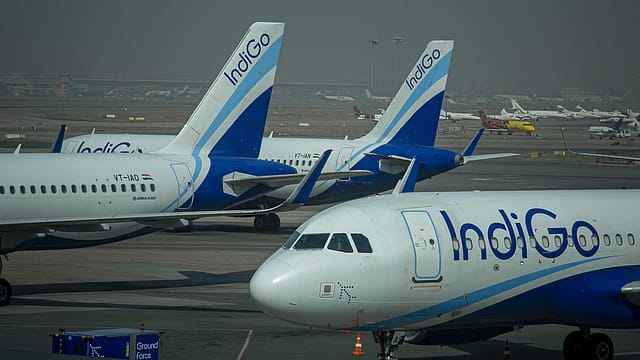
IndiGo Airlines’ parent, InterGlobe Aviation, saw its share price dip by nearly 5% today after multiple reports stated that the Rakesh Gangwal family offloaded 1.2 crore shares via a block deal, amounting to 3.1% of its equity stake. The budget airline stock was trading at ₹5,747.50 apiece at the time of reporting. Although official confirmation is awaited, the reports suggested that the deal is estimated to be worth ₹7,084.6 crore at a price of ₹5,830 per share.
This block deal comes after the Gangwal family sold 3.4% of its stake earlier in May this year, marking a gradual exit after Rakesh Gangwal stepped down from IndiGo’s board in February 2022. Since then, the family has been offloading its stakes, with a 2.74% stake sold for ₹2,005 crore in September 2022. Later in 2023, a 4% stake was offloaded by his wife, Shobha Gangwal, for ₹2,944 crore in February, and another 2.9% was sold for slightly over ₹2,800 crore in August.
Again, in August 2024, the family trust divested a 5.2% stake worth ₹9,549 crore. The Gangwal Group will retain a 4.78% stake in the airline, valued at approximately ₹11,169 crore, after this latest block deal goes through. The promoter family has raised over ₹45,300 crore after paring its stakes since 2022.
Talking about the company, Nitant Darekar, research analyst at Bonanza, opined that the latest news of the Gangwal family's divestment of ₹7,028 crore is a part of the former's multi-year exit strategy.
“In my opinion, this is a pure liquidity-driven selling rather than concerns over IndiGo's business fundamentals. Today's 5% decline appears overdone, driven by immediate supply pressure and weak Q2 operating metrics affected by geopolitical disruptions and yield compression. The sharp selloff, however, presents a compelling accumulation opportunity for long-term investors,” said Darekar.