
NSE IPO listing today: Here’s how India’s 10 largest issues have fared on debut
ADVERTISEMENT
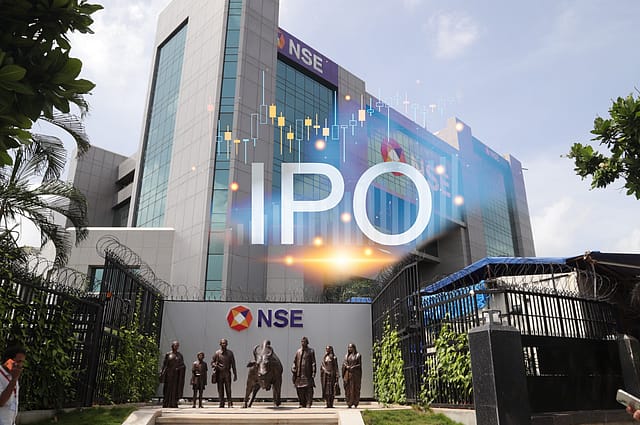
The much-awaited listing of the National Stock Exchange of India (NSE) on September 24 will mark a closely watched debut for one of India’s largest public issues. The ₹22,562 crore share sale, the second-largest in the country after Hyundai Motor India, was subscribed 5.68 times during the September 17-21 bidding period.

As NSE prepares to make its market debut, let’s look at how India’s 10 largest public issues - Hyundai Motor India, NSE, LIC, Paytm, Tata Capital, Coal India, HDB Financial Services, LG Electronics India, Swiggy and General Insurance Corporation of India - have performed on listing day.
Hyundai Motor India, which raised ₹27,859 crore, fell 7.12% from its ₹1,960 offer price on listing day.
LG Electronics India recorded the strongest listing-day gain among the 10 largest issues, rising 48.19% over its IPO price of ₹1,140 per share. Coal India followed with a 39.73% gain, while Swiggy and HDB Financial Services gained 16.91% and 13.64%, respectively.
At the other end, Paytm recorded the steepest decline, falling 27.25% from its ₹2,150 offer price on listing day. State-owned insurer LIC declined 7.75% from its ₹949 offer price.
Tata Capital, which raised ₹15,512 crore, had a relatively muted debut, gaining 1.35%, while GIC declined 4.56% on listing.
NSE listing: GMP points to modest premium
NSE’s listing will come after strong demand across investor categories, although its unofficial grey market premium (GMP) has moderated sharply ahead of the debut.
The latest GMP stood at ₹88 on September 23, according to grey-market tracking data. At the upper end of the ₹1,700-1,785 price band, this implies an estimated listing price of ₹1,873, or a potential gain of 4.93% over the issue price.
The GMP has weakened considerably from earlier levels. It stood at ₹142 when the issue opened on September 17, fell to ₹111 on September 18 and declined to ₹61 on September 19. After touching ₹48 on September 20, the premium briefly recovered to ₹65 on September 21 before falling to its lowest level of ₹43 after allotment. Over the past 20 days, the GMP has ranged between ₹43 and ₹310.
GMPs are unofficial market indicators and can fluctuate before listing. They do not guarantee the actual listing price or any gains for investors.
Valuation remains key focus
NSE’s market debut will also put the spotlight on the valuation investors are assigning to the exchange.
The issue was entirely an offer for sale (OFS) of 12.64 crore shares, with no fresh equity being issued. At the upper end of the price band, NSE is valued at around ₹4.45 lakh crore.
Prasenjit Paul, Fund Manager at 129 Wealth and Head of Research at Paul Asset, said NSE is a fundamentally strong, cash-generating business with a clear competitive advantage, but investors should focus on the price being paid for its earnings.
“At ₹1,785, the valuation is around 43 times FY26 earnings, which looks justified, though not cheap,” Paul said.
He said future growth could come from deeper capital-market participation, cash-market activity, new products, data, indices and GIFT City, rather than further market-share gains alone.
“The key risk remains its dependence on derivatives, with options transaction fees contributing significantly to revenue,” Paul said.
Post-listing, investors should track earnings growth, cash-market volumes, options activity and recurring profitability rather than headline turnover numbers, he added.
(DISCLAIMER: The views and opinions expressed by investment experts on fortuneindia.com are either their own or of their organisations, but not necessarily that of fortuneindia.com and its editorial team. Readers are advised to consult certified experts before taking investment decisions.)