
Sebi has heard brokers' MDR-charges related issues: Tuhin Kanta Pandey
ADVERTISEMENT
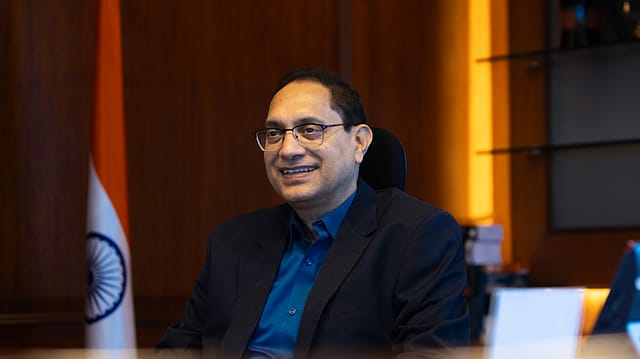
The Securities and Exchange Board of India chairman Tuhin Kanta Pandey on Thursday said that the regulator has heard the Merchant Discount Rate (MDR) charges on UPI transactions, which brokers and mutual funds had.
"We have already heard these concerns and considered what can be done from the regulatory side and how the issues can be represented more appropriately," he told Fortune India, at a press conference.
He said Sebi had received a number of concerns, and "some of them are certainly genuine. Many of these concerns arise because, in some respects, brokers are intermediaries rather than merchants, " Pandey said.
"At the heart of the matter is the question of how these transactions should be characterised. A B2B transaction is relatively straightforward, but the question here is whether the transaction between a person and the intermediary should be treated as a person-to-person transaction or as a merchant transaction, " he added.
Capital market transactions via UPI—including payments to stockbrokers, securities dealers, and mutual funds—will carry a MDR of 0.02%, capped at a maximum of ₹300 per transaction, from October 15 onwards.
Explaining the problem, Pandey told Fortune India, "For example, there is an account belonging to the client with the bank, and there is another account belonging to the same client with the broker. Money may move from one account to the other, and if it is not utilised, it can subsequently be returned to the client. The client may then replenish the account again."
"There is a regulatory requirement relating to investor protection under which such client accounts have to be reviewed periodically. If money has not been utilised, it may have to be returned to the client, who can subsequently put the money back into the account when required."
"The concern is that if the client repeatedly has to replenish the account because the money has not been utilised, another payment transaction could potentially attract a charge, " the Sebi chief said.
"So there are certain characteristics of securities-market intermediaries that are somewhat different from those of ordinary merchants, " he added.
The intermediaries have also made representations to the Government on these issues.
The brokerage charged by brokers may be a very small amount, while the larger amount moving through the payment system is essentially the client's own capital.
Sebi norms say registered brokers must use valid UPI handles and display them on their websites, so that investors transfer money only to verified accounts.