
27 years of watching technology change everything, and almost nothing
ADVERTISEMENT
The technology industry humbles you regularly.
I still remember my first days as a software developer in the late 1990s. The internet was still finding its place in our lives. My desktop computer was bulky, my email inbox was sparse, and every piece of code I wrote took patience. Information was not at our fingertips. If I needed to learn something new, I would search through manuals, ask colleagues, or spend hours experimenting. Collaboration happened in conference rooms and over cups of coffee. A meeting meant physically gathering people in one place. Technology moved more slowly, and perhaps so did we. Yet, at that time, it felt revolutionary.
The internet was beginning to transform how businesses operated and how people connected with one another. We did not fully understand it then, but we were witnessing one of the greatest technological shifts in human history. Today, nearly three decades later, I feel the same sense of anticipation. Only this time, the disruption is called artificial intelligence (AI). And it feels every bit as consequential as the internet did.
The Everyday Has Changed
In the late 1990s, simple tasks took effort. If I wanted information, I had to go looking for it. If I needed feedback on a piece of work, I would schedule meetings, send emails, and wait. Sharing a document with colleagues in different countries was not instantaneous. A business trip meant carrying folders of papers and printed itineraries. Today, much of that friction has disappeared. AI helps me summarise information, prepare for meetings, synthesise research, and surface insights in minutes. Technology has quietly returned one of our most precious resources: time. Developers are increasingly using coding assistants like GitHub Copilot and Cursor to write, review, and debug software. Teams are leveraging conversational AI tools such as ChatGPT, Claude, and Gemini to brainstorm ideas, summarise information, generate content, and accelerate problem-solving. Designers and creators are experimenting with tools like Midjourney and Adobe Firefly to transform ideas into visuals in minutes. Researchers and knowledge workers are turning to platforms such as Perplexity to navigate vast amounts of information more efficiently. Time that was once spent searching, waiting, coordinating, and performing repetitive tasks can now be invested in thinking, creating, learning, and connecting. And perhaps that is technology at its best—not replacing us but giving us back the space to be more human.
ERP Taught Us How Businesses Run. AI Is Teaching Us How Businesses Can Think
When I began my career, our job was to help customers digitise their businesses. Today, our responsibility is far more ambitious: to help them reimagine how their businesses can operate in an age where intelligence is becoming embedded in every process, every decision, and every interaction. Consider manufacturing: instead of waiting for a machine to fail and halt production, AI can analyse sensor data to predict potential breakdowns weeks in advance, allowing maintenance to be scheduled proactively and minimising costly downtime. In automotive, AI is transforming everything from supply chains to vehicle engineering. Automakers can use AI to anticipate parts shortages, optimise production schedules in real time, and even accelerate the design and testing of new vehicles through simulations that once took months to complete.
Today, AI agents can now automate workflows, retrieve and reason across organisational knowledge, assist with customer interactions, and support decision-making at scale. Tools and platforms such as SAP Joule, Microsoft Copilot, and Google’s Gemini for Workspace are embedding AI directly into the flow of work, making intelligent assistance available wherever work happens. In many ways, my career has spanned two defining eras: helping customers move from paper to software, and now, from software to intelligence.
The Workplace I Entered No Longer Exists
Notably, the workplace of the late 1990s was built very differently. Organisations were more hierarchical. Information often flowed from the top down. Expertise was concentrated in specific functions and teams. Learning happened primarily through experience and mentorship. Today, the barriers are much lower. Knowledge is democratised. Information is accessible. Ideas can emerge from anywhere in the organisation. A young engineer can build an application that impacts millions of people. A new hire can challenge long-held assumptions with fresh perspectives and data. Perhaps the biggest change I have witnessed is the shift from command-and-control leadership to collaboration and co-creation.
Leadership today is far less about having all the answers. It is increasingly about asking the right questions. And in the age of AI, that capability becomes even more important.
The Talent Landscape Has Been Rewritten
When I started my career, technical expertise alone could take you very far. Today, technical expertise is merely the starting point. The skills that increasingly matter are adaptability, curiosity, continuous learning, and the ability to work across disciplines. I often tell young professionals that their most important skill may be their capacity to learn, unlearn, and relearn. Because the shelf life of knowledge has shortened dramatically. I have spent more than twenty-seven years in technology, and perhaps the biggest lesson I have learned is this: no matter how experienced you are, you must remain a student. The technology industry humbles you regularly. Every few years, it reinvents itself. And every few years, it asks all of us to begin learning again.
Watching My Daughters Use Technology
Some of the biggest reminders of how much the world has changed come from my daughters. I grew up in a world where information was scarce. They are growing up in a world where information is abundant. I learnt to navigate physical maps. They instinctively trust digital navigation. I remember waiting for photographs to be developed. They capture memories and share them instantly. I approached technology as something I needed to learn. For their generation, technology simply exists—it is ambient, intuitive, and deeply integrated into everyday life. They do not distinguish between online and offline. To them, there is simply life. And perhaps this is what fascinates me most about Gen Z. They are remarkably comfortable with constant change. They adapt quickly, experiment freely, and question assumptions naturally. They embrace new technologies with a confidence that often inspires me. At the same time, they remind me that despite all our technological advances, people continue to seek the same things: purpose, belonging, creativity, and meaningful human connection.
What Hasn’t Changed
People often ask me what has changed most during my 27 years in technology. The answer is: almost everything. The tools have changed. The speed has changed. The workplace has changed. The way we learn has changed. The way we collaborate has changed. But there is one thing that has remained remarkably constant. Technology has always been about possibility. I felt it when the internet began connecting the world in ways we had never imagined. I feel it again today as AI opens entirely new frontiers. Every generation believes it is living through unprecedented change. This time, perhaps, we actually are. But if my journey in technology has taught me anything, it is this: The future never arrives all at once. It arrives quietly. Through small moments. A faster search. A smarter assistant. A new way of working. A conversation between colleagues sitting thousands of miles apart. Or watching your children use technologies that would have seemed like science fiction when you first started your career.
And then one day, you look back and realise that the world has transformed completely. I have had the privilege of witnessing that transformation from the days of dial-up internet to the age of AI. And somehow, despite all the change, I remain as excited about technology today as I was when I wrote my first lines of code nearly three decades ago. Because every era of technology gives us new tools. But every era also gives us something far more important: A chance to reimagine what human beings can achieve together.
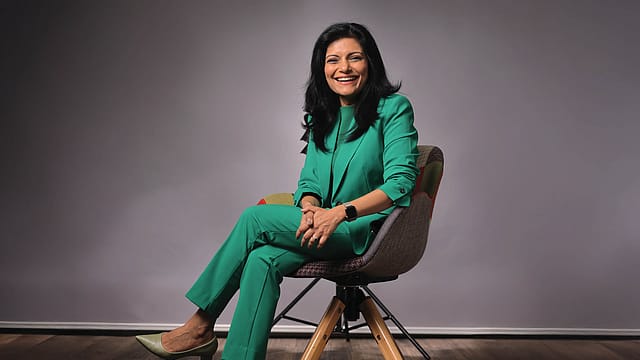
The author is MD, SAP Labs India; President, Indo-German Chamber of Commerce; and former Chair, Nasscom. Views are personal.)