
Delhi’s EV policy is a signal of boldness and stability
ADVERTISEMENT
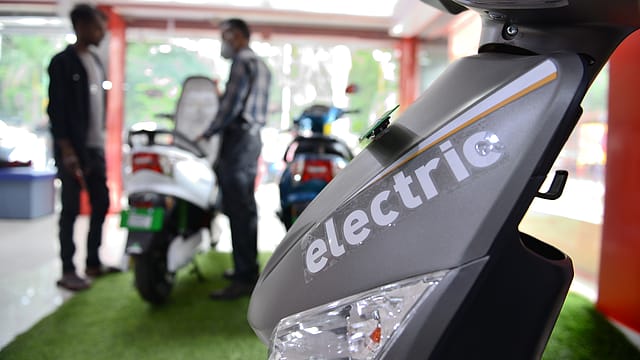
Much of the commentary on Delhi’s Electric Vehicle Policy 2.0, which came into force this month, will follow a familiar script: the size of the subsidies, the dates of the bans, the inevitable grumbling from industry. All of it will miss what makes this policy genuinely different—that it is bold, stable, and worth copying.
The most valuable thing Delhi has given the electric mobility market is calendar certainty. From January 1, 2027, only electric three-wheelers and light goods vehicles will be registered in the capital; from April 1, 2028, only electric two-wheelers. These dates were announced well in advance, backed by a ₹7,000-crore outlay, and anchored in a single accountable agency—Delhi Transco—for charging infrastructure. Subsidies persuade individuals and dates move industries. A manufacturer deciding whether to commit a production line, a bank deciding how to price an EV loan, a fleet operator deciding what to buy next—all of them need to know when the transition will happen, and whether it will stay. Delhi has answered that question more clearly than any Indian state before it.
The second thing the policy gets right is sequencing. It goes after commercial vehicles first—the autos, delivery vans, aggregator fleets, and school buses that run all day, every day. A commercial three-wheeler covers 100-150 km daily, four to five times what a private car does. Every commercial vehicle electrified buys several times the clean air per rupee of public money. Within Delhi’s transport emissions, two- and three-wheelers and heavy vehicles together account for roughly four-fifths of the problem. This is not a new insight—the Chinese city of Shenzhen electrified all 16,000 of its buses and 22,000 taxis before it worried much about private cars and rose into the top 10 Chinese cities for air quality. Delhi is the first Indian city and state to build a policy squarely around this.
We would add a category to watch: the school bus. It is the most morally legible vehicle on the road. It carries the citizens most vulnerable to air pollution, on fixed routes, on predictable schedules, returning every night to a depot—the easiest duty cycle in transport to electrify. Our organisations are partnering on precisely this, because we believe there isn’t a more meaningful symbol of electrification than the familiar yellow school bus turning green. It is a daily reminder seen by children, parents, and communities alike that the transition to clean mobility is not simply a government programme, but a shared journey in which they have a stake.
Now comes the question we get asked often: is the grid even green enough for this to matter? The answer, oddly enough, lies less in the fuel mix and more in the clock. E-bus charging load stood at 69 MW as of November 2024, with another 268 MW coming online through FY26—meaning depot load could roughly quintuple within a single year. That’s before Delhi’s fleet approaches its target of 14,000 buses by 2030, up from 4,800 today. The trouble is that charging for this fleet coincides with Delhi’s peak demand, which itself hit annual highs that increase every year, forcing the State’s electricity distribution companies (discoms) to buy costly short-term power at ₹8.50–10 when they are already stretched. Short-term power of this kind cost Delhi’s discoms roughly ₹3,000 crore in FY25 overall, nearly half of it in just four summer months—the same months and hours when bus charging adds to the strain. And these discoms aren’t always able to recover the cost differentials because the EV tariff in play is less than half the real cost of supplying that power.
The fix, encouragingly, isn’t more capacity, it’s better timing and more synchronised use of solar power. Buses often sit at depots far longer than they need to charge; simply shifting some of that charging to quieter hours, using power already bought cheap, could save ₹638 crore by 2030 without spending on new equipment. A large share of that cleaner and cheaper power which floods the grid and often gets curtailed, is in the middle of the day when demand is low. Depots charging then would be soaking up power that would otherwise go to waste, not adding to fossil generation at all. Add batteries at depots to store that cheap midday solar for release during the evening and night peaks, and the savings could be over a thousand crores, while also delaying transformer and network upgrades that would otherwise be needed to absorb a depot load moving from 69 MW toward several hundred megawatts. Much of the case for new wires and substations disappears; what would be needed instead is close(r) coordination between the transport department and the discom so that future charging schedules can be built around price, and around when the sun is actually shining. Getting this right would turn electric buses into a grid asset rather than a financial drain—and closer to a fleet that literally runs on sunshine.
Which brings us to why this matters beyond Delhi. California abandoned its clean-fleets mandate last year when the rule outran both product readiness and political consensus. Norway succeeded through three decades of boring consistency. Delhi’s mandate has advantages California lacked in that it targets segments where Indian-made electric products already compete on lifetime cost, and clean air is a live citizen issue here, but the lesson stands: the test of this policy is its continuity. If Delhi holds these dates across political cycles, it will have created something more valuable for cities to emulate. It will have created a template—for Lucknow, Kanpur, Patna, Pune, and every city in the Indo-Gangetic plain that dominates the world’s pollution rankings to follow.
What the Delhi policy ultimately demonstrates is that the clean-mobility transition is investible. That may prove to be its most significant contribution. Markets do not require governments to be generous; they require them to be bold and predictable—the kind that other states can adopt.
(Acharya is founder of INTENT and former MD & CEO of Convergence Energy Services Ltd (CESL). Mundol is chief advisor–India to Environmental Defense Fund (EDF). Views are personal.)