
How green power is reshaping India’s industrial geography
ADVERTISEMENT
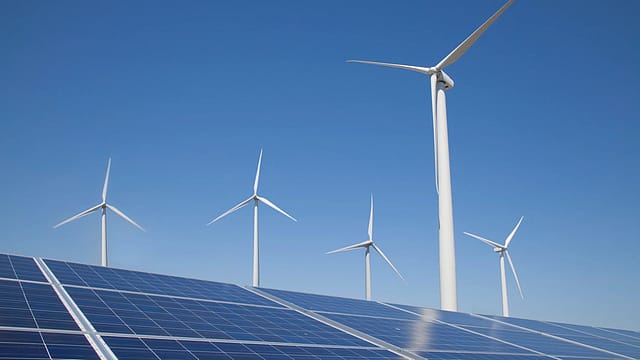
Industrial geography in India has traditionally been determined by market access, port access, resource access, labour access, and conventional power access. In an era where India is evolving towards becoming greener and more competitive, another consideration that is gaining relevance is access to green power.
While renewable energy is not merely an environmental consideration, it is also becoming a critical consideration for the location of industrial investment, production and expansion. Industries, such as green hydrogen, advanced manufacturing, data centres, electric mobility and renewable energy equipment, need more than just power; they need sustainable and economical power.
From Energy Availability to Energy Advantage
This signals an important change in the relationship between energy and industrial development. Traditionally, industries used to get concentrated near existing power systems and industrial corridors. With the dawn of the clean energy economy, industrial development could be following renewables and the supporting infrastructure built up around them. Places with abundant renewable energy sources along with land, connectivity, energy storage, and access to ports could become an attractive destination for investments.
Andhra Pradesh illustrates this transition. According to the Integrated Clean Energy Policy 2024, the state aims at becoming a clean energy and industrial hub with an ambition of having a total clean energy capacity of more than 160 GW, out of which solar will contribute 78.5 GW and wind 35 GW. Also, it has set a target of 22 GW of pumped storage and 25 GWh of battery energy storage systems.
The Rise of the Green Industrial Cluster
The importance of renewable energy goes beyond power generation. In the face of growing renewable energy, an ecosystem may arise around the development of renewable energy. For instance, solar and wind energy projects drive demand for hardware, engineering, and construction services. Energy storage enhances the possibility of integration of renewable energy. Green hydrogen will create new industrial value chains and export opportunities.
The vision of Andhra Pradesh also captures this holistic approach. The state’s ambitions in terms of clean energy involve the production of 1.5 million metric tonnes per year of green hydrogen, 3 GW of electrolyser manufacturing, 20 GW of integrated solar manufacturing and 5 GWh of battery manufacturing.
Thus, the opportunity does not only lie in developing renewable energy projects but also in creating ecosystems where energy generation, manufacturing, storage, logistics and exports reinforce one another.
Reliability Will Define the Next Phase
Renewable capacity alone will not be enough to shape the industrial geography of the future. Supply will play a crucial part. Today, Firm and Dispatchable Renewable Energy (FDRE) and Round-the-Clock (RTC) are becoming key features of the future energy infrastructure.
Data centres, green hydrogen projects, and advanced manufacturing facilities demand different load profiles. Successfully meeting this demand will require an integration of solar power, wind power, energy storage, and smart grid technologies.
The rise in demand for these solutions can potentially reshape industrial geography. States with sufficient potential to provide scalable and firm clean power can become attractive for energy-intensive industries.
Transmission Becomes an Industrial Enabler
The clean energy transformation also alters the role of transmission networks. The renewable energy sources may not necessarily be situated near traditional industrial hubs. Generation, storage, evacuation networks, and demand centres thus must be planned together.
Renewable Energy Zones (REZ) with planned transmission networks can provide for investment-ready locations and shorten project execution times. Transmission readiness can thus become a competitive factor for upcoming industrial hubs, as opposed to just being an auxiliary utility.
Flexibility will also be needed in the future grid in terms of pumped hydro storage, batteries, demand response mechanisms, smart grids, and distributed energy resources. This will be critical for the increased deployment of renewable energy.
Green Power Can Pull Manufacturing
The next transition would be particularly important for the manufacturing sector. States that integrate renewable energy with land, transmission, ports, policy and industry support can attract industries.
For instance, the Andhra Pradesh Integrated Clean Energy Policy 2024 aims to create such an ecosystem by supporting land allocation, transmission connectivity, open access, electricity-related incentives, capital support and approvals. Following this policy, the state has already cleared proposals with around 50 GW clean energy projects while investment pledges have already surpassed ₹4.10 lakh crore.
This shows the multiplier effect of clean energy where renewable energy can lead to storage; green power can lead to energy-intensive industries; and industries can create demand for local manufacturing and infrastructure.
A New Map for India’s Growth
As the industrial growth moves into a new phase, competitive industrial locations in the future cannot simply be based on their closeness to consumers, resources, or existing infrastructure. They must increasingly be measured according to the presence of clean, dependable and scalable energy, backed up by land, infrastructure, ports and the right policy environment. Clean energy is therefore no longer just an electricity source but also an industrial location factor.
The challenge for India is to make sure that the shift to clean energy creates not only gigawatts of power capacity but also industrial corridors, manufacturing hubs, job creation and export capabilities. When the development of renewable energy, storage and transmission goes together with industrial development, then clean energy can define not just the energy mix of the country but its economic growth as well.
[The author is Vice Chairman & Managing Director, New & Renewable Energy Development Corporation of Andhra Pradesh Limited (NREDCAP)]