
IndiGo at 20: A shared journey in India’s aviation rise
ADVERTISEMENT
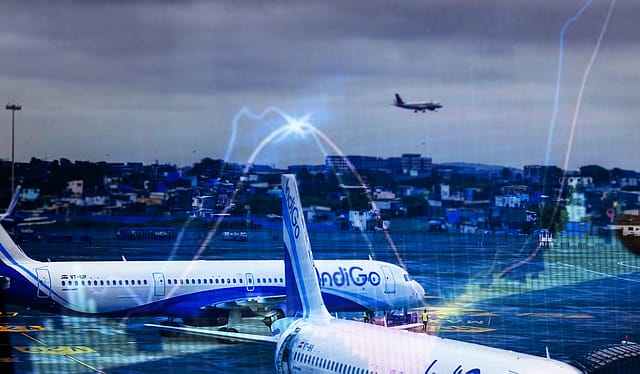
On August 4th, 2006, IndiGo took to the skies with a simple but ambitious promise: make air travel affordable, reliable, and on time for more Indians. At a time when Indian aviation was fragmented, financially fragile, and still limited to a relatively small passenger base, few would have anticipated how significantly both the airline and the Indian aviation market would evolve.
Since its inception, IndiGo has served nearly 900 million customers, and the one billion milestone mark is expected to be breached by FY27. This reflects a structural shift in how India travels, driven by rising incomes, expanding infrastructure, and IndiGo's relentless focus on making flying accessible. As IndiGo marks two decades of operations this month, its journey offers a useful lens into the underpinnings of the Indian civil aviation market.
IndiGo’s scale offers a telescopic view of how far Indian aviation has travelled: the airline served 123+ million passengers in FY26, serving 140+ destinations, while managing a fleet of 440+ aircraft. Industry indicators reinforce the scale of this shift. India is now widely recognised as the world’s third-largest domestic aviation market, with passenger traffic at Indian airports reaching 412 million in FY25 and projected to rise to 665 million by FY31. IndiGo’s expansion reflects both the airline’s own execution discipline and the deepening maturity of India’s aviation ecosystem.
IndiGo’s founders, Rahul Bhatia and Rakesh Gangwal, applied for an airline NOC in April 2004. IndiGo entered the market in 2006 with a business model in mind: a single aircraft family, quick turnaround times, a young fleet, operational reliability and a relentless focus on punctuality enabled the airline to keep costs low while delivering a dependable customer experience. This strategy proved remarkably successful, with IndiGo reaching break-even status by 2009, and then remaining continuously profitable for 10 years. During this period, IndiGo listed in 2015, becoming India’s largest airline IPO.
IndiGo’s rise has coincided with one of the fastest aviation growth stories anywhere in the world. In 2006, India’s aviation sector was still in its infancy. Annual domestic passenger traffic stood at around 33 million. Flying remained a luxury for many Indians, airport infrastructure was limited, and regional connectivity was sparse. Two decades later, India has become the world’s third-largest domestic aviation market. Annual domestic passenger traffic has reached nearly 168 million, airport infrastructure has expanded dramatically under successive government initiatives, and dozens of new airports have brought air travel within reach of millions of first-time flyers. In an industry where scale is meaningful only when it widens access, IndiGo helped democratize air travel by keeping fares accessible while expanding/bolstering operations across metropolitan, Tier-2 and Tier-3 cities. The airline encouraged millions of first-time flyers and helped transform aviation from a luxury into an everyday mode of transport.
IndiGo’s greatest contribution has perhaps been its emphasis on connectivity. Rather than concentrating solely on trunk routes linking major metros, the airline systematically expanded into emerging cities, enabling more balanced national development. Today, IndiGo serves 95+ destinations with over 500 routes within India, nearly four times the number it served a decade earlier. IndiGo has arguably been among the key architects of this shift in connectivity.
Complementing IndiGo’s connectivity has been its steady fleet expansion, which in turn has stimulated growth across India’s aviation ecosystem. The airline has ifly, one of the world's largest aviation academies, training 2,000+ aviation professionals daily. IndiGo has globally been the largest recipient of aircraft deliveries from Airbus for the past two years. Its record aircraft orders have provided long-term confidence to global manufacturers while creating demand for pilots, engineers, cabin crew, technicians and airport professionals.
Historically, Indian airlines have depended heavily on overseas maintenance facilities, resulting in higher costs and foreign exchange outflows. As the sector scales, stronger domestic MRO capability will be critical. IndiGo’s expanding engineering base, investments in pilot training, digital operations, operational control systems, and customer technology have contributed to raising industry standards.
Although IndiGo began as a domestic low-cost carrier, its international ambitions have accelerated in recent years. The airline unveiled its Vision 2030 targeting to operate around 3,000 daily departures, serve close to 200 million passengers, and achieve 40% international capacity share by FY2030. Partnerships with global airlines, the introduction of IndiGo BluChip, premium offerings such as IndiGo Stretch and the planned induction of widebody aircraft represent a significant evolution in its business model. This ambition reflects a broader national aspiration: for India to build stronger home-grown carriers that can support its emergence as a global aviation hub.
However, no twenty-year journey can be without setbacks. Like every global airline, IndiGo has faced significant headwinds, ranging from the unprecedented disruptions caused by COVID-19 to aircraft engine availability issues, supply-chain constraints, and operational challenges associated with rapid growth. The airline has also experienced periods of public scrutiny, yet, its ability to recover, maintain financial resilience, rebuild customer confidence, and continue investing for long-term growth illustrates the organisational discipline that has defined its history.
The domestic market will remain its foundation, but global leadership will require new capabilities beyond cost efficiency. Enhanced premium product offerings, stronger customer loyalty, seamless digital services and world-class passenger experience will become increasingly important. India possesses a unique geographic advantage between Europe, the Middle East, Africa and Southeast Asia. By leveraging this location, IndiGo can help position India as a major international transit hub.
IndiGo’s stated objective of becoming a major global airline by 2030 aligns closely with India’s own ambition of emerging as a global aviation hub. At twenty, IndiGo’s journey reflects the confidence of a rising India: A nation that is increasingly mobile, connected, ambitious and globally engaged. If its first twenty years transformed Indian domestic aviation, its next twenty may well help redefine India’s place in global aviation.