
Tata Sons is not merely a promoter’s story
ADVERTISEMENT
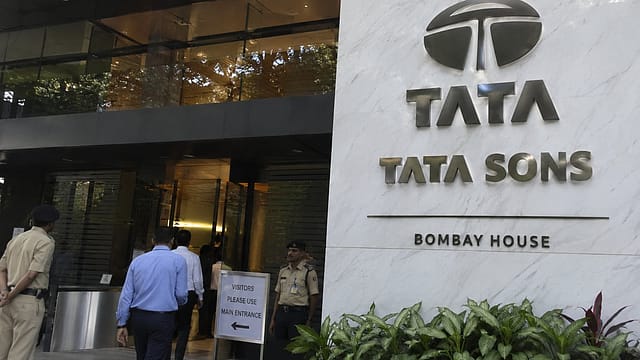
The differences in the Tata Group can be seen as a contest between the chairman of Tata Sons and its largest shareholder, the Tata Trusts. This reads like a familiar dispute between the management and promoters that Indian business has seen many times before. This narrative obscures far more than it reveals when applied to Tata Sons and the Tata Trusts. The trusts that hold the controlling stake in Tata Sons are unlike any ordinary promoter, since the obligations that attach to their ownership are of a wholly different kind.
The majority stake in Tata Sons is held by the Tata Trusts, a group of philanthropic trusts, whose purpose is charity and are managed by trustees and whose beneficiaries are the public at large. Generally, a promoter family owns its shares for itself and answers, broadly, to its own interests. But in this case, the Tata Trusts hold their shares in a fiduciary capacity, for ends that reach well beyond the enrichment of any one individual. This stewardship is bound up with a public mission built over several generations. This means that the role of the trusts cannot be assessed as though they were a promoter seeking to protect family control, because that is neither what they are nor what their own constitution permits them to be.
Much of the current commentary assumes that the Trusts are behaving as anxious owners trying to retain their grip on a prized asset. It reads like their resistance to a listing is the natural reflex of a promoter who is reluctant to dilute. The genesis of this is the belief that ownership strength ought to translate directly into the power to decide. While this assumption would be broadly sound in an ordinary promoter-led company, it applies differently to an institution whose owners are trusts charged with a public purpose. In other words, the question now relates to what the institution and its many stakeholders require. This distinction changes the standard against which every decision, including the choice of who leads the underlying company, ought to be measured.
The design of Tata Sons reinforces this further, as even with their collective majority, the Trusts do not enjoy an unqualified ability to determine the composition of the board of Tata Sons. This guardrail was built in the company’s Articles of Association by placing considerable care around how directors are appointed and how authority is exercised. While the interpretation of the Articles might vary, the structure suggests that the architects of Tata Sons did not intend shareholding and board control to be one and the same thing. Ownership was meant to carry influence over the enterprise. It was not meant to be command of its every decision. That deliberate separation is part of what has allowed the company to be run as an institution.
Indian company law points in the same direction. A director, once appointed, owes duties to the company itself and is required to bring independent judgment to the board, regardless of who nominated him. Shareholders have their own rights, to attend meetings and to vote on the matters placed before them, and those rights are real and protected. The law just does not hand the entire conduct of a company to its largest shareholder. It never intended to make the board a mere instrument of ownership.
The Indian company law has always emphasised on a balance, in which the board governs, management executes, and shareholders hold both to account through defined means. Therefore, a dispute of the kind right now at Tata Sons is meant to be worked out within that balance, not resolved by asking who holds the most shares.
Seen in this way, the leadership question at Tata Sons becomes a question about the enterprise itself. The relevant test is whether the course chosen serves the company, the operating businesses that depend on it and the wider public interest that the Trusts themselves exist to advance. A leadership and a board that has steadied the group, carried it through a demanding period and earned the confidence of its businesses and its partners would therefore be a pragmatic choice for all shareholders given the constantly evolving nature of the Tata Group’s myriad businesses.
An argument may be made that such an approach makes the Tata Trusts a mere observer with no legitimate voice. However, this approach suffers from limitations. The Trusts do retain their voice their concerns deserve to be heard with the seriousness that their history and their purpose command. However, the point is narrower and more important and requires a different approach. The question should be examined on its own institutional merits, as a matter concerning a company of unusual character, rather than pressed into a template drawn from the ordinary run of promoter disputes. Judged on those merits, the case rests less on who owns how much and more on what will keep this particular institution whole. That is the measure that ought to guide those who must now decide.
(The author is founder and managing director, InGovern Research Services. Views are personal.)