
Most small vendors will reduce UPI acceptance if MDR is implemented: ISB study
ADVERTISEMENT
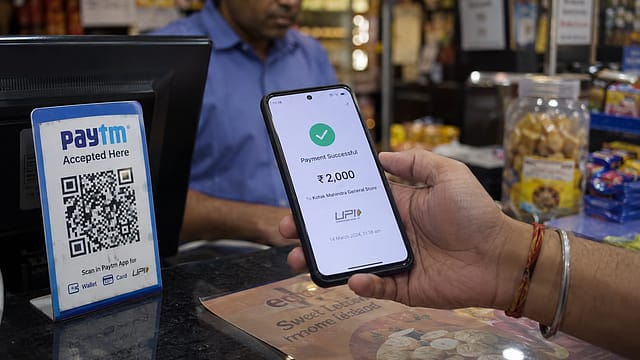
A study by the Indian School of Business (ISB) reveals that 70% of street vendors made supplier payments exceeding Rs 2,000 at a time, bringing these transactions within the proposed merchant discount rate (MDR) framework. 53% of the vendors in Tier 1 cities and 45% in Tier 2 cities said they would reduce Unified Payments Interface (UPI) acceptance if the MDR charges applied, the survey showed.
The study highlighted how charges on vendors’ larger payments to suppliers could affect them, even when their own sales remain exempt. If suppliers passed these costs on, vendors said they will switch supplier payments to cash or recover the cost from customers. This indicates that the usage of cash would increase or costs for the customer would rise.
This survey was carried out by the Centre For Analytical Finance (CAF) at ISB. The study surveyed 722 vendors in 14 states in India.
About 30% of the vendors in Tier 1 cities said they will pass the charge on while 14% in Tier 2 would do the same. The study covered individuals engaged in selling goods or providing services to the public in public or private spaces, through temporary structures or by moving from place to place. This included hawkers and peddlers and other locally recognised forms of street vending.
Further, 10.4% of vendors reported that their suppliers had asked them to pay additional charges for UPI transactions in the ten days preceding the survey. The findings indicate that such charges could influence vendors' own payment preferences, with all respondents indicating that they would switch to cash if suppliers imposed an additional charge for UPI payments.
CAF urges caution on MDR framework rollout
Announced in September this year, the framework proposes a 0.4% charge on for transactions above ₹2,000, but has exempted small merchants receiving up to ₹1 lakh per month through QR-based payments.
The rollout was supposed to be implemented on October 15, but was postponed by the National Payments Corporation of India (NPCI), which owns and operates the UPI platform, until after Diwali. A new date is yet to be notified.
CAF’s executive director Professor Prasanna Tantri at ISB, said the arguments put forward by the industry and the government on MDR need closer examination.
The CAF study called for caution in how the proposed framework is implemented.
“While transaction-size based exemptions may protect small merchants at the retail level, these do not necessarily account for the costs incurred through wholesale procurement,” the study noted. “If suppliers pass on these charges, vendors could face additional pressure on their already limited margins, making cash a more attractive payment option,” the CAF study said.
CAF suggested that any shift away from digital transactions could have wider implications for financial inclusion, transaction transparency and access to formal credit for small businesses.