
No commitment given to bank unions on 5-day work week by Finance Ministry, say sources
ADVERTISEMENT
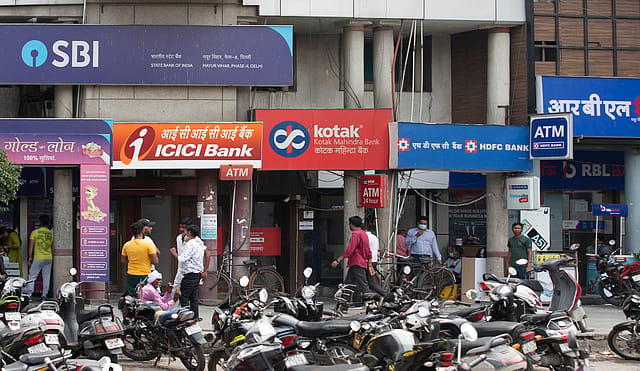
Rejecting claims of bank employee unions regarding a commitment to implement a five-day work week, government sources said there was no commitment on the issue from the Finance Ministry.
Bank employee unions under the United Forum of Bank Unions have announced a three-day strike from September 28 to press for their demands, including a five-day work week.
Unions have claimed that the Indian Banks' Association (IBA) had agreed to the proposal as part of the 12th Bipartite Settlement/9th Joint Note signed on March 8, 2024, under which working hours were to be increased by 40 minutes from Monday to Friday. The proposal was subsequently recommended to the government, and it is under consideration, sources said.
Besides, sources said, many pending union issues were resolved, including a revision in family pension for bank retirees and the grant of a pension option to resignees.
At the same time, sources said, one of the main demands of unions regarding withdrawal of Performance Linked Incentive (PLI) scheme was kept in abeyance.
The United Forum of Bank Unions (UFBU), which claims to represent 90 per cent of the banking workforce, has decided to go on a three-day strike beginning September 28, seeking 5-day banking among other demands.
The strike, if it materialises, would coincide with the banking sector's half-yearly close.
To meet the banking needs of customers before the three-day nationwide strike, the government has already instructed public sector banks to stay open on Sunday, September 27.
The Finance Ministry has also advised all departments and ministries to disburse September's salary in advance during the day in view of the strike.
In view of a three-day nationwide bank strike proposed from September 28-30, 2026, "the government has decided that the salary/wages/pensions of all Central Government Employees for the month of September 2026 may be drawn and disbursed by the Central Government offices (including Defence, Posts & Telecommunications) on September 25 2026 (Friday)", according to an office memorandum issued by the Controller General of Accounts under the Finance Ministry.
The wages for September 2026 of the industrial employees of the central government may also be disbursed in advance on September 25, 2026, it had said.
The pension for September 2026 of all central government pensioners may also be disbursed by bank/PAOs on September 25, 2026, it had said.
Meanwhile, the Finance Ministry earlier during the week appealed bank employees to refrain from resorting to strikes and resolve their remaining demands through dialogue, saying most concerns of the unions have been substantially addressed.
Other UFBU demands include updating and improving pensions, a uniform dearness allowance formula for all pensioners, and an option for employees covered under the National Pension System (NPS) to switch to the old pension scheme (OPS).