
Gold, silver prices tumble to 1-year lows: What is driving the precious metals crash?
ADVERTISEMENT
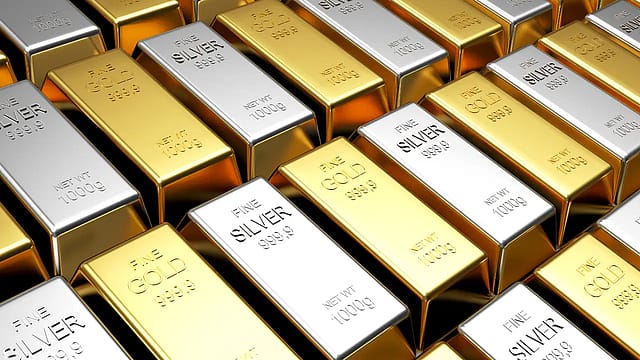
Gold and silver prices extended their losses on Thursday, hitting their lowest levels in nearly 14 months as a stronger US dollar, expectations of tighter monetary policy and a broader commodities sell-off weighed on precious metals.
COMEX December gold futures fell to an intraday low of $3,694.50 per troy ounce, their lowest level since September 2025. Silver has also witnessed a sharp correction, with international prices falling to around $45 an ounce from a record high of $121 on January 29, a decline of nearly 63%.
Domestic bullion prices have followed the global trend. Gold of 999 purity was trading at around ₹1.30 lakh per 10 grams in Delhi today, down more than 27% from its January peak of approximately ₹1.80 lakh.
Silver has fallen nearly 57% from its record high of ₹4,20,048 per kg on January 29, with retail prices hovering around ₹1.80 lakh per kg.
What is driving the crash?
The latest correction follows a strong rally fuelled by geopolitical uncertainty, tariff concerns and tightness in physical markets. Gold had climbed from approximately ₹47,600 per 10 grams in November 2021 to around ₹1.40 lakh during Dhanteras 2026, delivering an absolute return of nearly 200%.
The immediate trigger for the latest sell-off has been a shift in expectations around US monetary policy. Minutes of the Federal Reserve's October 27-28 meeting indicated that officials saw the need for further action to contain inflation, strengthening expectations of higher interest rates.
A stronger dollar and rising US Treasury yields have added to the pressure by increasing the opportunity cost of holding non-yielding assets such as gold and silver.
"There are signs of a dollar squeeze developing across commodity markets," said Anindya Banerjee, Head of Commodity, Currency and Rate Derivatives at Kotak Neo.
"Everyone wants dollars. Even scarce metal is getting sold!" he said, pointing to the simultaneous decline in gold, silver, copper and crude oil despite tightness in some physical markets.
Banerjee said technology companies borrowing heavily to fund artificial intelligence infrastructure, equity market volatility and the need to secure energy supplies were contributing to increased demand for dollars. He noted that advanced-computing debt issuance had exceeded $680 billion by October, roughly five times the total in 2023.
Is the worst yet to come?
Ponmudi R, CEO of Enrich Money, said COMEX gold was trading around $3,707, with immediate support at $3,670-3,700 and further support at $3,570-3,600. The $3,770-3,800 range has turned into immediate resistance.
The relative strength index (RSI) near 28 indicates deeply oversold conditions, although the broader trend remains negative. A sustained recovery above $3,800 is needed to stabilise the outlook, he said.
For COMEX silver, immediate support is placed at $43.50-44, followed by $41.50-42. Resistance is seen at $45.50-46. Silver has fallen 12.5% over the past week, nearly twice gold's decline, reflecting its greater sensitivity to industrial demand and global growth expectations.
On the domestic front, Enrich Money sees MCX gold support at ₹1,26,300-1,27,000, with further downside towards ₹1,22,000-1,22,800. For silver, support is placed at ₹1,58,000-1,60,000, while a break below this range could expose prices to ₹1,50,000-1,52,000.
Banerjee sees MCX gold support at ₹1,28,000 per 10 grams, followed by ₹1,26,000 and ₹1,24,000, with resistance at ₹1,35,000. For silver, support is at ₹1,56,000 per kg, with the next downside level at ₹1,45,000-1,46,000 and resistance at ₹1,67,000-1,68,000.
Axis Securities said COMEX gold had fallen more than 3% in the previous session to around $3,725. The near-term trend remains negative as long as $3,920 holds as resistance.