
Why owning 10 mutual funds may not mean diversification: Achin Goel of Bonanza explains
ADVERTISEMENT
Investors often equate owning multiple mutual funds with diversification. But a portfolio of eight or 10 schemes can still be heavily concentrated in the same stocks, sectors or investment styles. Similarly, selecting funds based on past returns and star ratings does not necessarily create a portfolio aligned with an investor’s risk appetite, financial goals or investment horizon.
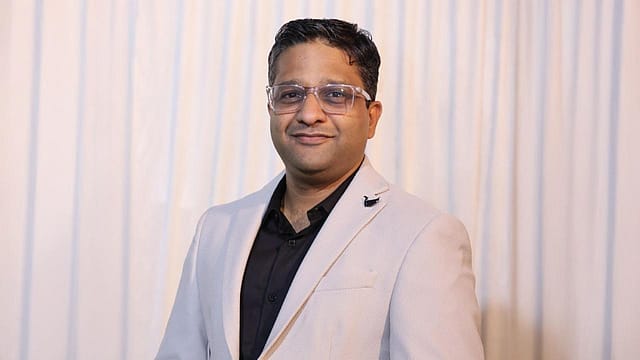
The challenge is not just choosing good mutual funds but ensuring they work well together. In an interview with Fortune India, Achin Goel, CFA, CIO and Fund Manager at Bonanza Portfolio Ltd, explains the limitations of DIY (do-it-yourself) investing, the role of technology in fund selection and why portfolio construction matters as much as individual investment choices.
Q. Why do investors need portfolio management rather than simply picking individual mutual funds?
Achin Goel: Selecting good funds and constructing a good portfolio are two different exercises. DIY investors typically evaluate funds based on past returns, ratings and fund manager track records. But wealth is created at the portfolio level, not the individual-fund level. Ten good funds can still form a poorly constructed portfolio.
The biggest issue is hidden overlap. An investor may own large-cap, flexi-cap, focused and index funds, only to discover that several underlying stocks are identical. Asset allocation, market-cap exposure, concentration and rebalancing must be assessed together. The question should be not which fund is best, but which combination can deliver suitable risk-adjusted returns.
Q. Can investors unknowingly build concentrated portfolios despite owning eight to 10 schemes?
Goel: Absolutely. The number of funds is not a measure of diversification; what matters is their underlying exposure. Large-cap, flexi-cap and multi-cap strategies can converge on the same high-conviction stocks.
Investors chasing returns may also accumulate mid-cap, small-cap or thematic funds exposed to similar businesses or factors. What appears diversified across schemes may actually be a concentrated bet on a particular sector, investment style or market cycle.
Professional portfolio management looks through the fund wrapper to assess underlying stocks, sectors, market capitalisation and portfolio factors.
Q. When should investors exit an underperforming fund?
Goel: A fund should not be replaced merely because another has outperformed over six or 12 months. Investors must assess whether its investment process has deteriorated. Warning signs include a fund manager change, style drift, persistent weakness in risk-adjusted returns, excessive concentration or a change in mandate.
The opposite problem is inertia. Investors may retain a fund because they have held it for years, fear tax implications or worry that a replacement could also underperform. Long-term investing should mean long-term discipline, not permanent ownership of every investment purchased. Decisions should be driven by evidence rather than recent returns or emotional attachment.
Q. What does MF-PMS offer compared with DIY investing and conventional PMS?
Goel: MF-PMS provides a professional decision-making layer above mutual funds. While DIY investors have access to thousands of schemes, they may lack the time or infrastructure to assess how these interact. MF-PMS combines fund selection, asset allocation, overlap analysis, risk monitoring and rebalancing.
It occupies a middle ground between DIY investing and conventional portfolio management services, which can offer concentrated portfolios of individual securities. MF-PMS retains mutual funds’ diversification and professional management while adding portfolio-level oversight.
The value lies in taking responsibility for the portfolio as a whole: what to own, how much to allocate, where exposures overlap and when risk or allocations need to change.
Q. How should MF-PMS approach asset allocation for investors with different risk profiles?
Goel: Asset allocation often becomes an afterthought. Investors keep adding funds without building an intentional allocation. The starting point should instead be return objectives, risk tolerance, liquidity needs and investment horizon.
A conservative investor needs lower equity and drawdown exposure. A balanced investor requires a mix of growth-oriented and defensive assets, while growth-oriented and aggressive investors can accept progressively higher equity exposure. Aggressive portfolios may take greater mid-cap and small-cap risk, but still need concentration limits. Risk should be designed at the portfolio level rather than discovered after a market correction.
Q. What is the biggest misconception about mutual funds?
Goel: The first is that buying mutual funds automatically creates a diversified portfolio. The second is that long-term investing means never making changes. The third is that adding more products necessarily reduces risk.
MF-PMS addresses these gaps through a structured framework covering asset allocation, scheme selection, overlap management, quantitative monitoring and disciplined rebalancing. Investors can select good funds themselves, but managing a portfolio becomes more complex as wealth and the number of investments grow.
Q. What is Bonanza’s long-term vision for MF-PMS?
Goel: As Indian household financial wealth grows, investors will increasingly need to move from product accumulation to portfolio management. Bonanza has managed MF-PMS portfolios since 2023, building experience through live market conditions.
Differentiation will come from portfolio intelligence, technology and quantitative capabilities, and investment judgement supported by governance. Technology can process fund, portfolio, risk and market data, but judgement is needed to decide when intervention is warranted.
We are not competing to identify which mutual fund will deliver the highest return next year. The more important question is whether we can build and continuously manage a robust portfolio that improves an investor’s chances of achieving long-term financial goals at an appropriate level of risk. DIY investing addresses product selection; professional portfolio management adds portfolio construction, monitoring and decision discipline.
(DISCLAIMER: The views and opinions expressed by investment experts on fortuneindia.com are either their own or of their organisations, but not necessarily that of fortuneindia.com and its editorial team. Readers are advised to consult certified experts before taking investment decisions.)