
AI is changing insurance, Plum wants to insure the risks it creates
ADVERTISEMENT
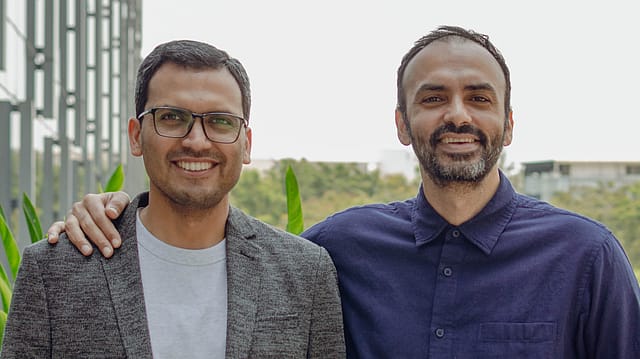
Artificial intelligence is making insurance claims faster, but it is also creating a new set of risks for businesses as AI systems increasingly move into products, workflows and customer-facing decisions.
For Plum Insurance, which counts around 6,000 organisations across India as clients, the question is not simply how much of the insurance process can be automated, but where automation should stop and human judgement should take over.
The company has processed nearly 500,000 claims so far and handles around 20,000 claims a month, according to Saurabh Arora, co-founder and CTO of Plum. It says pre-authorisation and discharge approvals that can traditionally take six to seven hours can be brought down to 30-45 minutes. Reimbursement claims that can take 30-40 days are now completed in about four days on average, Arora said.
Plum’s scale has grown beyond insurance claims. The company provides insurance and healthcare benefits to more than 600,000 employees through its corporate clients, which include CRED, Meesho, PhonePe, Swiggy, Tata CLiQ, Urban Company, WeWork and Zomato.
While insurance still contributes around 80% of Plum’s revenue, healthcare accounts for the remaining 20% and is growing at a triple-digit pace, with expectations of this mix to shift meaningfully, with healthcare contributing 40-45% of the business over the next few years.
The company has also been expanding its business insurance operations. In March, Plum announced an additional ₹193 crore in Series B funding, led by Peak XV Partners, with participation from existing investor Tanglin Venture Partners and new investor GMO Venture Partners, a Japan-based technology investor. Plum has raised $41.2 million across four rounds, with its latest Series B round worth $20.5 million. Its post-money valuation was $127 million as of April 18, 2026, while its annual revenue stood at ₹69.9 crore as of March 31, 2025, up 54% year-on-year.
Plum expands into AI-risk insurance
The company’s experience using AI in health insurance is now feeding into a broader push into business risks created by the technology.
Plum on Tuesday announced a full-stack risk management suite designed to help businesses identify, structure and manage risks arising from AI, cyber and operational systems. Plum said queries from companies exploring coverage for AI-related risks have risen 45% over the past six months.
The company argues that AI-related risks can extend beyond conventional cyber incidents. An AI system can hallucinate, produce incorrect outputs, influence decisions or trigger uncontrolled automation, potentially affecting customers and products without necessarily resulting in a conventional security breach.
“AI is now embedded inside how businesses operate,” Arora said. “Failures don’t always show up as incidents. They show up in outputs, decisions and customer interactions, which makes them harder to detect and even harder to contain. That’s where most traditional systems fall short.”
Plum’s new offering brings insurance, technology and advisory together, covering risks across AI, cyber and operations. Its existing business insurance portfolio includes cyber insurance, professional indemnity, directors and officers liability, commercial general liability and asset protection. The business insurance vertical works with more than 1,000 companies in India.
But Plum’s own claims operation illustrates why the company believes AI cannot simply replace human decision-making. “Anything which has a good set of rules to work on, right? This is like an intelligence layer that we are building as humans,” Arora said.
A straightforward policy rule can be handled by AI. Whether a treatment is covered or whether a defined sub-limit applies to a claim can be determined from the policy. But cases that fall into a medical or contextual grey area require judgement.
Plum has built human intervention into parts of its claims process. Rejected claims automatically go to a human queue, while deductions above a defined threshold also trigger human review. The company continuously monitors its AI systems and uses mistakes to improve them.
The same tension is playing out in fraud detection. AI can help identify fraudulent claims, but it can also help bad actors generate fake bills and receipts. “This is a cat and mouse game,” Arora said. “We are using AI to detect fraud, risk and abuse. And then on the other side, people are using AI to generate fraud receipts as well, for bills as well.”
For Plum, this makes fraud an evolving problem rather than one that can be solved through a single detection mechanism. Insurers and intermediaries are building repositories of fraud patterns across hospitals, customers and claims, while looking for unusual activity across hospitals, geographies and individual claimants.
The company’s latest offering is therefore an extension of a problem Plum has already encountered inside its own business: how to use AI where rules are clear, while retaining human judgement where they are not.
“What we’re seeing is not a lack of access to insurance, but a lack of clarity,” said Abhishek Poddar, co-founder and CEO of Plum. “Companies are adopting AI at speed, but the way they think about protection hasn’t evolved. This is no longer just about protecting against cyberattacks; it’s about understanding AI risk across every touchpoint in a company, including processes at companies and the products they build.”