
AI is forcing IT services to trade headcount for expertise, says Publicis Sapient CEO Nigel Vaz
ADVERTISEMENT
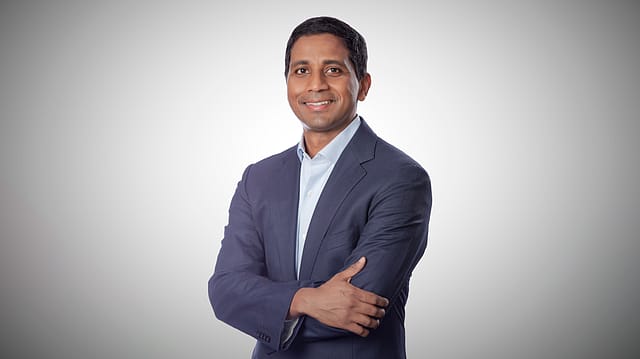
India’s IT services industry is entering a phase where scale alone may no longer be enough to sustain its traditional business model, as artificial intelligence (AI) changes the economics of software work and pushes clients towards specialised expertise, platforms and measurable outcomes, according to Nigel Vaz, CEO of Publicis Sapient.
The shift comes as India’s technology sector continues to grow, but workforce expansion has become far more measured. The country’s technology industry is expected to reach $315 billion in revenue in FY26, while direct employment is projected to reach about 6 million, with net additions of 135,000. Nasscom has also highlighted a broader shift from scale-led growth towards value and innovation as AI productivity gains increasingly flow through the sector.
Nasscom’s own assessment of the sector points to a similar transition. In its Strategic Review 2026, the industry body said Indian technology providers were “re-engineering revenue models”, moving away from FTE-led delivery towards outcome-based and risk-sharing models as AI-driven productivity gains materialise. It expects India’s technology sector to cross $315 billion in FY26, while direct employment reaches around 6 million, with 135,000 net additions. Nasscom also expects hiring to shift “from volume to skill mix” as AI-driven productivity gains are passed on to clients.
For Vaz, this is not simply a cyclical change in hiring. It represents a fundamental shift in what clients will pay technology service providers for. “IT services is going to continue to be valuable as long as we don't perpetuate the model of cost arbitrage, human scale and repetitive work,” Vaz said in an interaction with Fortune India. “The value is going to move from repetitive tasks being done by people at scale to expertise.”
Vaz compared the emerging model with a small group of highly equipped “Navy SEALs” rather than an army of hundreds of thousands of people performing repetitive tasks. With AI and the right platforms, he said, a much smaller group can achieve a dramatically different outcome.
“There’s still going to be massive numbers of people that are needed to help every company in the world become AI-first,” Vaz said. But the capabilities of those people, and the platforms they work with, will have to change.
GCCs add another layer of pressure
The rise of global capability centres (GCCs) in India is reinforcing the shift away from the traditional outsourcing model. India had 2,117 GCCs across 3,728 units employing about 2.36 million professionals as of FY26, generating $98.4 billion in revenue, according to the Nasscom-Zinnov GCC Landscape 2026 report. The number of GCCs has grown 32% since FY2021, while nearly half of the GCCs established since FY2021 were built with AI as a core focus from inception.
Vaz sees GCC growth as both a challenge and an opportunity for technology service providers. “GCCs are created for two reasons. One is cost arbitrage and the other is skill and capabilities,” he said. The opportunity for companies such as Publicis Sapient, he argued, is not to replicate the old model of “hiring thousands and thousands of people”, but to help companies build systems, products and AI platforms around specialised talent.
That distinction is increasingly important as global companies build in-house technology and product capabilities in India. For service providers, the opportunity shifts from supplying labour to helping build the platforms, products and operating models that allow those teams to work more effectively.
For enterprises, the problem is also legacy tech
That is closely aligned with Publicis Sapient’s own business, which focuses on digital business transformation and modernising enterprise technology. Vaz argues that AI’s biggest opportunity may not be simply automating existing work, but rethinking how businesses operate.
Large enterprises still carry decades of technology debt, including mainframes and applications written in COBOL. Publicis Sapient has built Sapient Slingshot to address this problem by ingesting legacy code, generating specifications and allowing users to describe what they need in English before generating modern code. “The process that could have taken 10 years, we can do in under three,” Vaz said.
But the problem extends beyond code. Vaz said enterprises also have legacy processes that remain manual and inefficient. He cited an insurance use case in which external information such as ambient air quality could trigger proactive customer support, and a banking onboarding process that could be reduced from 17 or 27 steps to one or two using agents and connected data, with customer permission. Publicis Sapient is deploying platforms including Slingshot, Bodhi and Sustain alongside people to tackle technology debt, process redesign, governance and organisational change.
Vaz is similarly sceptical of the corporate obsession with becoming “AI-native”. “AI-native is already a misconception because you can’t become AI-native,” he said. His advice to boards and CEOs is instead straightforward, “Focus on the outcomes, not the technology.”