
AMD takes on Nvidia with its latest AI full-stack compute infrastructure
ADVERTISEMENT
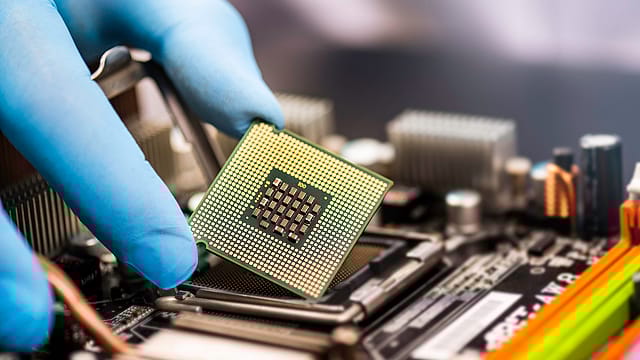
At its Advancing AI 2026 event, AMD introduced sixth-generation EPYC server processors, Instinct MI400 Series GPUs, ROCm.ai software and Helios, its first rack-scale AI platform that combines CPUs, GPUs, networking and software into a single system. Helios is designed for hyperscale AI deployments and puts AMD in direct competition with Nvidia’s rack-scale AI systems, which have become the backbone of many of the world’s largest AI data centres.
For years, AMD and Nvidia have competed largely in the GPU market. With Helios and its broader software and networking stack, AMD is now following a playbook similar to Nvidia’s by offering customers an integrated AI platform instead of individual components.
That strategy comes as the AI infrastructure opportunity continues to expand. According to Gartner, worldwide AI spending is expected to reach $2.59 trillion in 2026, up 47% year-on-year. More importantly for AMD, AI infrastructure—including AI-optimised servers, networking, cloud infrastructure and semiconductors—is expected to account for more than 45% of total AI spending, with AI server spending projected to triple over the next five years as cloud providers build capacity for generative AI and agentic workloads.
Gartner also expects AI spending to become increasingly driven by long-term infrastructure investments rather than one-off hardware purchases, as hyperscalers expand capacity ahead of future AI demand.
Why this matters for AMD
AMD has spent years trying to narrow the gap with Nvidia in AI chips. But competing on hardware alone has been difficult because Nvidia’s advantage extends beyond GPUs to its software ecosystem, networking products and deep relationships with hyperscalers.
The latest launches show AMD is trying to compete across that entire stack.
Instead of selling a GPU, AMD now wants to sell the entire AI system, from processors and accelerators to networking and software and making it a bigger participant in the AI infrastructure spending cycle.
The partnerships could matter as much as the products
AMD’s infrastructure push is also backed by some of the biggest AI companies. OpenAI has said it plans to deploy Helios systems beginning later this year and expand deployments through 2027.
Anthropic has signed a strategic partnership to deploy up to 2 gigawatts of AMD’s Instinct MI450 GPUs. The agreement also includes a multi-year engineering collaboration under which Anthropic will use Claude to help optimise AMD’s ROCm software. Separately, AMD has committed to invest up to $5 billion in Anthropic, subject to deployment milestones.
Meta’s agreement is even larger. The social media giant plans to deploy up to 6 gigawatts of AMD Instinct GPUs over multiple generations using EPYC processors, ROCm software and Helios systems, making it one of AMD’s largest AI infrastructure wins to date.
Nvidia’s leadership in AI has been reinforced by long-term relationships with companies building frontier AI models. By securing OpenAI, Anthropic and Meta as infrastructure partners, AMD is creating its own installed base. Those deployments improve its software ecosystem, validate its hardware at scale and make it easier for future customers to adopt AMD’s platform.
AMD is still well behind Nvidia in the AI accelerator market. But its latest announcements suggest it is no longer trying to compete only on chip performance. It is positioning itself to capture a share of the much larger AI infrastructure market, where spending is expected to accelerate over the coming years.