
Apple’s “absurd” pricing: Users vent spleen on social media against steep iPhone price hike, question “Make in India”
ADVERTISEMENT
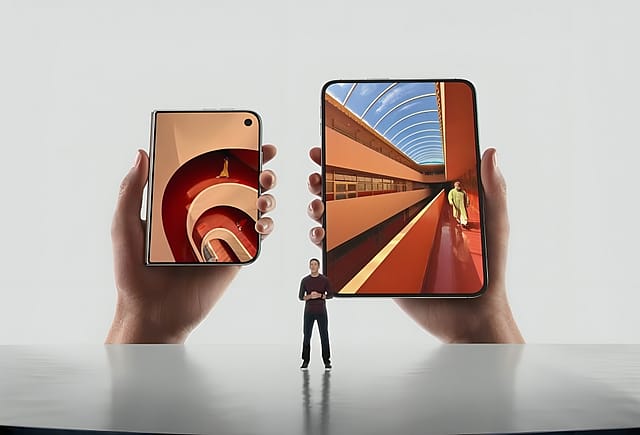
A steep hike in Apple iPhone prices has evoked outrage from consumers. Responding to the substantial increase in prices, users took to social media calling the hike “absurd” questioning the India premium and Make in India scheme of the government.
How the prices stack up
The iPhone Duo induces sticker shock with a starting price of ₹2,99,900 for the 256GB variant; the 512GB model costs ₹3,24,900, the 1TB version is for ₹3,74,900, while the top-end 2TB variant costs ₹4,49,900.
As for the iPhone 18 Pro and 18 Pro Max, prices start at ₹1,64,900 and ₹1,79,900, respectively for the 256GB version; the top-end 2TB variant will set you back by ₹3,14,900 and ₹3,29,900, respectively.
For the older models, the starting price (256GB) of the iPhone Air has risen to ₹1,49,000 from ₹1,19,000 earlier; the top-end 1TB version now costs ₹2,24,900, while the earlier price was ₹1,59,900. For the iPhone 17—Apple did not unveil an iPhone 18 this year—the 256GB version now costs ₹99,900, up from ₹82,900 earlier. The entry-level iPhone 17e now costs ₹79,900, up from its launch price of ₹64,900. Meanwhile, the two-year-old iPhone 16 (128GB) is now available at ₹89,900, up from its launch price of ₹79,900.
Equity analyst Rakesh Bansal said Apple has flipped the script. "Older iPhones now cost up to 25% More in India," he said.
Another user suggested Apple keeps increasing the prices in India as it thinks the consumers in the country will keep buying it.
Users also questioned low price hikes in other countries.
Apple has expanded its wearable line-up with three new products, AirPods 5, Apple Watch Series 12 and Apple Watch Ultra 4, bringing Active Noise Cancellation to its open-ear AirPods, a new health sensing system to its mainstream smartwatch and longer battery life to its high-end Ultra model.
The three products also have a common thread running through them: Apple is pushing more of its intelligence features into devices that users wear rather than simply use alongside the iPhone. AirPods 5 get hands-free Siri AI and Live Translation, while both new Apple Watch models use the S11 chip and Apple's new health sensors to collect more frequent data and turn it into features such as a daily readiness score.
Trade-ins, cashback, easy payments and discounts to sweeten deal for buyers
To counter the sticker shock, Apple is banking on trade-ins, easy payment options, and cashbacks. While No Cost EMI is available for tenures of up to 6 months while purchasing an eligible product with a qualifying card, instant cashback is available only on qualifying cards issued by American Express, Axis Bank, and ICICI Bank.
Meanwhile, some retailers such as Croma are offering discounts on the recently discontinued iPhone 17 Pro and iPhone 17 Pro Max models.