
Beyond the smartphone: Meta unveils VR glasses, camera-free AI glasses and Muse Charm
ADVERTISEMENT
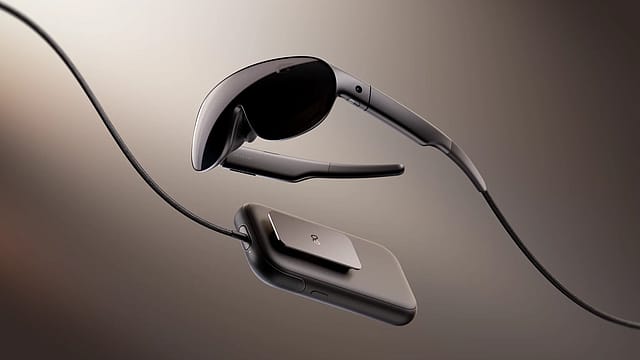
Meta is pushing deeper into a future where the smartphone is no longer the centre of computing. At Meta Connect 2026, the company unveiled a new pair of lightweight virtual reality glasses, its first camera-free AI glasses and a pocket-sized device built around its Muse personal AI agent.
The biggest hardware announcement was Meta VR Glasses, a 100-gram device that brings virtual reality into a glasses-shaped form factor. Meta CEO Mark Zuckerberg described the product as “a new era for VR”, positioning it as a combination of a personal cinema, gaming console, computer and private workspace.
“There’s really nothing like this,” Zuckerberg said during the Connect keynote, describing the device as “a glimpse of the future.” Meta says the glasses are about five times lighter than the Meta Quest 3 and can be worn for extended periods without the straps and bulky hardware associated with conventional VR headsets.
Meta VR Glasses bring 5K display, AI and spatial computing
The Meta VR Glasses feature a 5K Infinite Display built on micro-OLED panels, delivering 37 pixels per degree. They also support Dolby Vision and Dolby Atmos, with Meta pitching the device as both an entertainment system and a productivity machine.
The glasses use a two-part design. While the glasses contain the sensors and display, a separate pocket-sized puck connected through an optical tether houses the computing hardware, battery and storage. Meta says the puck can provide up to three hours of continuous high-resolution media playback and supports 45W fast charging.
The company is also using AI and natural interactions to remove the need for conventional controllers. Users can speak to the glasses or use their eyes and hand gestures to open apps, play content, adjust their workspace or search for information.
“You can wear Meta VR Glasses to comfortably watch a full movie, or get things done on a portable, private screen during a long flight, while maintaining a sense of the world around you,” Meta said in its announcement. Meta VR Glasses will launch in spring 2027 at $1,299.99.
Alongside the VR push, Meta introduced Ray-Ban Meta Audio, its first-ever camera-free AI glasses. Unlike the company’s existing camera-equipped Ray-Ban Meta glasses, the new model removes the camera altogether and focuses on audio, calls and hands-free AI.
Meta’s camera-free glasses focus on audio and AI
The Ray-Ban Meta Audio glasses weigh 43 grams and offer up to 12 hours of use on a single charge, with an additional 48 hours available through the charging case. They are available in Clubmaster and Burbank styles, with 23 colour and lens combinations. Pre-orders start at $349, with shipments beginning October 13.
The decision to remove the camera comes as Meta expands its smart-glasses portfolio and faces greater attention around privacy and recording in public spaces. The company is retaining cameras in its higher-end Ray-Ban Meta Gen 3, which comes with a 12MP camera capable of 3K Ultra HD video recording.
Zuckerberg said the audio glasses also have a role beyond entertainment, with Meta adding technology that can “compensate for perceived mild to moderate hearing loss.”
Meta’s broader objective is to make glasses a mainstream computing platform rather than a niche accessory. Zuckerberg said, “We are excited about building other wearables too, but we think that glasses are going to be the biggest category.” Meta expects to offer more than 100 AI glasses options across Ray-Ban, Oakley and Meta Glasses by the end of 2026.
Muse Charm puts Meta’s AI agent into a pocket-sized device
The company also used Connect to reveal Muse Charm, a small device designed specifically for interacting with Meta’s Muse personal AI agent.
Meta says Muse Charm brings the power of Muse and its real-time voice model to a device that fits in a pocket. The company has not yet disclosed full specifications or pricing and said more details will be shared later this year.
The device is part of Meta’s wider push to make Muse available beyond a conventional AI app. Muse is designed as an agent that can perform tasks rather than simply answer questions. Meta says it can handle actions such as sending emails and booking travel, while working across connected services with the user’s permission.
Meta is also bringing Muse to its AI glasses. Users will be able to activate it hands-free by saying the name of their agent, while Muse can use what the wearer is seeing to answer questions or act on information in front of them. Zuckerberg has framed this wider AI strategy around putting more computing power directly in users’ hands. At Connect, he said, “We believe that the best way to create a positive future for everyone is to put power in people’s hands." He added, “We believe that empowering people is the source of prosperity in the world, that the highest purpose of superintelligence is creation and invention—not automation.”