
How Apple's foldable iPhone could disrupt the market
ADVERTISEMENT
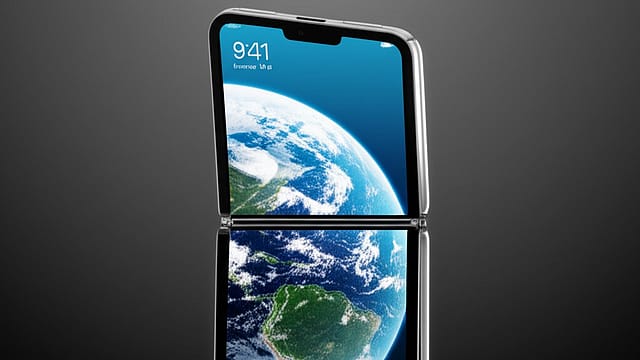
Apple could finally enter the foldables space this week. The Cupertino-based company is expected to showcase its first foldable iPhone at its September 9 event alongside the iPhone 18 Pro and the iPhone 18 Pro Max. Apple has not confirmed this, but reports suggest that the device, potentially called the iPhone Ultra, will be positioned as a premium book-style foldable.
The timing puts Apple at the centre of an increasingly crowded premium foldable market. Huawei has launched its latest tri-fold smartphone, the Mate XT2, in China today, while Xiaomi is also expected to unveil a new foldable shortly. Samsung, meanwhile, remains the largest player in the global market after years of developing its Galaxy Z Fold line.
Apple's expected entry comes as the global foldable smartphone market approaches a significant milestone. According to Counterpoint Research, cumulative global foldable smartphone shipments are expected to cross 100 million units by the end of 2026, eight years after the category emerged commercially in 2019.
Yet foldables remain a niche within the broader smartphone market, accounting for only about 2% of global smartphone shipments. That leaves considerable room for growth, and Counterpoint expects global foldable shipments to rise 37% year-on-year in 2027, the fastest growth rate for the category since 2022.
How much do foldable phones cost today?
The premium pricing of current foldables also explains why Apple's entry is potentially significant. Samsung's Galaxy Z Fold7 starts at ₹1,74,999 in India for 12GB RAM and 256GB storage, rising to ₹2,16,999 for the 16GB RAM and 1TB variant.
Google's Pixel 10 Pro Fold is officially priced at ₹1,72,999 for the 256GB version in India, although current retail prices can be lower. vivo's X Fold5, another book-style foldable available in India, is priced at ₹1,59,999 for 16GB RAM and 512GB storage. Motorola's Razr 60 Ultra, a clamshell rather than book-style foldable, currently starts at around ₹79,999, although its listed price varies by retailer and availability.
Huawei's new Mate XT2 sits considerably above these conventional book-style foldables because of its tri-fold design. Its starting Chinese price of 19,999 yuan translates to roughly ₹2.81 lakh at current exchange rates, although direct currency conversion is not equivalent to an Indian retail price because of taxes, distribution and local pricing.
Against this backdrop, Apple's first foldable is expected to command an even higher price. Reports and analyst estimates have put the device at more than $2,000 (about ₹1.75 lakh), with some forecasts placing the starting price closer to $2,100-$2,300. The actual price will only be known when Apple announces the product.
Counterpoint expects Apple's entry to have an immediate impact despite the expected supply constraints. The research firm forecasts up to 6 million foldable iPhone shipments in 2026, which would give Apple a 25% share of the global foldable market and put it in second place behind Samsung, at 38%, and ahead of Huawei, at 22%.
The forecast is particularly notable because Apple would potentially reach the No. 2 position within months of entering a category in which Samsung has had years of experience and Huawei has established a strong position in China.
Research Director Tarun Pathak said, “Apple’s entry will surely increase competition at the premium end. However, foldables are still a very small part of the overall smartphone market, so there is room for the category to grow well beyond current volumes. Samsung continues to push innovation, Huawei remains strong in China, and we are seeing more OEMs prepare new designs and form factors. The broader participation is expected to help the market expand over the next few years.”
Supply as an initial hurdle
Apple's initial challenge, however, may be supply rather than demand. Counterpoint expects production volumes to remain constrained during the early ramp, meaning sales and deliveries are unlikely to reach full scale immediately after the expected September 9 unveiling.
Associate Director Liz Lee said, “Initial supply for Apple’s first foldable iPhone will inevitably be limited during the early production ramp, which keeps the upper end of our 2026 shipment forecast at 6 million units. Even with the short selling window, we still expect Apple to take 25% of the global foldable market and directly move into the No.2 position. That would be a very strong start and shows the impact Apple can have on the category even before supply fully ramps up.”
The bigger disruption could come in 2027, when Apple would have a full year of sales. Counterpoint expects Apple's foldable shipments to more than double next year, with its market share potentially reaching 40%. That would put Apple directly against Samsung's Galaxy Z Fold line while Huawei remains a major force in China. Counterpoint expects the market to increasingly shift towards wider book-style designs, supported by the response to Samsung's Galaxy Z Fold8 and the momentum behind Huawei's Pura X Max.
Senior Research Analyst Prachir Singh said Apple's entry should not be viewed simply as an attempt to displace Samsung immediately. “Apple stepping into foldables isn't about stealing the crown overnight. Their ecosystem pull and premium user base will do more to legitimize foldables as a category than to shift market share in year one. Samsung's lead is built on years of iteration and first-mover trust, and that's not something any single launch unwinds. What Apple brings is credibility. It nudges the next wave of iPhone loyalists to finally consider using foldables. We expect the category to expand before the competition truly intensifies.”
For Apple, the opportunity is less about inventing the foldable smartphone than making the form factor mainstream among its enormous installed base. The company enters the segment years after Samsung and Huawei, but with an ecosystem that could make foldables more attractive to consumers who have so far stayed with conventional iPhones.
Foldables are still expensive
The economics remain a constraint. Counterpoint notes that foldables still cost roughly three times as much as traditional slab smartphones, meaning mass-market adoption is still several years away. The next stage of competition will therefore depend on whether manufacturers can turn larger, flexible displays into meaningful advantages for productivity, multitasking and content consumption rather than simply selling them as premium hardware.