
India becomes third country with private space launch capacity as Skyroot's Vikram-1 successfully reaches orbit
ADVERTISEMENT
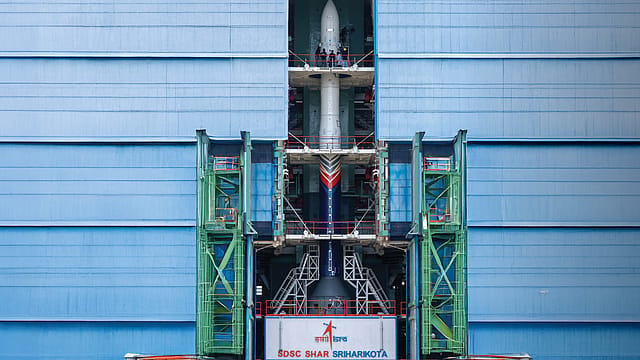
India today created history as the first privately developed orbital rocket, Vikram-1 test flight-1, successfully reached orbit after launch short while ago.
The rocket developed by Hyderabad based Skyroot Aerospace successfully lifted off on a historic maiden mission named 'Aagaman' from the Satish Dhawan Space Centre in Sriharikota. “India's first privately developed orbital rocket has completed its final burn and injected its payloads into a 450 km orbit, making India the third country in the world with private orbital launch capability,” a company spokesperson said. Prime Minister Narendra Modi congratulated the team of Skyroot Aerospace for the successful launch,
It may be noted that this is a test flight as the company needed to demonstrate the capability to reliably put satellites into the orbit. After a couple of more test launches, the company will launch regular commercial flights.
The company management had earlier told Fortune India that multiple geographies have approached it for launch of satellites.
Majorly companies from three geographies – U.S., Europe and South-East Asia, have approached the company and the demand pertains to two major types of payloads. First is communication satellites, which provide communication, data transmission services. The other is earth observation satellites for clicking images from the space. There are satellites that can watch in night and various spectrums.
Wishing Skyroot Aerospace best for successful launch of Vikram-1 - privately developed indigenous launch vehicle - Prime Minister Narendra Modi said space-sector reforms are unlocking new opportunities for innovation and enterprise.
Earlier today, wishing Skyroot Aerospace best for successful launch of Vikram-1, Prime Minister Narendra Modi said in a post on X that space-sector reforms are unlocking new opportunities for innovation and enterprise. "I urge all Indians, especially my young friends, to follow this historic mission and join in wishing Team Skyroot success," he said in the post.
Vikram-1 is a multi-stage orbital launch vehicle designed to deploy satellites weighing up to 350 kg into Low Earth Orbit (LEO). Standing nearly seven stories tall, the rocket features an all-carbon composite structure and is powered by propulsion systems developed in-house, including 3D-printed engines and high-thrust solid rocket boosters. The maiden mission is targeting a 450-km orbit at a 60-degree inclination.
The rocket will carry technology demonstration payloads from Grahaa Space, Cosmoserve, DCubed and Skyroot's own SCOPE platform. The payload stack also includes Cosmos Diamonds' "Cosmic Bloom" artwork and a micro-art payload.