
ITC Infotech, Happiest Minds and the pursuit of $1-billion revenue in testing times
ADVERTISEMENT
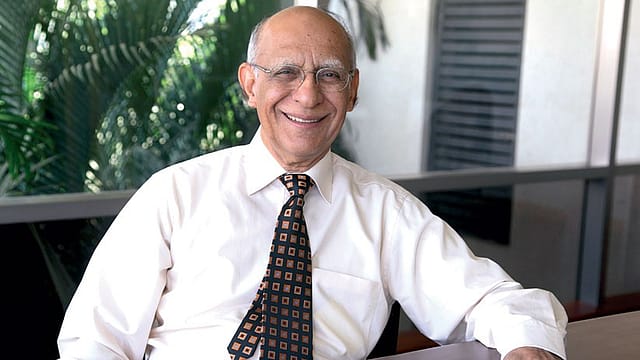
Late on Monday, August 31, Happiest Minds , the second IT services company promoted by Ashok Soota and founded in 2011, made a filing to the exchanges. The filing said that Soota, who holds a 32.34% stake in the company in his personal capacity, and Ashok Soota Medical Research LLP, which holds an 11.79% stake, have decided to sell a 22.1% stake for ₹1,329.7 crore to ITC Infotech India Limited.
The deal will take place in two tranches of 11% and 11.1%, with Happiest Minds merging with ITC Infotech. The combined entity is expected to be listed on the Indian bourses by Q2 or Q3 of FY28. The combined entity will be the 11th largest company in the Indian IT space. Following regulatory approvals, Happiest Minds will be delisted from the stock exchanges to facilitate the listing of ITC Infotech. The transaction will also mark ITC’s third listed entity after ITC Ltd and ITC Hotels Ltd.
ITC Infotech was formed in 2000, when ITC spun off its information technology business into a wholly owned subsidiary. The company reported revenue of ₹4,718 crore in FY26. ITC Infotech will raise funds through a rights issue. After the amalgamation, ITC Ltd will hold a 73.4% stake in the combined entity, Happiest Minds shareholders will hold 19% while Ashok Soota will hold more than 7%. Existing public shareholders of Happiest Minds will receive one ITC Infotech share for every 3.24 Happiest Minds shares held, on a pre-rights issue basis.

However, the public markets viewed the it as a raw deal, with Happiest Minds shares on the BSE closing nearly 11% lower on Tuesday. While ITC Infotech is larger in terms of revenue, Happiest Minds has been growing faster, with the five-year compound annual growth rates (CAGR) of the two companies standing at 14% and 25%, respectively. A joint valuation report dated August 31, 2026, prepared by PwC and Grant Thornton, ascribed an implied per-share value of ₹405 to Happiest Minds, valuing the company at ₹6,167 crore, or 15.1 times its FY26 EBITDA.
ITC Infotech’s unlisted shares were valued at ₹1,312 apiece, implying a valuation of 13.6 times its FY26 EBITDA and an enterprise value of ₹11,920 crore, on a pre-rights issue basis. However, Soota’s stake sale price across the two tranches averages out to ₹395 per share. Venkatraman Narayanan, Managing Director of Happiest Minds, candidly admitted during an analysts’ call on Tuesday that the company’s target of reaching $1 billion in revenue by FY31, from $260.3 million in FY26, would have been difficult to achieve without the deal. Happiest Minds’ revenue grew 6.9% year-on-year to $260.3 million in FY26.
Billion dollars and beyond
The integration roadmap is yet to be finalised. Joseph Anantharaju, Co-Chairman and CEO, Happiest Minds, said during the call that once the Competition Commission of India approves the transaction, the two teams will work out the details. For ITC, the deal on paper looks promising. It will help expand its presence in the Americas while enhancing its AI and digital capabilities. For Happiest Minds, the transaction will provide access to Fortune 500 clients and deeper financial resources to support growth. According to ITC’s latest annual report, ITC Infotech’s consolidated revenue stood at ₹4,835 crore in FY26, compared with ₹4,244.83 crore in the previous year. Net profit for the year stood at ₹407.78 crore, against ₹449.82 crore in FY25. In Q1FY27, Happiest Minds’ revenue grew 2.6% sequentially in constant currency terms, led by the GenAI business unit and the India and APAC regions while its core US and European markets continued to show muted performance. The company’s GenAI business had a standout quarter, increasing its contribution to revenue to 5.4% from 4.1% in Q4FY26. The unit accounted for 73% of the sequential increase in revenue during the quarter.
While ITC Infotech derives nearly 58% of its revenue from the CPG, retail and manufacturing sectors, around 54% of Happiest Minds’ revenue comes from the BFSI, hi-tech and ed-tech segments. “Together, we would create a much broader end-to-end proposition, from strategy and design through engineering implementation, modernisation, operations, infrastructure management and security, covering all the IT needs of a typical enterprise,” Anantharaju said. He added that the combined entity’s total customer universe would expand to around 800 customers across industries and geographies, creating significant opportunities for cross-selling and deeper account penetration. At the conglomerate level, ITC contributes around ₹228.2 crore, or nearly 5% of ITC Infotech’s revenue, according to the FY26 annual report. However, ITC Infotech remains a significant dividend-paying subsidiary, contributing ₹374.76 crore in dividends in FY26, compared with ₹488.32 crore in FY25.
In the long term, the deal gives greater certainty to shareholders about the company’s future, particularly as octogenarian promoter Ashok Soota’s 44% stake will be reduced to just over 7% in the combined entity. The larger scale of the combined business could also give it greater ability to participate in and invest in larger enterprise opportunities, as well as pursue acquisitions, given that neither entity has undertaken any significant acquisitions in recent years. The transaction also brings together two companies with complementary capabilities, particularly in artificial intelligence. Sanjiv Puri, Chairman and Managing Director, ITC, who also served as Managing Director of ITC Infotech between 2006 and 2009, has pushed the adoption of AI across the conglomerate, particularly in its manufacturing facilities, to improve efficiency and optimise costs. From an AI angle, the two companies also bring complementary strengths. “If you look at ITC Infotech, they've got a lot of depth in physical and plant AI, whereas Happiest Minds is more on the digital, data and generative AI,” Anantharaju said during the analysts’ call.
Integration, AI, and macro headwinds
While the opportunity is promising, the merger and listing plan comes at a time when the IT industry is undergoing an AI-led transformation, with companies realigning their offerings and pricing models. Since the beginning of the year, IT stocks have taken a beating amid concerns over AI developments, IT firms acquiring companies for capabilities and inorganic revenue growth, and a slowdown in discretionary spending. A recent report by Crisil on the Indian IT sector expects growth to remain muted in the current fiscal year. The sector is expected to grow by 1-3%, weighed down by AI-driven disruptions, weak discretionary spending, and continuing geopolitical uncertainties. Anuj Sethi, Senior Director at Crisil Ratings, noted that AI is no longer just a productivity lever for IT services companies but has also begun to challenge their traditional revenue model. “Rising adoption of AI-native solutions is intensifying pricing pressure, triggering deal renegotiations, and slowing execution as clients reassess technology spending. At the same time, weak discretionary spending and uncertainty in the US and Europe continue to weigh on demand. This will keep revenue visibility modest over the near term,” Sethi said. According to Crisil, the key test for the broader industry this year will be how quickly companies reinvent their business models, adapt to the changing industry landscape and expand into newer services.
At the Happiest Minds’ earnings call, Anantharaju also said discretionary spending was more concentrated around optimising the run part of the operations and then taking that savings and deploying it on some of the AI and other innovations. Given the company’s earlier revenue growth guidance of 12.5% for FY27, on the risks he said, “If you look at the current war and the impact having on inflation and other things, I think that dragging out for too long is what I would see as a risk right now to sustaining the kind of performance that we've delivered in Q1.”
For most questions on integration—top talent, people, and roles—the management of Happiest Minds will look for answers over the next couple of months. For now, the management is convinced of value creation, where the key monitorable would include extent of cross-selling opportunities, large deal participation, and the TCV pipeline as well as conversion. With the integration roadmap is yet to be chalked out, long-term value creation for Happiest Minds shareholders hinges on execution more than anything else.