
Volkswagen partners with NXP to develop next-gen vehicle architecture, first model planned for 2027
ADVERTISEMENT
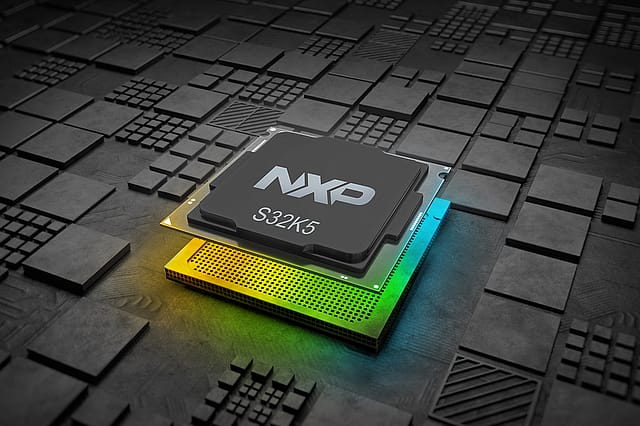
Volkswagen Group has entered into a strategic partnership with NXP Semiconductors to strengthen its automotive semiconductor ecosystem, selecting the chipmaker’s S32K5 family of microcontrollers (MCUs) as a key component of its next-generation software-defined vehicle (SDV) architecture. The first vehicle featuring the new architecture is planned for 2027, the companies said on October 26.
The partnership will focus on zonal vehicle architecture, which consolidates multiple functions into fewer Electronic Control Units (ECUs). The move is aimed at reducing hardware complexity, simplifying parts management and enabling the scalable deployment of digital features across Volkswagen Group’s brands and vehicle segments.
Zonal architecture to simplify vehicle electronics
Modern vehicles increasingly rely on digital functions, from advanced infotainment to driver assistance systems. Managing these through separate ECUs can increase development complexity and limit scalability. Volkswagen plans to address this through a common MCU platform that integrates multiple functions within zonal controllers.
NXP’s S32K5 microcontrollers will connect sensors and actuators, process data from specific areas of a vehicle and manage functions covering lighting, body systems, comfort, chassis and safety. These controllers will work alongside high-performance central processors responsible for computing-intensive tasks, including artificial intelligence-enabled functions such as automated driving and advanced infotainment.
The architecture is designed to support real-time computing, secure Over-The-Air (OTA) software updates and continuous improvements to vehicle functionality.
Rivian joint venture to develop common platform
The S32K5 family will serve as a common building block for the future zonal SDV architecture being developed by Rivian and Volkswagen Group Technologies, LLC (RV Tech), the joint venture between Volkswagen Group and Rivian. The architecture is intended for vehicles from both companies, while allowing them to retain brand-specific features and customer experiences.
Werner Tietz, Volkswagen Group’s executive committee member responsible for research and development, said harmonising key technologies across brands would help reduce complexity, leverage scale and accelerate innovation, allowing digital features to reach customers faster.
Volkswagen sharpens semiconductor strategy
The agreement forms part of Volkswagen Group’s broader strategy to establish direct, long-term partnerships with semiconductor companies, strengthen supply resilience and improve planning certainty across its supply chain.
Karsten Schnake, Volkswagen’s procurement chief, said the partnership would enable the group to define technology requirements earlier and leverage its scale across brands.
For NXP, the agreement strengthens its position in the automotive semiconductor market. The company operates in more than 30 countries and reported revenue of $12.27 billion in 2025.
NXP chief executive Rafael Sotomayor said the collaboration would combine scalable real-time computing, edge intelligence and software innovation to support the next generation of intelligent vehicles.