Indian auto industry welcomes India–US trade deal as tariff cuts lift export outlook and investment confidence
/ 2 min read
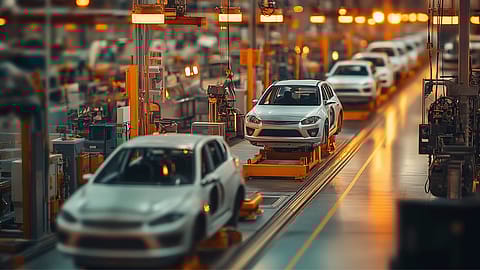
For India’s auto industry, the US is a key market for component exports and a strategic partner for technology development | Credits: AI-generated
Indian auto industry welcomes India–US trade deal as tariff cuts lift export outlook and investment confidence
The India–US trade deal, reducing tariffs on Indian exports from 50% to 18%, is hailed by India's auto industry as a boost to export competitiveness and investment confidence. Industry leaders see it as a step towards stronger bilateral trade relations, enhancing supply-chain integration and technology collaboration, crucial for the sector's growth and global competitiveness.
This summary is AI-generated, and Fortune India is not responsible for its content or any associated copyright issues.
Auto majors say sharp tariff cuts and a roadmap to ease non-tariff barriers will improve export competitiveness, supply-chain integration and investment confidence amid global uncertainty
For India’s auto industry, the US is a key market for component exports and a strategic partner for technology development | Credits: AI-generated
India’s automobile sector has welcomed the newly announced India–US trade deal, viewing it as a timely boost to export competitiveness, supply-chain integration, and long-term investment confidence amid global economic uncertainty.
Industry leaders said the agreement, concluded after discussions between Prime Minister Narendra Modi and US President Donald Trump, signals greater predictability in bilateral trade relations—an important factor for capital-intensive sectors such as automobiles and auto components.
Tariff reduction offers immediate upside
Dr. Anish Shah, CEO and Managing Director of Mahindra Group, described the reciprocal tariff cut on Indian exports from 50% to 18% as a “significant step forward in strengthening India–US trade and investment ties.” He noted that the commitment to progressively lower tariff and non-tariff barriers would support business confidence and long-term investment planning.
“With the Indian economy on a strong growth trajectory, this deal adds meaningful momentum to India’s growth ambitions,” Shah said, highlighting the importance of stable and predictable trade frameworks for sustained expansion.
Auto parts body applauds the deal
The Automotive Component Manufacturers Association of India (ACMA) also expressed strong support. Vikrampati Singhania, President of ACMA and Vice Chairman & MD of JK Fenner (India) Ltd., said:
“ACMA welcomes the India–US trade understanding, which strengthens bilateral economic ties and enhances market access for Made-in-India automotive components through reduced tariffs. This will support export growth, technology collaboration, and reinforce India’s position as a trusted global manufacturing hub.”
Vinnie Mehta, Director General of ACMA, added, “The India–US trade understanding brings timely clarity for industry at a phase of global supply-chain realignment. Lower tariffs and improved market access can accelerate auto-component exports, deepen technology partnerships, and strengthen India’s integration into global automotive value chains.”
Export competitiveness and technology collaboration
TVS Motor Company Chairman Sudarshan Venu highlighted that the tariff reduction would enhance the competitiveness of Indian goods in the US market. He emphasized that the agreement could deepen supply-chain integration, enable faster technology collaboration, and attract investments in advanced manufacturing.
Venu noted that India has secured strategic trade arrangements with key global partners in recent years, helping the industry navigate a challenging external environment. He said that predictability and openness in trade are crucial for Indian companies to scale operations, innovate, and generate employment.
Why the US market matters
For India’s automobile sector, the US is a critical market for component exports and a strategic partner for technology development—particularly in electric mobility, advanced electronics, and clean manufacturing. Industry executives believe that clearer tariff visibility and policy certainty could encourage Indian firms to scale exports and integrate more deeply into global value chains.
About the India–US trade deal
The India–US trade deal announced late last night focuses on easing trade frictions and improving market access by sharply cutting reciprocal tariffs on Indian exports to 18% from an earlier 50%. The agreement also outlines a roadmap for gradually reducing tariff and non-tariff barriers, which have long been a concern for exporters across sectors, including automobiles, auto components and engineering goods.
Follow Fortune India
NEXT STORY