Capital gains from India Art Fair
With 135 participants and global galleries in attendance, India Art Fair emerges as the Capital’s most expansive edition yet
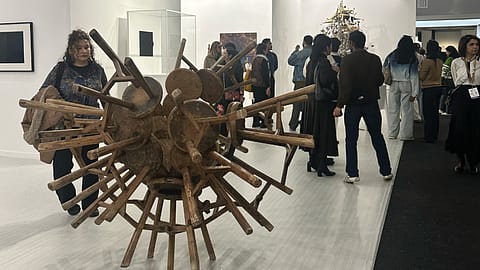
India seems to be immersed in arts in the last few weeks with the Kochi-Muzris Art Biennale opening in December and many galleries-based talks and events happening around the country. Then came the much-awaited India Art Fair in Delhi. With galleries, artistes, immersive experiences, optical illusions, visual art performances, discussions, etc spread across 135 participants this time, the India Art Fair that concluded proved to be the biggest such event in the Capital yet, attracting hundreds of art lovers from across the country as well as overseas. The same was the case when it came to participants, collectors, artists, curators, who have come from India and abroad showcasing pieces of art and installations from around the world. The event this time also focused on ecology using immersive installations. And it appears that, even though there are no concrete figures available yet with the organisers, the business of art also flourished during these three days.
“India Art Fair’s 17th edition signals the growing confidence of the region’s art market. This year, leading Indian galleries are presenting museum-quality works by modern masters alongside tightly curated contemporary projects, reflecting a maturing collector base focused on depth, provenance, and long-term legacy,” says Fair Director Jaya Asokan. “The fair’s decade-long partnership with BMW India, including The Future Is Born of Art Commission, underscores the critical role of private patronage in enabling ambitious, large-scale artistic production, while the Design section positions craft-based practices, material intelligence, and exceptional workmanship firmly within the luxury conversation.”
Right from the entry point itself that arty feel engulfed the visitors with immersive and contemporary in spirit, the showcase unfolding through monumental outdoor installations crafted from natural and recycled materials, where sculptural forms spoke to ecology, memory, and material storytelling. Within the halls, galleries from India and abroad revealed a rich dialogue of paintings, environments that can be seen and felt, and design-forward objects with fluidly blurring the boundaries between art and architecture. “With international galleries deepening their engagement and collectors responding to focused, high-value presentations, the fair reinforces India’s position as a serious destination for global collectors and capital,” adds Asokan.
Even though the Fair has established itself as one of the most important business events for art and design, it appears that the exact business figures generated every year through individual participation or through the overall event are not very clear. “While the fair does not release overall visitor numbers or verify individual sales figures, India Art Fair has continued to see consistent success year on year,” says Asokan. “In recent editions, galleries have anecdotally reported strong sales to both established collectors and a growing new generation of millennial buyers, reflecting a widening interest in collecting and a sustained curiosity around artists from the region.”