Drishyam 3’s ₹300 crore run shows what brings audiences back to cinemas
/ 4 min read
Drishyam 3’s ₹300 crore triumph signals a revival of discerning cinema audiences.
THIS STORY FEATURES
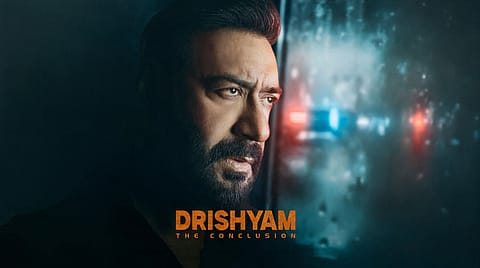
The success of Drishyam 3: The Conclusion is giving India’s cinema industry more than another blockbuster to celebrate. For PVR INOX executive director Sanjeev Bijli, the film’s performance is evidence that the theatrical habit is returning, but with a more discerning audience that is willing to reward films that deliver on story and execution.
Drishyam 3 has crossed the ₹300 crore worldwide mark within four days of its theatrical release, grossing ₹237 crore in India and ₹66 crore overseas for a total worldwide gross of ₹303 crore. As of 2.30 pm on Tuesday, the crime drama had added another ₹4.20 crore to its India net collection, according to industry tracker Sacnilk.
At PVR INOX, the film contributed around ₹65 crore over the opening weekend (more than 65% occupancy), accounting for roughly 36% of its all-India weekend collection of ₹176 crore. The performance was around 10-15% ahead of the multiplex operator’s expectations, making it a strong start to the third quarter, which has a sizeable pipeline of Hindi releases. And overall footfall at PVR INOX over the long weekend was more than 30 lakhs.
“We always knew that it will do well because it's a very successful franchise. Both part one and two did very well. But, it's surpassed our numbers by about 10-15% already, and it's still running,” Bijli said.
Meanwhile, the October 2 weekend was a standout period for Cinépolis, with 5.1 lakh tickets sold over the weekend and 7.8 lakh tickets overall. North and West India performed particularly strongly.
“Drishyam comes with a familiar franchise and a strong audience connection, but familiarity gets you only so far. Audiences still need a compelling reason to make the trip to a cinema,” Ashish Misra, head of Commercialisation, Cinepolis India said.
Is the audience more selective?
For Misra, what's interesting is not just the scale of the response, but what sits behind it. Drishyam 3 is a good example of the broader shift taking place in cinemas.
He added that he would hesitate to describe the current phase as a simple Bollywood comeback. “Audiences never really stopped watching Hindi cinema. What changed was the threshold for what they were willing to watch theatrically. They have become more selective, and films now have to earn that visit.”
Bijli agrees. While the Drishyam franchise gave the third instalment a ready audience, Bijli believes familiarity alone cannot sustain a theatrical run. The storyline and execution, followed by positive word-of-mouth, ultimately determine whether audiences continue to turn up.
“What has worked really is the storyline. And people are talking about the climax and how unexpected it is,” he said. “The taste of the consumer now has really evolved and they want a good story and a good film. The usual masala and the trappings may not work.”
Bijli pointed to Hanuman Ansh, which, according to him, had none of the conventional ingredients of a large theatrical hit, including a major star cast, prominent music or extensive promotion, yet has moved towards the ₹300-350 crore range and continues to count. The film’s performance, he said, showed how strongly audiences can respond when a film connects with them.
{{#most-powerful-women-snapshot-individual.slug}} {{/most-powerful-women-snapshot-individual.slug}} {{^most-powerful-women-snapshot-individual.slug}} {{/most-powerful-women-snapshot-individual.slug}} {{#showRanking}} {{current-rank}} {{/showRanking}} {{#photo.0.url}}
{{name}}
Toxic, on the other hand, is an example of a film that had a strong star cast and high anticipation but did not resonate with audiences as expected.
The Vvaan, despite relatively weak reviews, has collected around ₹81-82 crore at the all-India box office and is still running in its second week, Bijli said. PVR INOX accounts for around 30% of its business. Its performance in tier-2 and tier-3 cities, in particular, has been significant.
“Hindi movies always have done well [overall]; but some will do well, and some won't do well, which is the nature of the beast,” he said. Hindi cinema continues to account for around 40-50% of PVR INOX’s total revenue, with the first two quarters of 2026 broadly similar to the corresponding period last year.
Meanwhile, Ormax has reported Hindi cinema’s share of the domestic box office rising from 39% to 44% in the first half of 2026, while industry footfalls grew 5%, marking the first growth after three years of decline or stagnation. By the end of August, the Indian box office had reached ₹9,868 crore, 18% ahead of the corresponding period last year, with Hindi cinema accounting for around 40% of the market.
“There was a time when we used to talk about the ₹100 crore club, and then ₹200 crore club. Now, for a good film to reach ₹400 or ₹500 crore seems very easy,” Bijli said.
The upcoming Hindi film slate gives one a a reason to be optimistic. Ramayan, King, Prahaar and Nayyi Navelli are among the films expected to contribute to the pipeline, while the success of recent films has also raised exhibitors' expectations for forthcoming releases.
“For Bollywood, therefore, the real opportunity is not to chase one blockbuster after another,” opined Misra, while adding, “A healthier theatrical market is one where more films connect with audiences across genres, budgets and different parts of the year.”
For the multiplex industry, then, Drishyam 3 is a proof that audiences are willing to come back frequently when filmmakers give them a reason to leave their homes.

Follow Fortune India
NEXT STORY